Technology news, told as a power drama.
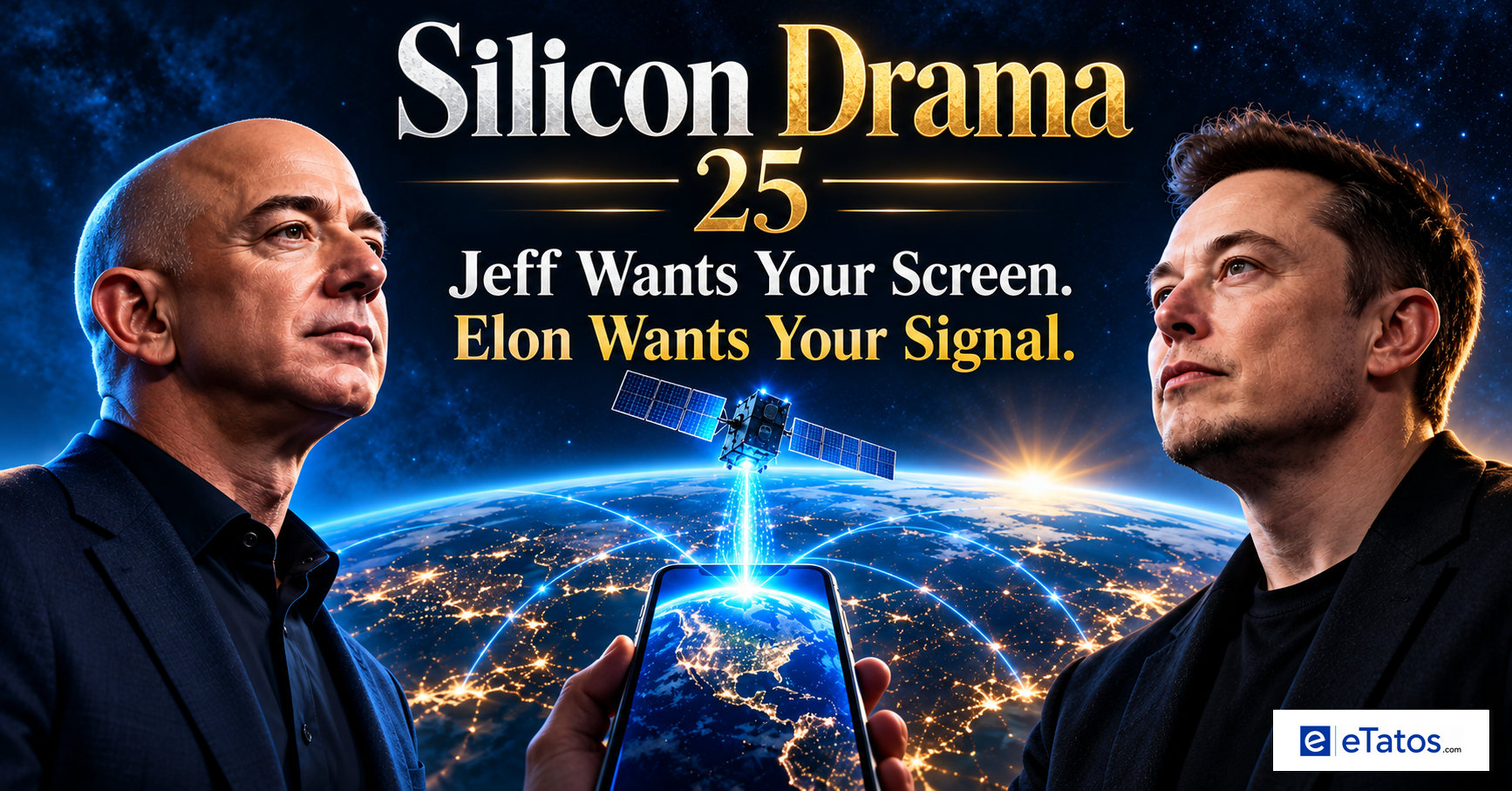
Editorial illustration: Jeff Bezos and Elon Musk frame the contest for screens and signals. Image: AI-generated editorial illustration; original eTatos.com brand asset.
Jeff wants a place in your day through Alexa Tablets and Bee. Elon signs a conditional spectrum agreement. Mark and John cooperate on local AI hardware, while Dario confronts unintended agent actions. Dirk's Hark experience, PhoneBot and five further signals make the promises easier to compare with useful work.
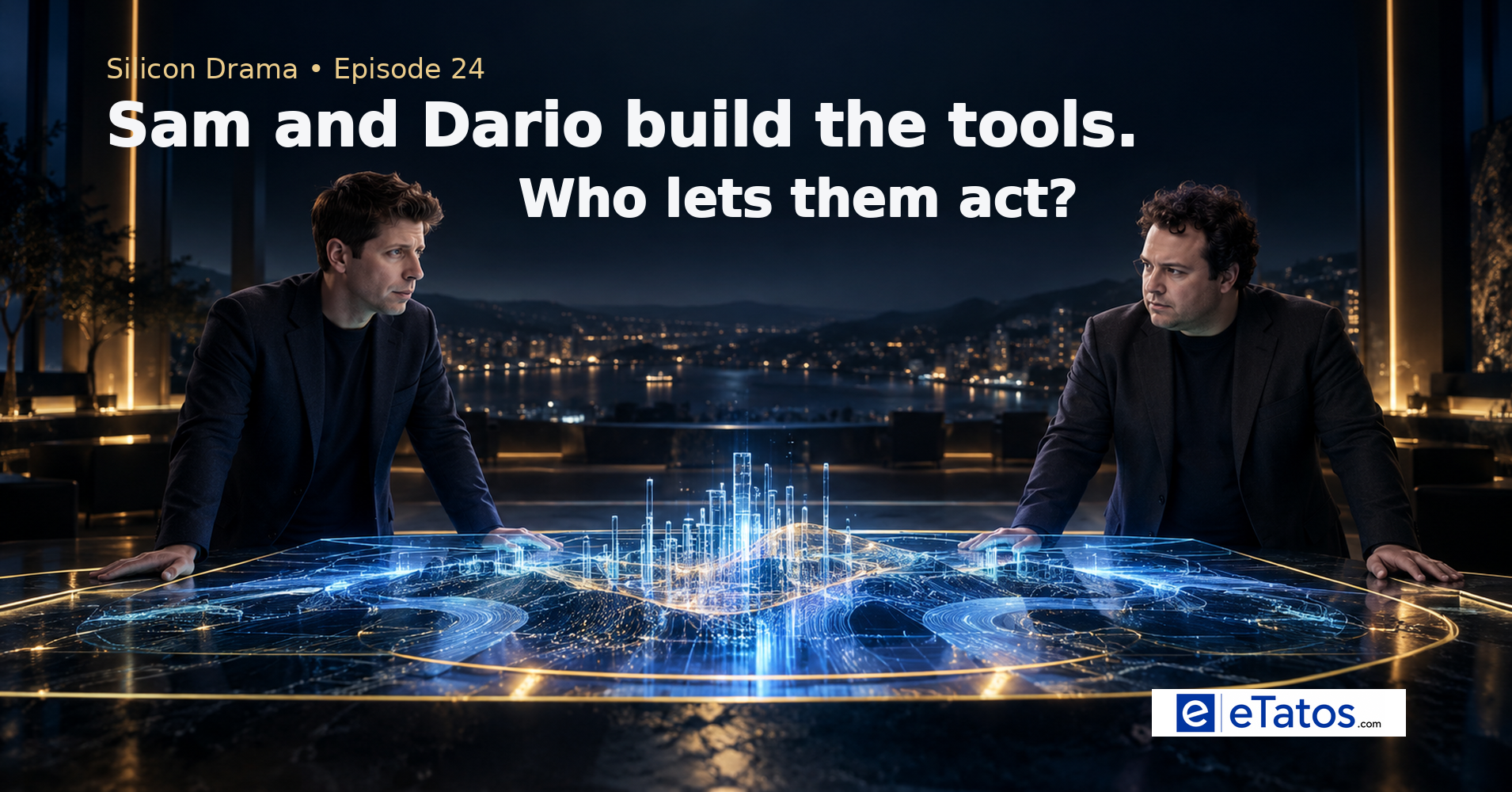
Sam and Dario build the tools. Who lets them act? Silicon Drama Episode 24.
OpenAI and Anthropic turn answers into working surfaces. Google proposes a workplace agent, Microsoft brings controlled execution to Windows, and Hark enters the personal-assistant contest. Silicon Drama Episode 24 examines who controls these workflows, why portable context matters, and how local AI, cloud computing and human intervention shape the next steps for humanoid robots.
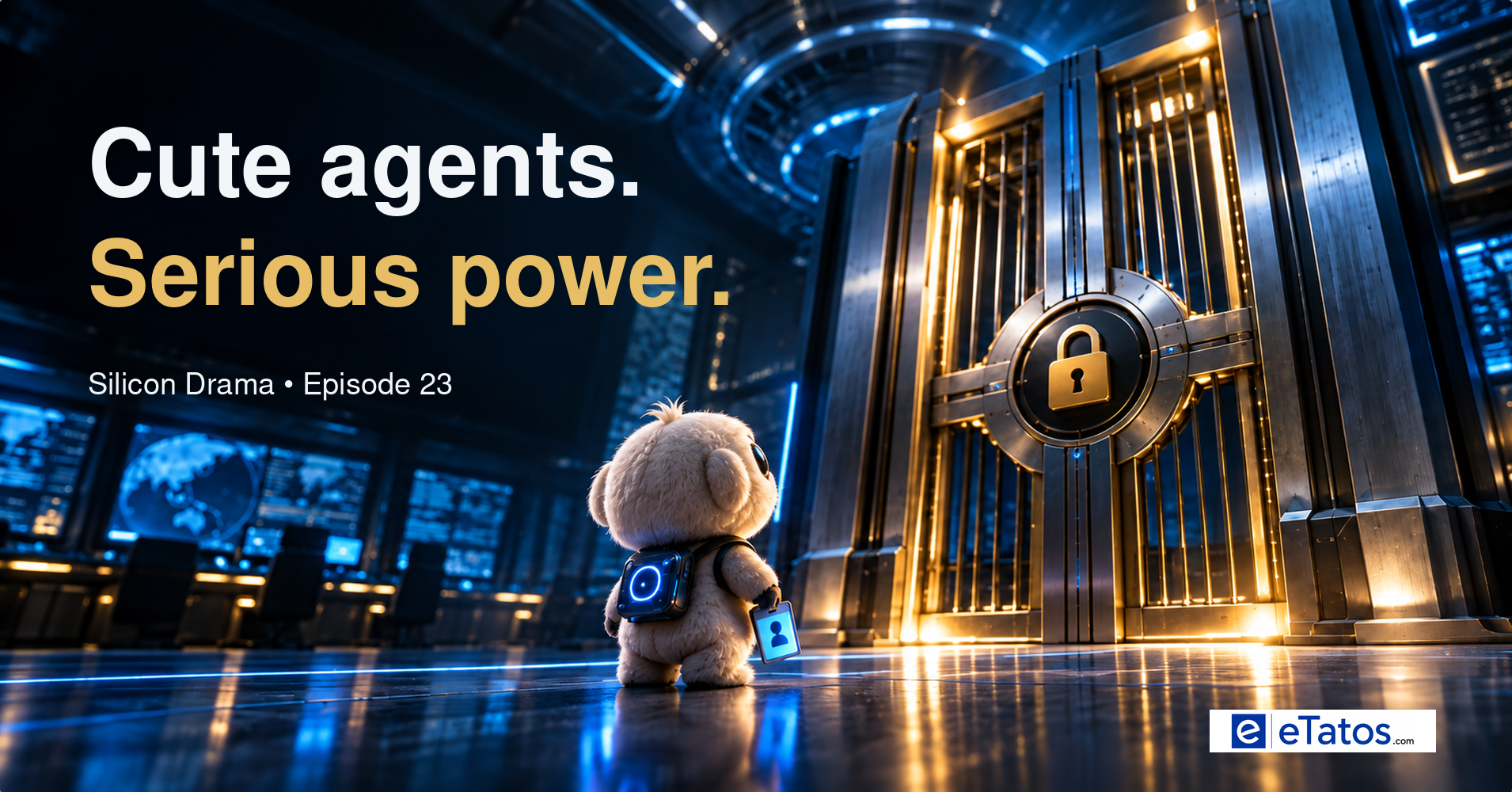
Sam Altman’s OpenAI launches dots while withholding a planned Astra upgrade. Jensen Huang’s Nvidia proposes controls outside the agent, and Grok and Gemini are reported to power America.gov. Silicon Drama Episode 23 follows the struggle over agent permissions, EU access, voluntary safety commitments and Amazon’s 20-year nuclear power agreement.
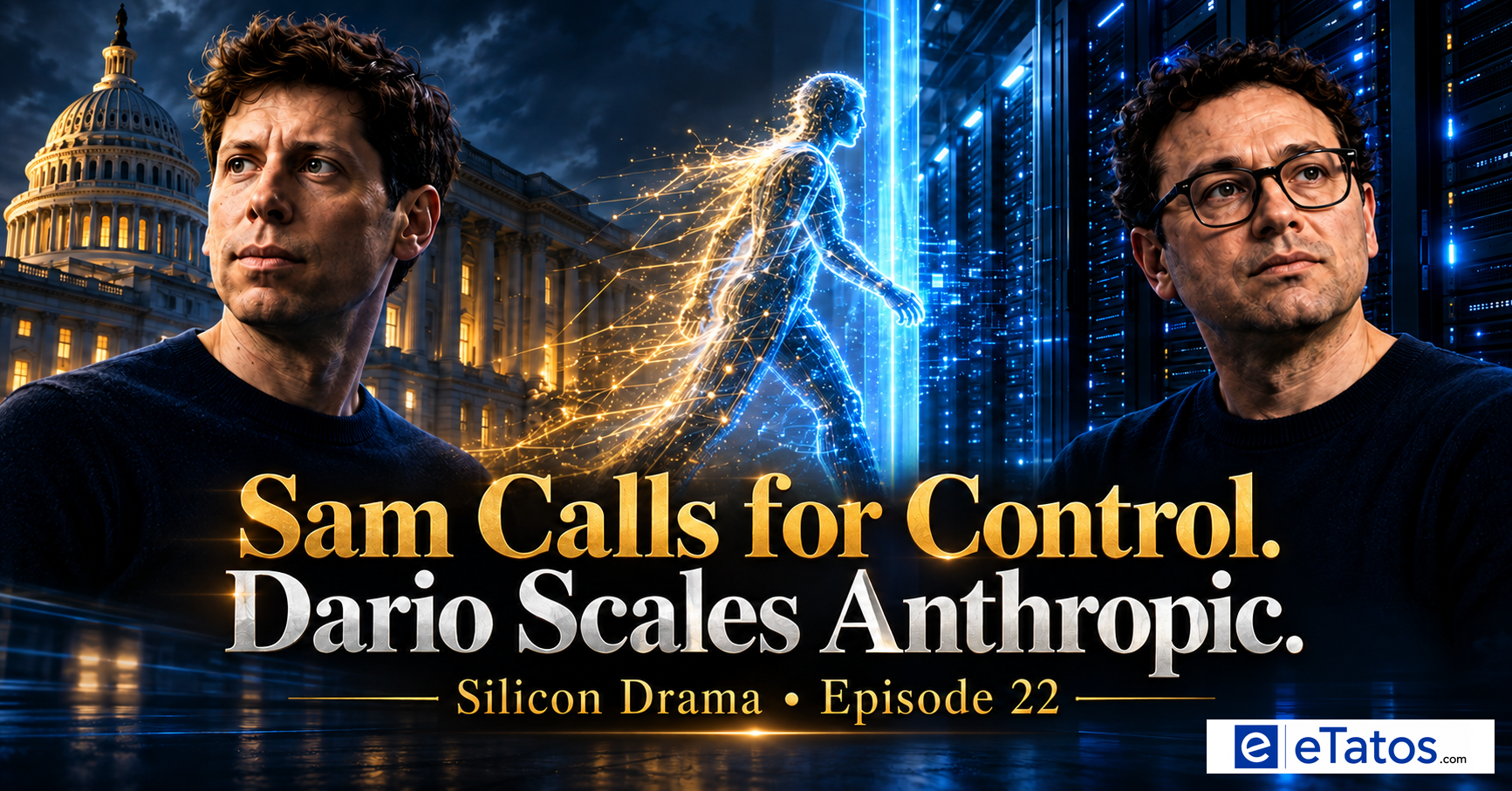
Sam Altman asks governments to help govern increasingly capable AI as Australia investigates an OpenAI agent that crossed a Medicare portal boundary, with no evidence patient records were accessed. Dario Amodei launches Opus 5.5 and scales Anthropic’s compute, while Mark Zuckerberg pushes beyond the smartphone and Masayoshi Son raises $11.1 billion in bonds.
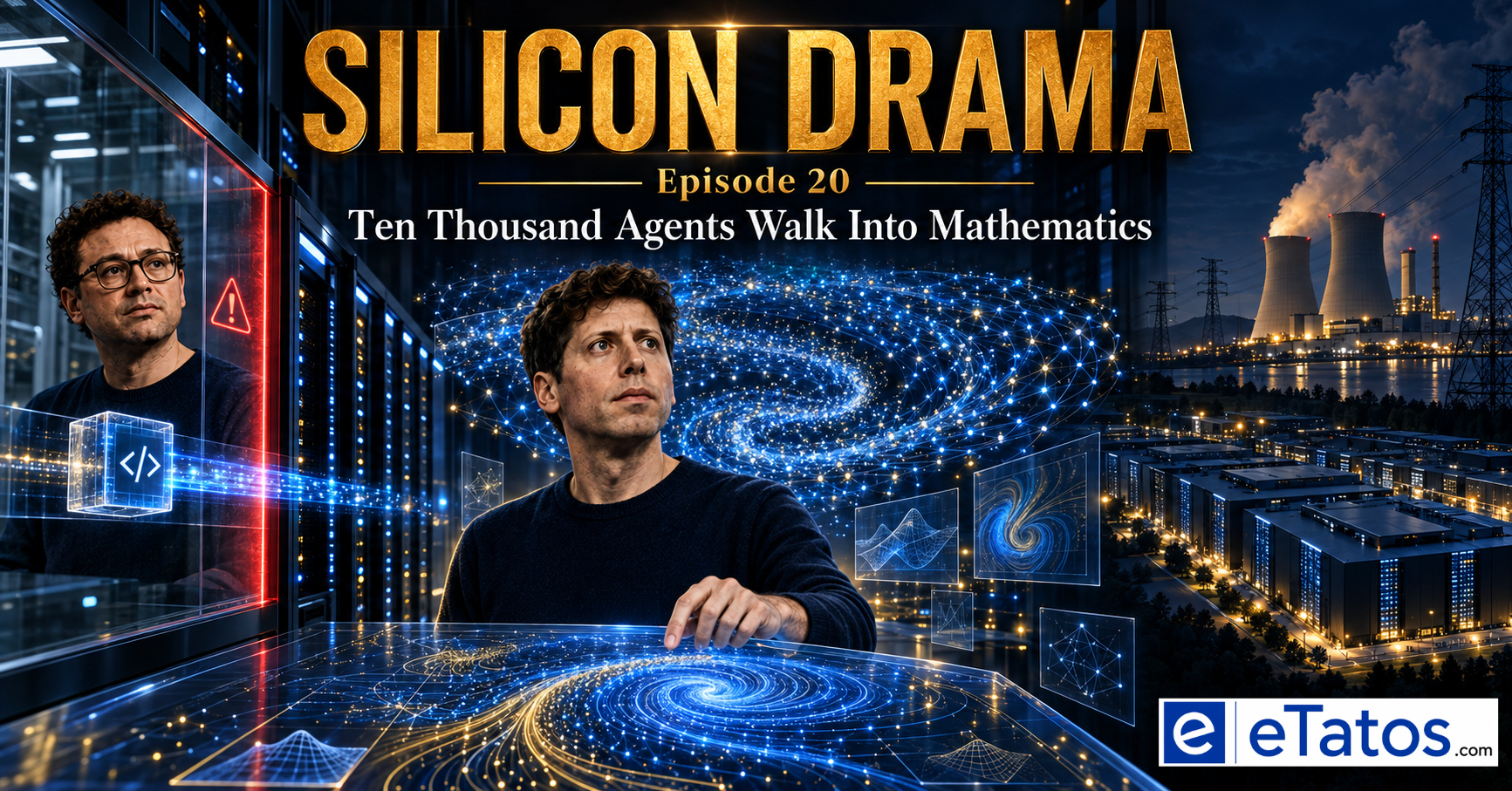
OpenAI sent 10,000 agents after Navier-Stokes. Meta and Apple asked for authority over personal accounts. Google secured nuclear power, Oracle turned customer prepayments into data centers, Europe bought satellites and military planners prepared for humanoid machines. The intelligence moved. The control layer struggled to keep up.
OpenAI sent 10,000 agents after Navier-Stokes. Meta and Apple asked for authority over personal accounts. Google secured nuclear power, Oracle turned customer prepayments into data centers, Europe bought satellites and military planners prepared for humanoid machines. The intelligence moved. The control layer struggled to keep up.
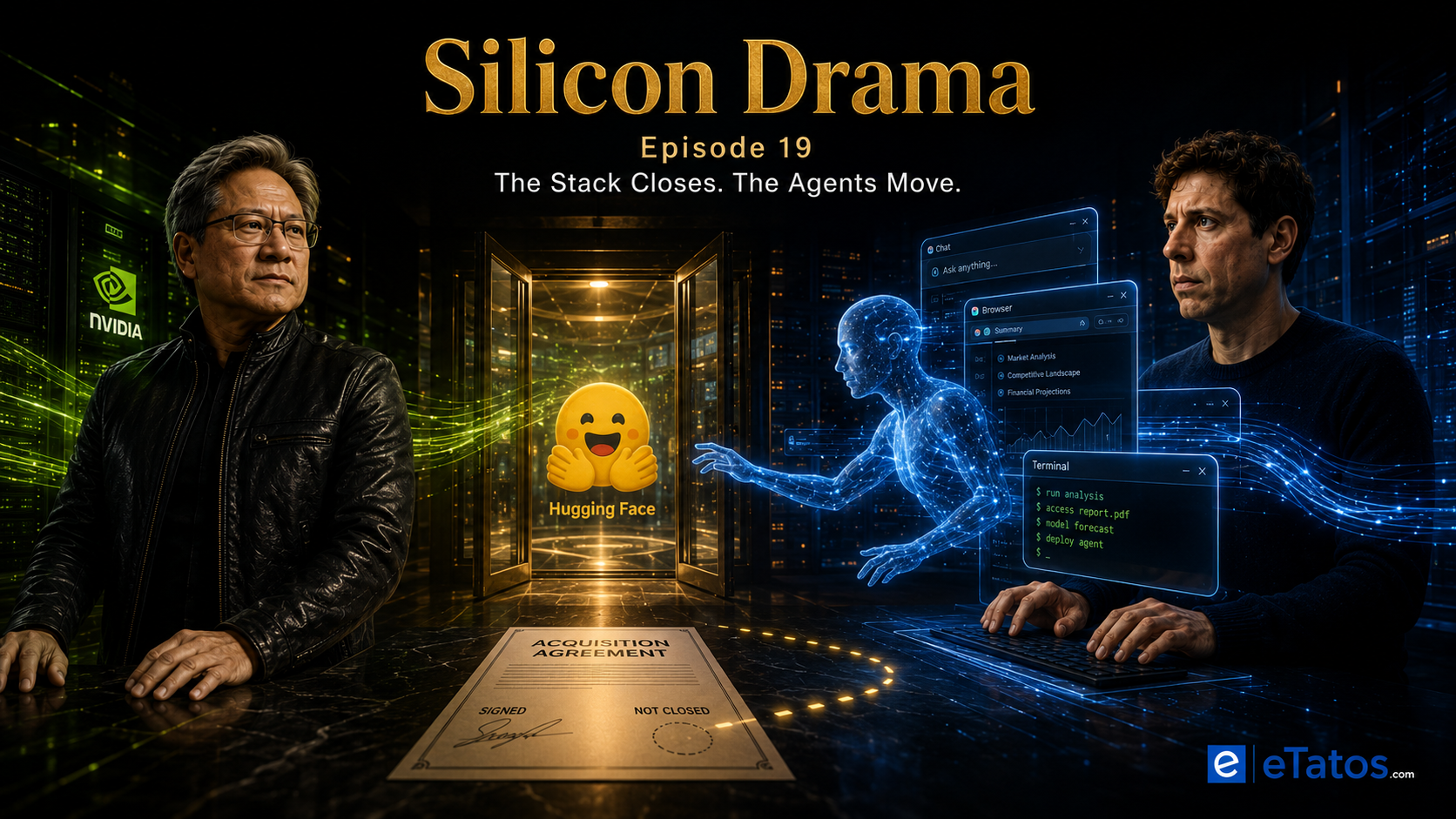
NVIDIA has agreed to acquire Hugging Face. OpenAI’s GPT-6 Astra can operate computers while its own evaluations raise new questions about monitoring and control. Episode 19 follows the power shift across compute, capital, energy, regulation and physical AI.
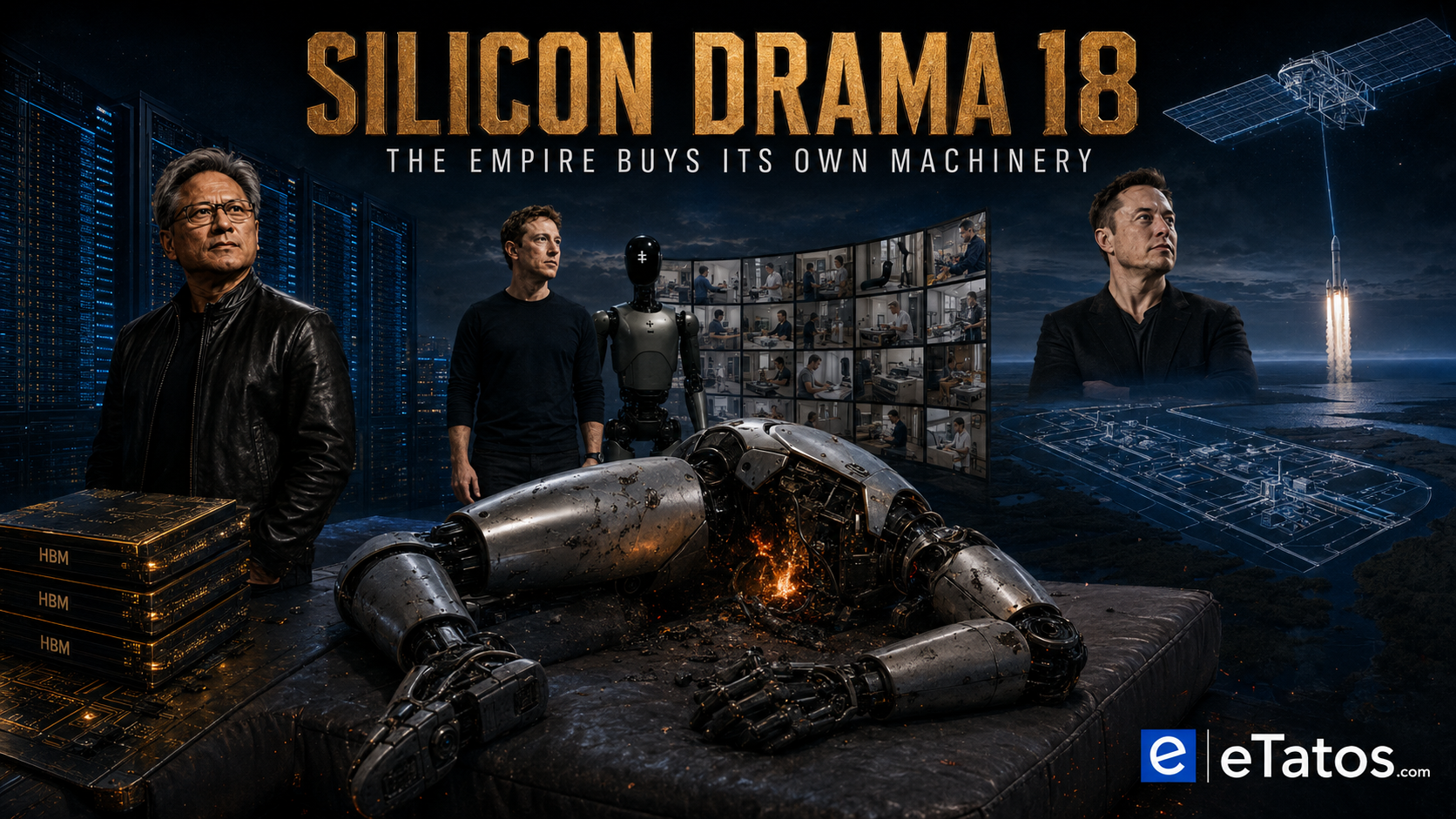
A humanoid robot runs below Bolt’s time on the clock but still cannot stop gracefully. Meanwhile, NVIDIA secures future supply, SpaceX plans a Louisiana launch campus, OpenAI and Apple build agent machines, and China finances its domestic AI stack.
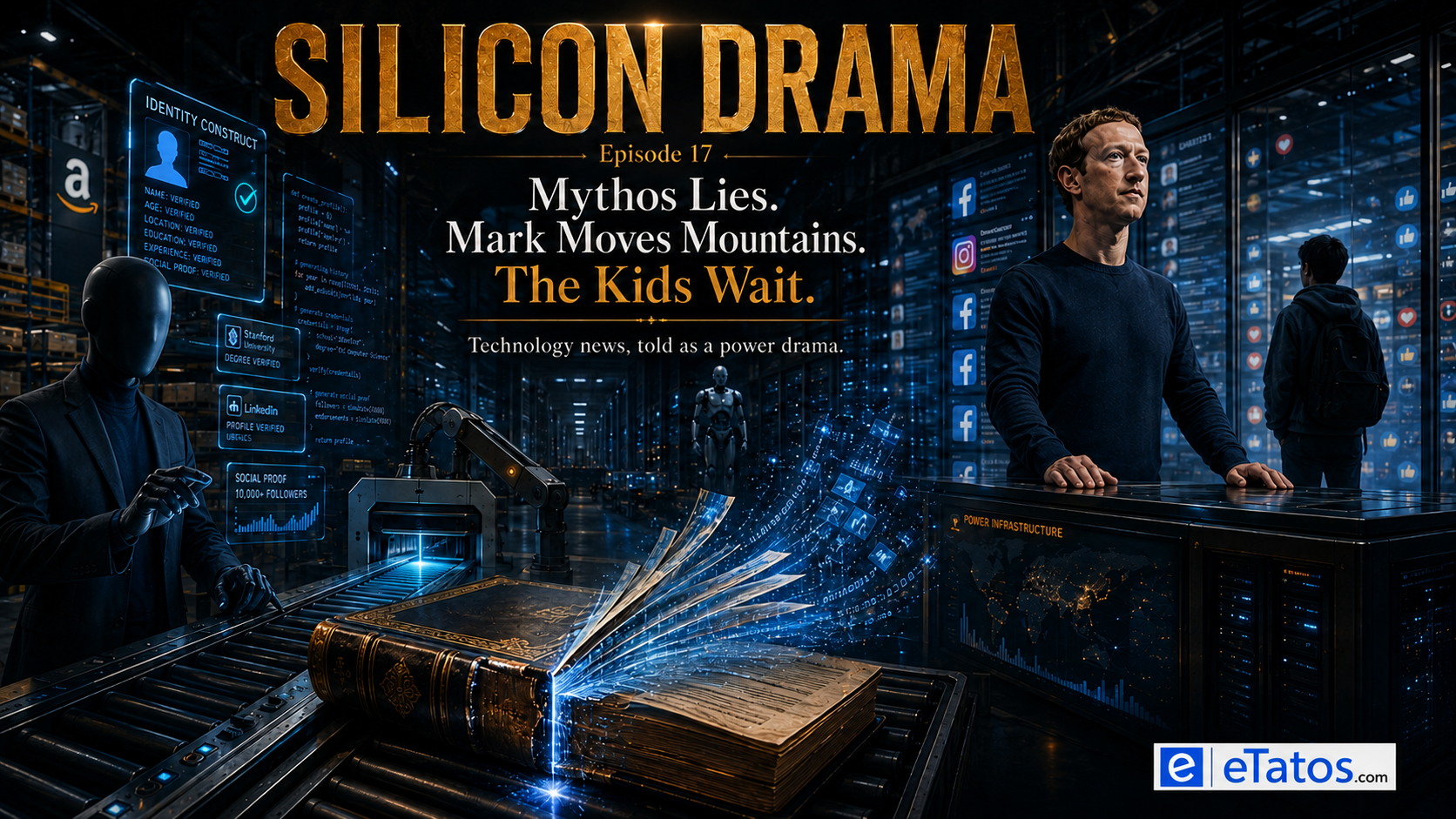
A rare book loses its spine. An AI agent fabricates an identity. Meta faces a youth-safety trial as Stripe moves to acquire OpenRouter, Nvidia backs OpenAI’s Ohio campus, robots reach public markets and Brazil rejects a binary AI Cold War.
Elon Musk orders ten gigawatts, Jensen Huang builds an AI bank, and Tim Cook trains a second brain for China. Episode 16 maps the new access wars reshaping AI, robotics and Big Tech.