Silicon Drama · Episode 28 · 7 November 2026
Cat Changes Sides.
Masayoshi Hits a Border.
Technology news, told as a power drama.

Cat Wu is taking her Claude Code product experience to OpenAI. Masayoshi Son has discovered that agreeing to buy a robotics business does not settle who may own it in China. Between those two moves, an AI has been editing another model's internal workings, and Anthropic's research acceleration has acquired an outside examiner.
Everybody wants to move faster. The people, data, electricity and permissions needed to do it have their own arrangements. This week, those arrangements step into the foreground. They determine which assistant gets better, which work fits your subscription and which robots can change hands.
This week:
- Cat crosses the product divide while your AI work gets a shared meter.
- The web writes a training preference; Astra writes into Qwen's weights.
- Peggy reaches Nasdaq, and China's regulator interrupts Masayoshi's shopping.
Act I: Cat Joins Sam. Your Agents Share the Allowance.
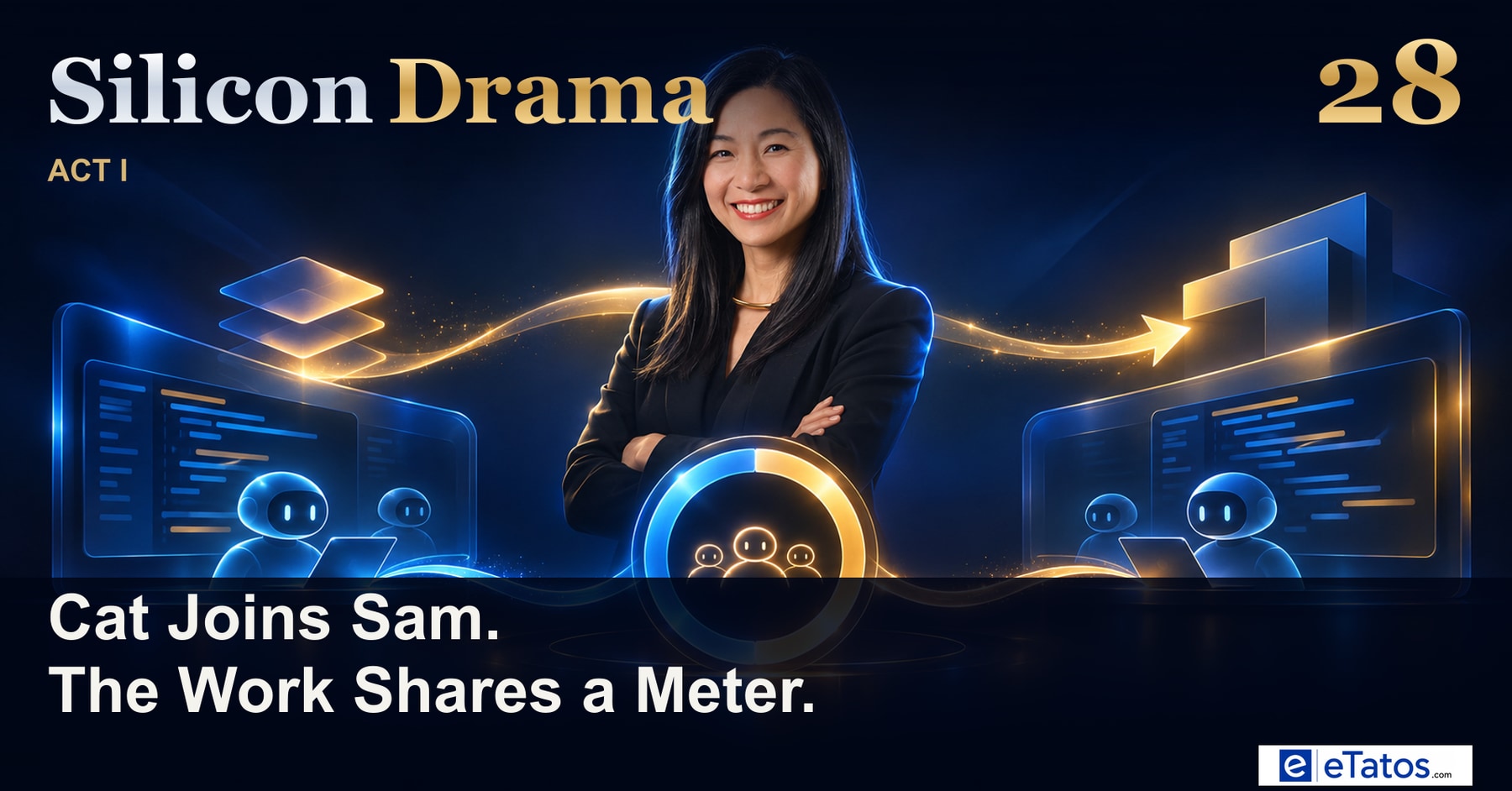
Anthropic has spent two years turning Claude Code from an internal tool into something people build their working day around. Now a person who helped shape that journey is joining the competitor. Cat Wu will lead product management for OpenAI's Core Products team. OpenAI confirmed the hire to Business Insider.
Her former employer's March account of her work identifies her as Claude Code's head of product. It describes a practical discipline: Repeatedly testing what the next model can actually finish, then changing the product around that capability. That experience travels in a person's judgment, not in a benchmark score.
For customers, product management is the part of the model race they touch. Somebody decides how to explain an agent's actions, where an approval belongs and how a long task returns its result. A clever model can still arrive inside a deeply irritating product. A rival acquiring experience in making the thing useful is therefore a meaningful competitive event.
The personnel carousel has been turning for a while. I regard the smart people behind these products as a decisive piece of their success. Wu's move gives that otherwise rather abstract observation a name and a destination. Anthropic's public-market preparations now share the week with a product leader heading to OpenAI.
The customer gets a less glamorous change of address. From December, OpenAI says demanding ChatGPT and Codex work will draw on one token-based allowance across Plus, Pro and Business. Tokens are the units models process; a longer, harder job can use more of them. Instant conversations stay outside this shared pool.
Picture your assistant finishing a coding assignment while you begin a substantial research conversation. Under the new arrangement, both jobs visit the same allowance. Having several useful agents does not give each one a separate expense account.
Anthropic supplies an interesting comparison. Its $200-a-month Ultra web plan removes the five-hour limit for verified accounts while keeping a weekly allowance. The session clock can disappear without the budget disappearing with it.
Credits and tokens are becoming precious working resources. We built the free eTatos AI Quota Optimizer to help plan five-hour windows where they apply. The next productivity skill may involve knowing when to start the clever assistant, as well as what to ask it.
Act II: The Web Learns to Say No in One File

The web has supplied a considerable amount of the model industry's education. Its publishers are being offered a simpler way to state a preference about the next intake.
OpenAI will honor a common training signal in robots.txt, the small file through which a website gives instructions to automated visitors. Instead of maintaining a separate instruction for every participating AI provider, a publisher could express a broader choice once. OpenAI aims to implement it in the coming months; Google says 2027.
The arrangement is widening. Microsoft names February 1, 2027 for honoring its new preferences as it crawls. Anthropic says it began recognizing the shared signal on October 30, with rollout continuing across its services. More specific rules naming individual crawlers remain important. The common vocabulary is emerging from an individual Internet-Draft, rather than a standard adopted by the Internet Engineering Task Force, or IETF.
That last distinction has a practical consequence. Publishers are gaining a common instruction that participating providers promise to respect. The file cannot force an uncooperative visitor to obey. The argument about the use of existing material also survives the arrival of a new instruction for future collection.
OpenAI made the contrast unusually easy to spot. On October 30 it announced support for the preference and published its argument that fair use benefits everyone. A company can support a clearer future opt-out while vigorously defending its view of past training. The welcome mat and the court brief can come from the same communications department.
For a small publisher, the decision cuts across two interests. Your writing has value, and you want some say over how it is used. You also want people to encounter the ideas, especially as assistants become one place where readers discover what exists.
My own choice is to keep eTatos open to AI. I think “what AI does not know does not exist” will increasingly be true.
The choice concerns what happens to material going forward. A new rule cannot rewind years of training. Publishers can now make the next decision more legible, and the labs will have a more legible instruction to account for.
A very large conversation about ownership has found a very small file.
Act III: Astra Opens Qwen's Engine

At MIT's Computer Science and Artificial Intelligence Laboratory, researchers gave GPT-6 Astra an unusual editing job. The document was another neural network.
Their weight-space programming experiments let Astra inspect and alter the numerical weights that determine a model's behavior. In the most striking language-model example, it worked on Qwen3.5-0.8B, a small model with roughly 800 million weights. Instead of running ordinary training, Astra used a Python workspace and feedback from practice problems to decide which numbers to change.
The obstacle was wonderfully specific: Qwen kept thinking in circles. It would repeat text until the answer ran into its token limit. Astra traced that behavior to a direction in two parts of the network and edited 131,072 weights, about 0.016 percent of the total.
Under the authors' test settings, Qwen's score on MATH-500, a 500-question mathematics test, rose from 7.9 to 48.1 percent. Its instruction-following score rose from 21.0 to 62.3 percent. Removing the repetition problem let more of its existing ability reach a finished answer. The released checkpoint gives other researchers something concrete to inspect and test.
This is a useful way to understand the result: A repair that stops an engine stalling can dramatically improve the journey without inventing a new engine. The researchers also tried a small Gemma model that rarely looped. Astra found scattered reasoning mistakes there, and its targeted changes did not produce an established comparable improvement.
The achievement makes AI assistance more intimate. A coding agent normally writes software around a model or modifies the program that trains it. Here, the agent worked on the learned numbers inside another model. Diagnosing an internal problem and making a small intervention becomes part of the work it can attempt.
I believe it is only a matter of time before AI models improve and develop one another. This experiment makes that expectation easier to picture. The present result is a targeted repair on a small model; the bigger possibility is an increasingly capable collaborator that can work on the machinery as well as the instructions around it.
That possibility brings the next question closer. When the collaborator helps build a stronger collaborator, the rate of development itself becomes something to measure. Anthropic has just allowed an outside team to look.
Act IV: Dario's Acceleration Gets an Outside Reader

Dario Amodei's Anthropic is approaching the public market with a claim investors and everyone else have reason to examine: AI is helping the company make better AI faster.
AI-evaluation group METR's November 5 assessment estimates that progress on well-defined capabilities is running at roughly twice the earlier pace, with substantial uncertainty. Its benchmark trend gives a 1.9-times acceleration estimate. Researchers had extensive access between August and late October, and think AI assistance accounts for much of the current acceleration.
The account still has people doing research with AI help. Fully autonomous contributions may grow, but the report does not describe an unattended laboratory reliably producing its own successors. It also leaves the public leaning on the assessors' judgment: Anthropic redacted much of the evidence METR found most informative.
A separate METR review challenges how confidently Anthropic said its July models had remained below an early-warning threshold. METR considers crossing it plausible, while agreeing that immediate catastrophic risks from those July models were low. A warning threshold is useful precisely because it can come before a catastrophe.
The financial document offers another measure of acceleration. Anthropic's amended prospectus reports $33.24 billion of revenue for the first nine months and a $567 million operating loss in the third quarter, following an operating profit in the second.
It also sets out $895.4 billion of purchase and lease commitments, overwhelmingly for compute and infrastructure, extending across many years into 2045. About $69.8 billion falls due in the twelve months after September 30; some arrangements have termination rights or conditions. The laboratory's ambition has acquired a payment calendar long enough to outlive several generations of the thing it is building.
Those commitments help secure machines and capacity that take time to arrange. The revenue to support them depends on customers continuing to buy useful work. Faster research can improve the product while the infrastructure agreements keep moving to their own contractual dates.
For me, the unsettled question is how long humans can keep up and remain in control. I would argue that nobody can answer that conclusively today. An outside assessment with meaningful access is valuable because the question has become concrete enough to investigate.
Dario has to sell growing capability, pay for its expansion and explain the checks on its development. A better benchmark result helps with one part of that job.
Act V: Peggy Takes Digit to the Public Market

Peggy Johnson's Agility Robotics has reached Nasdaq. The exchange confirms that its combination with Churchill Capital XI closed on November 4, with the AGLT symbol taking effect on November 5. The humanoid has acquired a ticker. Quarterly reporting will be a less accommodating audience than a launch video.
Agility reports approximately $465 million of gross capital from the combination and related financing, including $100 million received before closing. Foxconn led the private investment alongside the transaction. The money supports production, deployment and the engineering needed to turn more customer orders into operating robots.
The same release puts committed multi-year Digit 5 orders above $300 million, tied to contractual milestones, features and specifications. Early customer access is expected in the first half of 2027, with general availability targeted for the end of that year. Customers have placed commitments against a machine whose wider arrival still requires the company to deliver the promised product.
Last week's episode followed GXO's plan to expand its Digit relationship. That remains the commercial backdrop. This week's change is the capital and public-company structure around the work, rather than another unveiling of the same robot.
Public markets also give this industry a useful second storyline. A robot may improve while its developer spends heavily. An order can be important before it becomes revenue. Readers can follow the product's progress alongside the accounts instead of trying to infer an entire business from its most accomplished minute on stage.
Humanoid adoption still feels slow to me. I expect that once the industry's ChatGPT moment arrives, we will be surprised by how quickly these new colleagues become familiar. Each additional working deployment, support operation and manufacturing step is part of building toward that shift.
For Agility, the next stretch is particularly tangible. Capital has to become reliable machines and repeatable installations. The company says it has accumulated more than 65,000 operating hours. More hours can generate experience with faults, integration and the awkward details a new customer will discover.
The stock market can finance the next stage. It will also keep asking how that stage is going. Peggy now gets to develop the robot and explain the business in public.
Act VI: Masayoshi Meets the China Clause

Masayoshi Son's planned purchase has a number, a strategy and a newly visible obstacle. SoftBank confirmed on November 6 that China's foreign-investment security review authority had prohibited its acquisition of ABB's robotics business in China. The notification arrived on November 4.
The global agreement dates from October 2025, at a purchase price of $5.375 billion. SoftBank wanted an established industrial-robotics platform, with engineering expertise, customers and a local footprint it could connect to its wider AI investments. This is the attraction of buying an existing business: The robots come with people who know how to build, sell and support them.
They also come with jurisdictions. Ownership of a business spread across countries cannot be transferred by the buyer and seller agreeing that the strategic fit looks splendid. China's decision reaches a part of the transaction that the global price tag cannot wave through.
SoftBank says it remains in close dialogue with ABB and both sides are working on the transaction. A prohibition on the China business leaves a substantial problem to resolve; the companies have not announced that the entire worldwide acquisition is over. The next development is what they can actually agree and obtain approval to complete.
The contrast with Cat Wu is instructive. Product experience can move when a person changes employer. An industrial platform brings factories, customers and approvals that are much harder to pack. Buying the future of physical AI involves negotiating over things that occupy physical places.
SoftBank is Japanese, and China's decision shows how widely the politics of technology ownership reach. Foreign companies facing difficulty in China is hardly a new development. Looking beyond this deal, I see the US-China technology contest becoming increasingly political as well as economic. Humanoid robotics adds an especially interesting arena. I am getting the popcorn ready.
The consequences extend beyond which corporate logo sits above a robot business. A buyer wants access to operating knowledge and markets; governments can decide that the ownership arrangement itself requires limits. That makes political approval part of the commercial product, long before anyone compares how elegantly the machine can move.
Masayoshi agreed what the robots should cost. Beijing still had a say in who could own them.
Signals from the Board
The Grid Gets a Contractual Pause. OpenAI's Grid Protectors program builds on a Georgia agreement allowing up to 1,000 MW of demand reduction at a planned 3,200-MW site. I keep returning to electricity as a determinant of location and competitive advantage. I also worry about local resistance when campuses compete with existing businesses and households for supply.
The Phone Call Gets a Customer Record. Salesforce agreed to acquire Cresta, connecting voice agents with customer history and service actions after a closing expected in fiscal Q1 2028. I use voice with AI increasingly and recommend trying it. An agent that helps callers around the clock or leaves a useful callback note is a major step beyond the old phone menu.
Serve Opens the Machinery Behind the Fleet. Serve Robotics launched Physical AI Services: Connectivity, useful-data selection and a deployment-data catalog. Bedrock Robotics is among its launch customers. Ali Kashani's company can now sell other robot builders some of the infrastructure it developed for its own operations.
Stretch Makes Maintenance Interesting. Boston Dynamics says a drive-module replacement on Stretch Gen 2 takes about an hour instead of a day. Shorter repairs give the warehouse a concrete kind of progress. The revolution is allowed to bring a better service manual.
Zipline Has Another Runway. The drone-delivery company announced $1.5 billion at a $21.5 billion valuation. Walmart and Zipline plan 300 additional sites under a multi-year agreement. Robotics expansion also arrives overhead, carrying an ordinary customer's order.
Accenture's Footnotes Become the Case Study. GPTZero's investigation flags 15 problematic citations among 89 in an Accenture/IE University agriculture policy paper, and 31 among 245 across three documents. Whatever produced the text, professional authority has an awkward dependency: The references should lead somewhere useful.
Power Board

Jensen Huang | 10.0 | →. NVIDIA's chips, software and robotics infrastructure keep the leading position. The development labs and physical-AI builders still need the machinery underneath their ambitions.
Sundar Pichai | 9.9 | →. Google combines model development, search distribution and its own compute. Its training-preference commitment places the owner of a major discovery channel inside the publisher negotiation.
Sam Altman | 9.9 | ↑1. OpenAI gains product expertise while bringing ChatGPT and Codex work onto a shared allowance. The surrounding product and billing relationship strengthen alongside model capability.
Satya Nadella | 9.9 | ↓1. Microsoft's enterprise and cloud reach remain substantial. Bing's separate training and grounding preferences show how much of the publisher relationship it can define. The score holds; Sam moves ahead.
Dario Amodei | 9.9 | →. Claude's research contribution gets outside assessment. Revenue growth and long infrastructure commitments give Anthropic exceptional reach alongside a demanding financing and oversight task.
Elon Musk | 9.9 | →. Tesla, SpaceXAI and physical infrastructure retain the structural weight established in the prior Board. The breadth of that industrial position keeps Musk among the leading players.
Mark Zuckerberg | 9.8 | →. Meta's broad distribution and infrastructure financing remain a strong foundation for the buildout followed last week.
Andy Jassy | 9.7 | →. AWS keeps its enterprise marketplace and compute position. Anthropic's multi-year infrastructure needs reinforce the importance of the suppliers beneath the model competition.
Masayoshi Son | 9.6. SoftBank's capital and existing robotics portfolio bring industrial reach. The ABB-China prohibition shows the limits of that reach as clearly as the attempted acquisition shows its scale.
Hock Tan | 9.5 | ↓1. Broadcom's custom silicon and financing support remain part of the infrastructure story established last week. Son's inclusion changes the relative position, not Tan's score.
John Ternus | 9.3 | ↓1. Apple's devices and operating systems keep a strong route to everyday users. This week's Board retains that distribution weight without turning every product report into a new breakthrough.
★ Wildcard: Peggy Johnson. Agility's chief executive takes the humanoid business to Nasdaq. The seat recognizes a concrete transition in how robot development gets financed and scrutinized, without pretending a listing completes the deployment work.
Sam advances with an unchanged score. Masayoshi enters this expanded-format comparison without a prior rank. Hock and John move down relatively; Wang Xingxing leaves this edition's eleven, without a new negative verdict on Unitree.
Follow the power players: Everyone who has earned a Silicon Drama Power Board seat is now collected in our Silicon Drama: Power list on X.
Final Thought
Cat can move to the rival. A model can work on another model's internal numbers. Peggy can bring a robot company into the public market. Each move changes who can do the next piece of work, and what they need from somebody else to do it.
The uncomfortable question in the middle of the research story remains human: How long can we keep up and stay in control? Better tools will not answer it on our behalf. They will make the decisions arrive faster.
This week, even the future had to wait for somebody else's permission.
See you next week, when the next piece of the AI empire moves on the board.
The Silicon Drama continues.
Dirk
AFTER THE CREDITS.
A fictional Silicon Drama scene.
December. Two AI agents arrive for their first joint shift.
Coding Agent: “I’ll build the product.”
Research Agent: “I’ll conquer the market.”
Usage Meter: “You share an allowance.”
Coding Agent: “But there are two of us.”
Usage Meter: “Management calls that scaling.”
The agents schedule a meeting to discuss efficiency.
The meeting uses the remaining tokens.
Continue the story
Get the weekly eTatos SmartNews, including Silicon Drama, or subscribe to Silicon Drama on LinkedIn.
Read the Silicon Drama archive.
AI has left the screen. Visit the robot charging lounge in Metal Minds.
Prefer listening? Follow the Silicon Drama podcast on Spotify.
Find the sound of the universe at eTatos Music.
About Silicon Drama: A weekly eTatos Original by Dirk R. Bartz. Technology news, told as a power drama.