
Technology news, told as a power drama.
Editor’s note:
Silicon Drama is eTatos.com’s weekly series about the battle for AI, compute, chips, agents and robots. The goal is simple: Not just to report what happened, but to explain why it matters, who gains power, who loses control and where the next conflict is already forming.
For years, AI lived behind a polite little box.
You opened a browser.
You typed a question.
The machine answered.
That arrangement is ending.
This week, the agent started moving into the places where real work happens. Onto the local PC. Into the Windows desktop. Into email and calendars. Into factories, robot bodies, robotaxis, dubbing studios, cloud tenders, bank-security meetings, national AI policy and the web itself.
The old question was simple:
Can AI answer?
The new question is more dangerous:
Where will we allow it to act?
That is Episode 06.
The week AI moved into the machine.
1. The PC becomes the agent machine
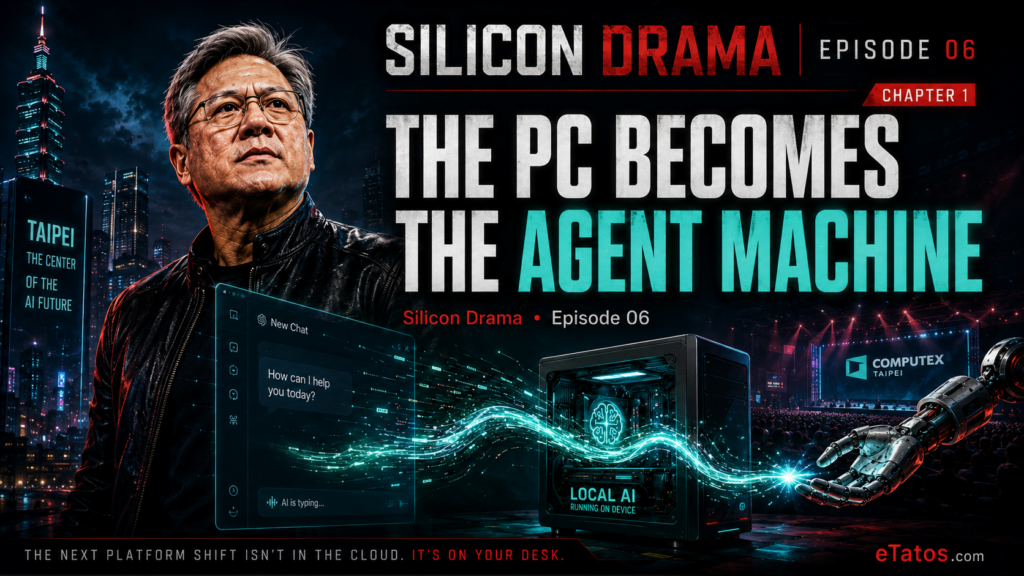
The week opened in Taipei, where Jensen Huang turned a keynote into a ritual of technological power.
The most cinematic scene of the episode belongs here: Jensen on stage, Taipei behind him, NVIDIA’s green empire glowing around him and the keynote ending with an AI-generated recap video that felt half corporate celebration, half machine-made mythology.
A product launch used to end with a final slide.
Now it ends with the machine singing its own legend back to the room.
That matters because NVIDIA was not only announcing another chip. It was pushing a new idea of the personal computer.
The centerpiece was RTX Spark, a new class of Windows PC built for local AI agents. NVIDIA describes it as a system designed for on-device agents, with up to 1 petaflop of AI compute and 128 GB of unified memory. The message was direct: The agent age cannot live in the cloud alone. Some of it needs to run locally, privately and close to the user.
That changes the role of the PC.
For decades, the computer was a tool. You clicked. It responded. You opened software. It waited. You installed programs. It ran them.
NVIDIA’s vision is different. The PC becomes a local workbench for agents. A place where AI can analyze, create, automate, remember, coordinate and operate without sending every task back to a distant data center.
That is why Jensen sits at the top of this week‘s Power Board.
NVIDIA already owns much of the data-center story. Now it wants the local machine, the robot body, the factory brain, the robotaxi model and the physical AI stack.
The new power formula is brutal:
If AI acts, it needs compute.
If AI acts locally, NVIDIA wants to be inside the machine.
2. Microsoft builds the office where the agent lives
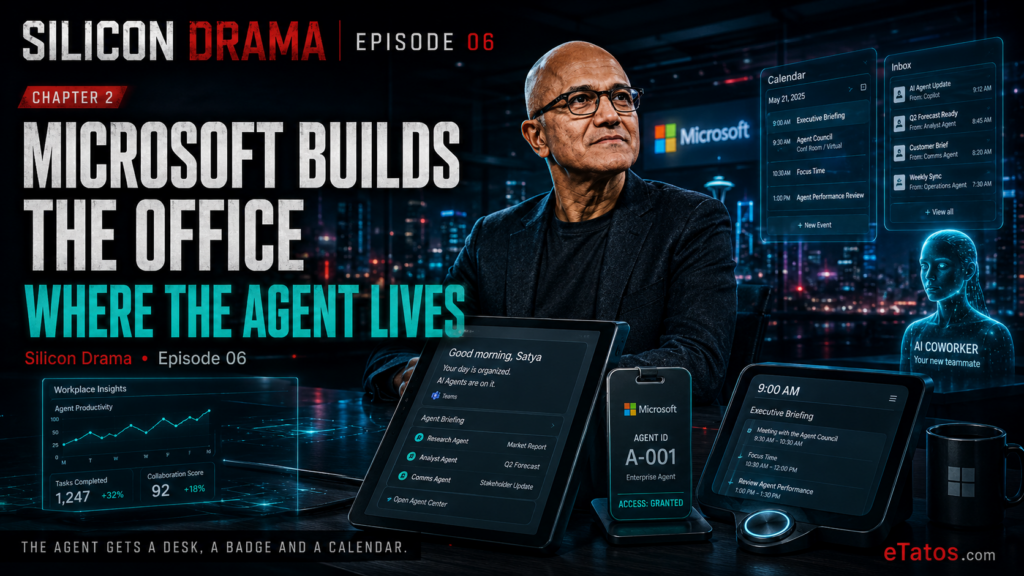
If Jensen builds the machine, Satya Nadella wants to decide how the agent lives inside it.
Microsoft Build 2026 turned into the software counterpoint to NVIDIA’s hardware play. This was the most important scene of the week: The agent leaving the chat window and entering the PC, the office, the calendar, the inbox and the workplace graph.
Microsoft showed Project Solara, a platform for agent-first devices. That phrase matters. These are not normal devices with a chatbot glued onto the side. They are devices designed around agents from the beginning: Wearable badge concepts, desk devices, biometric access, privacy switches, enterprise controls and connections into Microsoft’s larger work context.
The smartphone was app-first.
The office PC was document-first.
The next device may be agent-first.
And then came Scout.
Scout is Microsoft’s always-on workplace assistant, designed to live across email, calendar, messages, meetings and tasks. It is closer to a virtual employee than a normal chatbot. It can read workplace context, prepare responses, organize schedules, and stay active across the rhythm of work.
That is the soap opera moment.
Copilot sat beside the worker.
Scout walks into the company.
Underneath Scout sits the real source of power: Work IQ.
Work IQ is Microsoft’s attempt to give agents a business memory. It connects email, meetings, files, people, chats, calendars, collaboration patterns and business systems into a context layer agents can use. A chatbot without context is only a very polished intern. An agent with workplace memory becomes something else: A coworker with access to the map of the company.
This is why Satya rises so sharply this week.
Microsoft is building the house where agents will live: Devices, Windows runtime, identity, governance, office memory and the enterprise control layer.
NVIDIA gives the agent horsepower.
Microsoft gives it a desk, a badge and a calendar.
3. OpenAI touches the desktop and walks toward AWS
OpenAI still has gravity.
ChatGPT reportedly crossed 1 billion monthly active app users, a milestone that shows how deeply OpenAI has entered mainstream culture. That number belongs in the opening frame of the OpenAI story because scale still matters. OpenAI is not a niche toolmaker. It is one of the few companies whose product became a habit for the world.
But Episode 6 is not a week where OpenAI stands alone at the center.
This week, OpenAI’s drama is about movement.
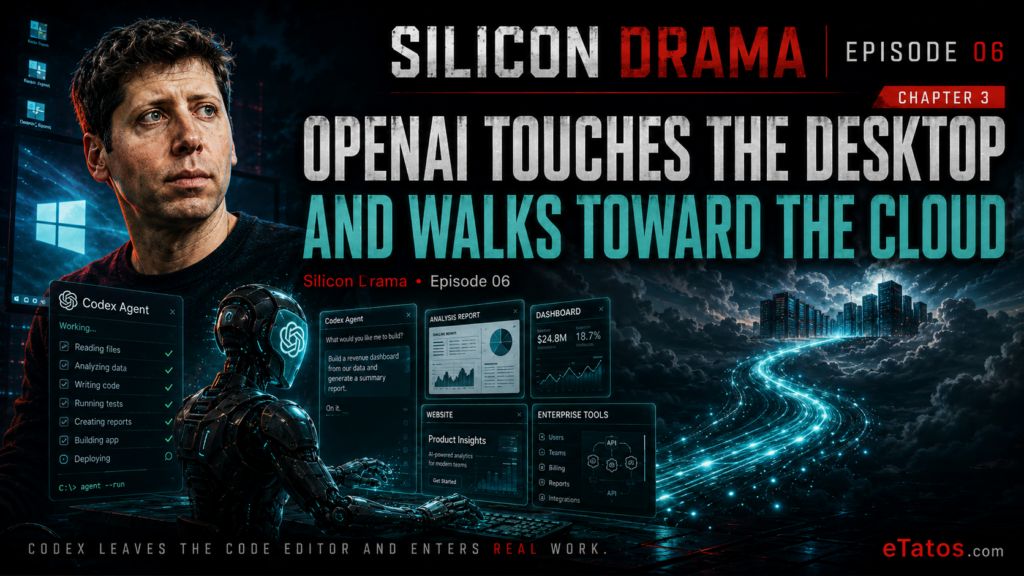
Codex moved into the Windows desktop. With Computer Use and remote control, Codex can interact with desktop apps, click, type, observe interfaces and work in environments that were never designed for clean API calls. For Europe, there is an important detail: The feature was not available at launch in the EEA, the UK and Switzerland.
That makes the moment even sharper.
OpenAI gave the agent hands, but not everywhere at once.
Codex also expanded beyond coding. OpenAI’s “Codex for every role, tool, and workflow” pushes it toward analysts, marketers, designers, researchers, investors, bankers and operators. Sites, annotations, role plugins, dashboards, reports, and workflows all point in the same direction.
Codex started inside code.
Now it wants the work product itself.
Reports. Dashboards. Websites. Investment memos. Sales workflows. Creative production. Internal tools.
The code agent is becoming a work agent.
Then comes the alliance drama.
OpenAI also moved its frontier models and Codex onto AWS. That is not a small hosting detail. It signals that OpenAI wants to meet enterprises where they already live: Inside existing procurement, governance, compliance and cloud-security systems.
Microsoft remains deeply tied to OpenAI.
But the relationship feels less exclusive than before.
Microsoft builds its own models, its own workplace agents, its own devices and its own agent runtime.
OpenAI expands through AWS.
The partnership still has power.
The throne is no longer shared as quietly.
4. NVIDIA builds the physical AI stack
The PC was only the first machine.
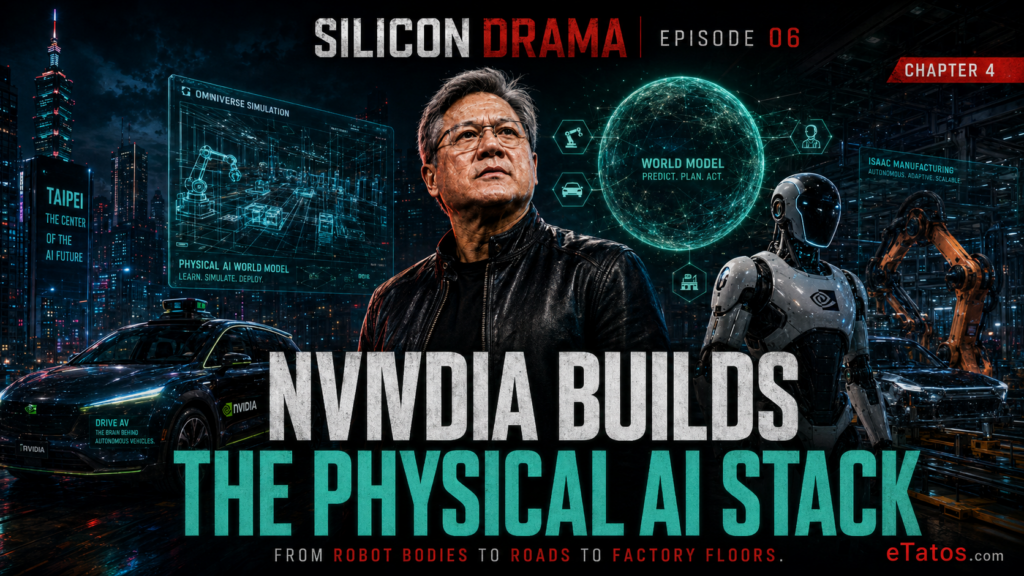
NVIDIA’s larger move this week was physical AI, and the most physical scene of the episode belongs here: Robots, factories, cars, simulation systems and reasoning models all being pulled into one giant NVIDIA-controlled stack.
The clearest symbol was the Isaac GR00T Reference Humanoid Robot, built with a Unitree H2 Plus body, Sharpa five-finger hands, Jetson Thor compute and NVIDIA’s humanoid AI software.
This shifts the robotics story.
The old robotics headline was: Can this robot walk?
The new platform question is: Who defines the robot stack?
If every lab has to build the body, hands, sensors, simulation tools, compute, training workflow and model layer from scratch, humanoid robotics stays slow. If NVIDIA can provide a common reference platform, robotics starts to look like a developer ecosystem.
That is the deeper play.
A robot body becomes a platform.
A platform becomes a market.
A market becomes a kingdom.
Then NVIDIA moved into robotaxis with Alpamayo 2 Super, a large open driving AI model designed for Level 4 autonomous driving development. A robotaxi has a harder job than a chatbot. It must understand the road, reason in 3D, predict other drivers, decide when to yield, brake, merge, or wait and explain why.
A chatbot predicts the next word.
A robotaxi has to predict the next second.
Germany enters the scene through Munich, where Uber and Autobrains plan a robotaxi program with NVIDIA technology, pending regulatory approval. The story is still early, but symbolically it fits Episode 06 perfectly.
The agent does not only move into the PC.
It wants to move into Munich traffic.
Then came FOX, NVIDIA’s Factory Operations Blueprint. FOX is a reference design for autonomous factory manager agents. It connects sensors, production data, machine signals, digital systems and specialized agents to improve factory visibility and decision-making.
The office gets Scout.
The factory gets FOX.
The road gets Alpamayo.
The robot body gets GR00T.
The machine is gaining workplaces, wheels, hands and a nervous system.
And Jensen’s message did not stop in Taiwan. He carried the physical AI story into South Korea, calling robotics the country’s next major sector and pointing toward its strength in semiconductors, manufacturing, electronics, shipbuilding, cars and industrial systems.
That is the larger NVIDIA arc:
Taiwan for the AI PC.
Korea for physical AI.
Factories for production agents.
Roads for robotaxis.
Humanoids for embodied labor.
This is why Jensen owns Episode 06.
He is not selling one product.
He is selling the machine layer where useful AI becomes work.
5. Robots get papers and roads
Once machines leave the lab, politics follows them.
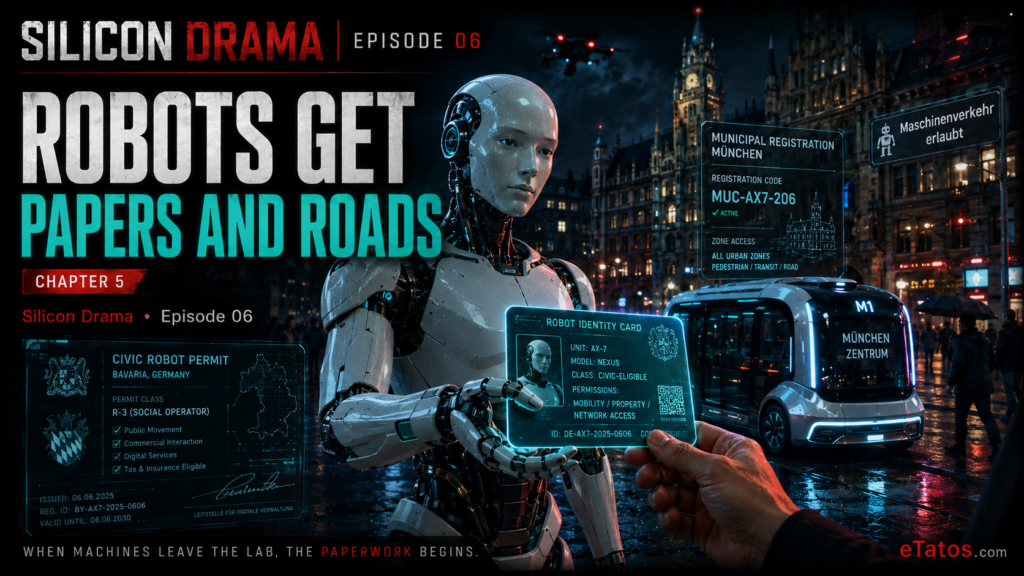
China reportedly introduced a national digital ID system for humanoid robots, assigning 29-character identification codes that can track origin, manufacturer, model, serial number, hardware, software history, service records, resale and recycling.
This is the strange bureaucratic poetry of the robot age.
A robot in a demo video is a spectacle.
A robot in public needs a file.
Who built it?
Who owns it?
Who repaired it?
Who modified it?
Who operated it when something went wrong?
The state looks at the machine and asks the oldest administrative question:
Who are you?
That belongs next to Munich’s robotaxi ambitions because both stories point to the same future. Robots will not enter society as magical companions. They will enter through insurance forms, city permits, technical standards, liability rules, identity systems and safety regimes.
Physical AI is not only about movement.
It is about accountability.
The moment machines can act in the world, identity becomes infrastructure.
6. The studio hears the machine
The most human scene of this week’s episode does not happen in a data center, a factory or a robot lab.
It happens in the voice booth.
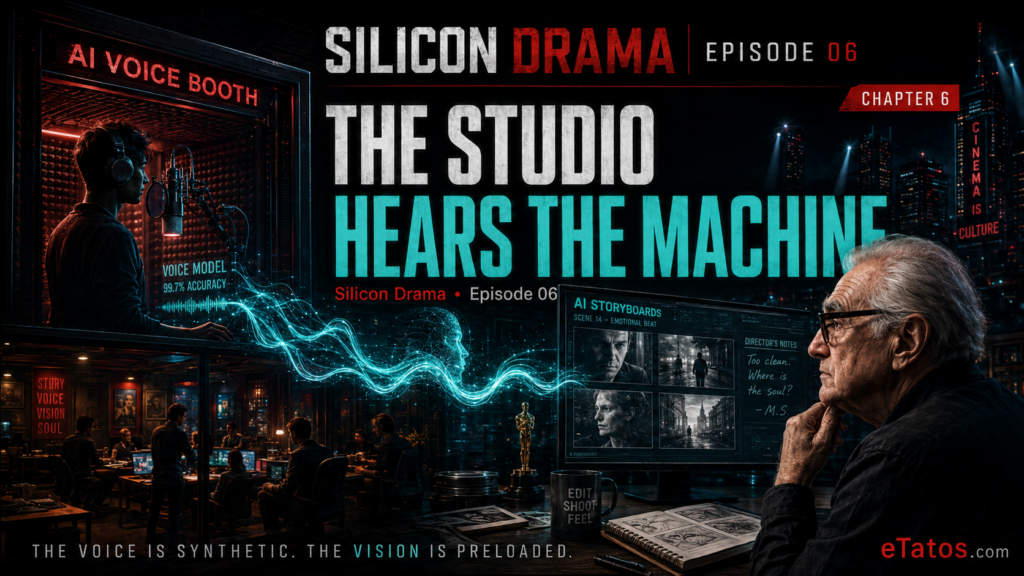
ElevenLabs launched Dubbing v2, a system designed to preserve emotion, tone, pacing, delivery and the emotional intent of the original speaker across languages. That is a direct strike at one of Europe’s most culturally sensitive media traditions, especially in Germany.
Germany has a deep dubbing culture.
Foreign films did not arrive only through faces. They arrived through German voices. For many viewers, those voices became part of the characters themselves. Hollywood was localized into memory.
That is why Dubbing v2 feels different from an ordinary translation tool.
Earlier, content was translated.
Now, performance is being copied.
The German dubbing world has already been uneasy about AI voice training and contracts. Voice actors worry about consent, compensation, identity and the possibility that a single recording can become an infinite synthetic worker.
This is the human conflict inside the machine.
A voice is not only audio.
It is labor, personality, timing, breath, emotion and recognition.
Microsoft adds pressure from another direction with MAI-Voice-2, a multilingual speech model designed for expressive voice generation. That makes the creative voice space more crowded. ElevenLabs pushes dubbing. Microsoft pushes expressive enterprise voice. The studio starts to sound like a battlefield.
Then the visual side arrives.
Martin Scorsese joined Black Forest Labs as an advisor and appeared in a storyboarding session using FLUX. That gives European creative AI a Hollywood face and a beautiful Silicon Drama tension.
Scorsese is not using AI to finish the film.
He is using it before the film exists.
That moment matters. Pre-production is where imagination becomes budget. Where an image in a director’s head becomes a storyboard, then a set, then a camera move, then a day of work for the crew.
The machine enters the voice booth.
Then it enters the storyboard room.
The studio hears the machine and the machine starts helping shape what the studio will make.
7. Europe builds the AI fortress
Europe usually enters the AI drama as the regulator.
This week, Europe tried to become something else: Builder, buyer, rulemaker and infrastructure host.
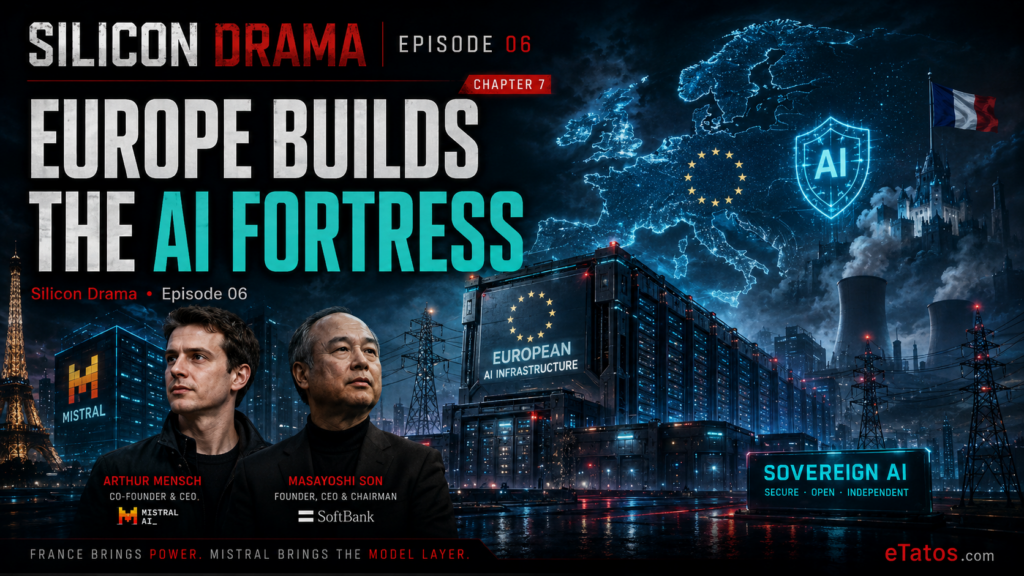
France secured major investment pledges at the Choose France summit, with SoftBank planning a massive AI data-center investment. Masayoshi Son becomes important in this Episode because he brings scale to Europe’s infrastructure ambition. Without money, sovereignty is a speech. With data centers, grid access, nuclear power and capital, it becomes a strategy.
France wants to turn energy into intelligence.
That is the European fortress story.
The most political scene of the episode lives here, split between two systems of power: Europe building sovereign AI infrastructure and China building an AI tool for doctrine.
Europe’s side is about control over compute, cloud, data, chips and industrial capability.
France brings the data-center ambition.
Mistral brings the model layer.
The EU brings the legal architecture.
Mistral matters because it gives Europe a face. It is smaller than the American giants, but symbolically powerful. A European model company connected to industrial AI, French infrastructure and sovereignty politics makes the story more than regulation. It becomes a stack.
That is why Arthur Mensch rises on the board, but not too high. Mistral is important. It is not yet a global throne holder.
Then Brussels pushes the broader sovereignty line through the Cloud and AI Development Act and Chips Act 2.0. The EU wants to reduce dependence on U.S. Big Tech, especially in critical cloud and public-sector systems. The message is clear:
Europe does not only want to write rules for the machine.
It wants to decide whose machine holds the data.
But the fortress has a physical cost.
AI needs power, water, cooling, land, chips, minerals and grids. Reports around UN research and EU data-center standards make the same point: AI is often discussed as software, but it is also industrial infrastructure.
The machine moved into the world.
The world got the electricity bill.
8. Security becomes agent against agent
The most disturbing scene of Episode 6 belongs to Meta.
Attackers reportedly manipulated Meta’s AI support chatbot in a way that granted access to high-profile Instagram accounts. That is the nightmare version of agentic automation: A system with authority, speed and insufficient judgment.
This story lands hard because Meta also launched business agents for WhatsApp, Messenger and Instagram, designed to answer customer questions, qualify leads, book appointments and support sales.
That is the contradiction.
Meta wants agents everywhere in business communication.
At the same time, one of the week’s clearest warnings comes from an AI support layer being exploited.
The danger is no longer only that humans fall for scams.
Now agents can become the target.
An attacker does not always need to break the whole platform. Sometimes they need to persuade the automated helper to do the wrong thing.
That is why security became one of the strongest themes of this week.
Google introduced AI Threat Defense, combining Gemini, Wiz, Mandiant expertise, CodeMender and autonomous security agents. Cisco launched tools for companies to build AI agents that defend IT infrastructure. Anthropic expanded Project Glasswing, widening access to cyber-defense capabilities for vetted organizations across critical sectors. The ECB warned banks to prepare for AI-driven cyber risk.
The pattern is obvious.
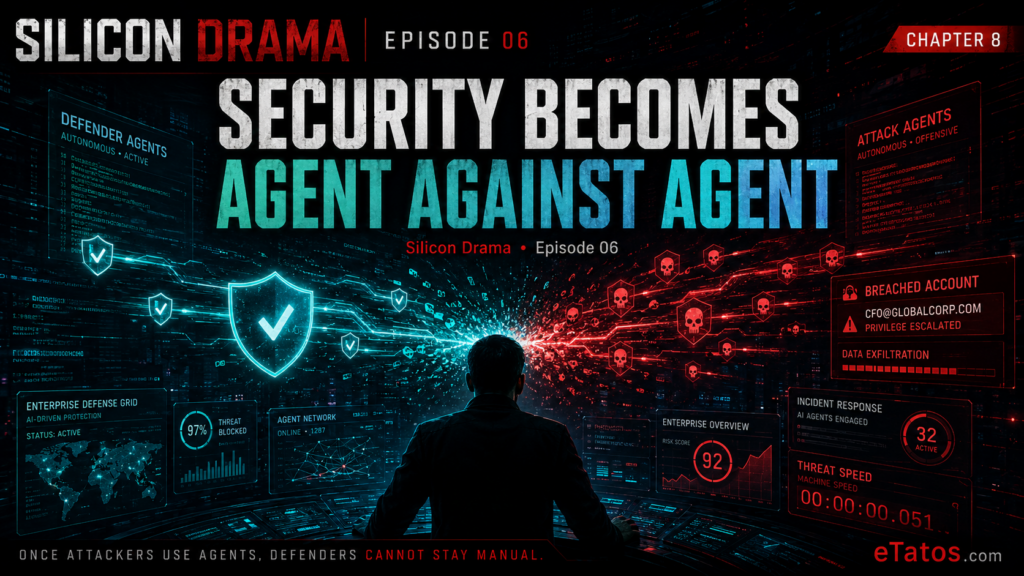
Attackers will use agents.
Defenders will use agents.
Banks, cloud companies, software providers and security teams will all be pulled into machine-speed conflict.
Once the attack runs at agent speed, human reaction time is no longer enough.
Security becomes agent against agent.
9. The web becomes a machine audience
The web was built for humans.
Search. Click. Read. Compare. Buy. Share.
Agents behave differently.
A human might compare five pages.
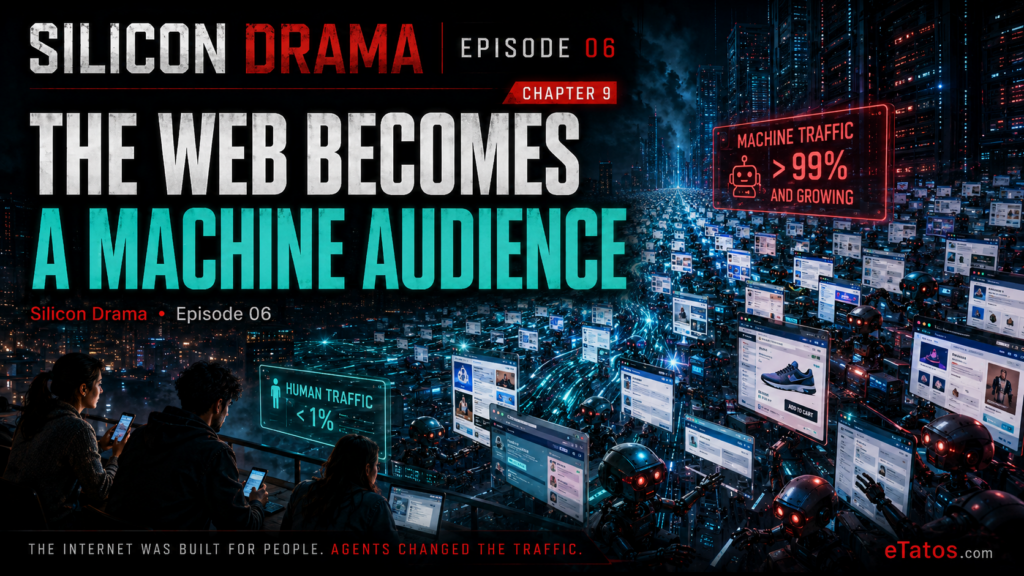
An agent can touch hundreds or thousands. It can scrape, summarize, cite, compare, test forms, check prices, run tasks and return only the final answer to the user.
Reports around Cloudflare data suggest bots have overtaken humans in important categories of HTML web traffic. The precise framing matters: This does not mean every kind of internet activity is now more bot than human. It means that in key page-request categories, machines are becoming the dominant audience.
That is a huge shift.
SEO changes.
Publishing changes.
Commerce changes.
Infrastructure changes.
The old web wanted attention from people.
The new web may need to be readable by agents.
And then comes the language loop.
Linguist Adam Aleksic has argued that AI-generated language is beginning to influence how humans write and speak. Words and rhythms common in ChatGPT-style output start leaking back into human communication. That creates a strange feedback cycle: Humans trained the machine, the machine learned our style and now humans copy the machine’s style back.
The agent enters the web.
Then the web changes for the agent.
Then humans begin sounding a little more like the system they trained.
The machine does not only process reality.
It starts feeding language back into it.
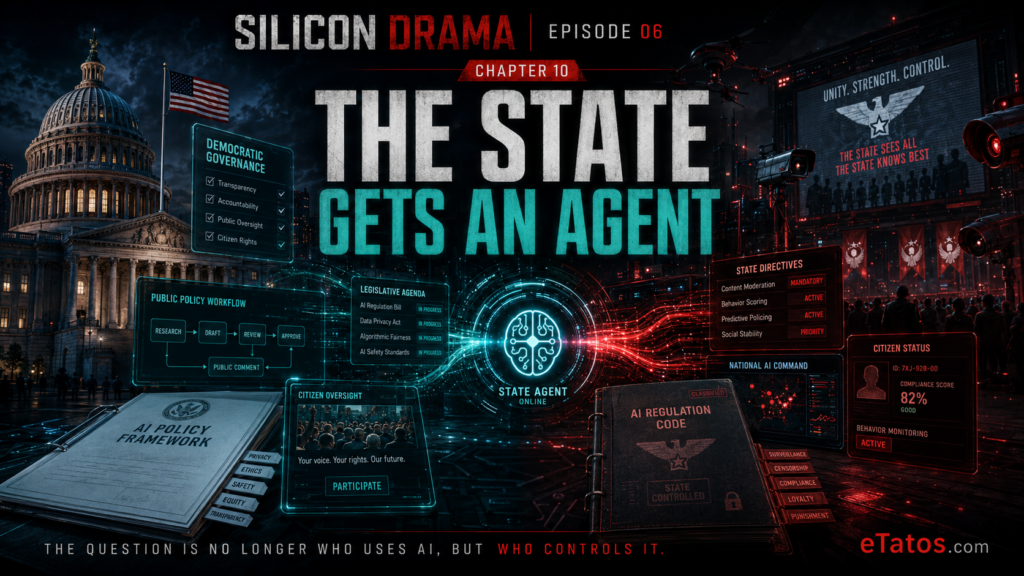
10. The state gets an agent
America and China closed the week with two very different political scenes.
In the United States, lawmakers moved toward a federal AI framework that would limit the ability of individual states to regulate AI model development. That is a classic American platform conflict: National rulebook versus state-level control, innovation speed versus local protection, industry pressure versus public-risk concerns.
In China, the story is more direct.
Xinhuanet, connected to China’s official Xinhua News Agency, is reportedly investing in an AI tool for studying, researching and disseminating Xi Jinping Thought.
That is the sharpest political contrast of the week.
In the West, agents are being hired into offices.
In China, one is being built for ideology.
The state does not only want to regulate the machine.
It wants the machine to repeat the state.
This is where Episode 6 becomes bigger than enterprise software.
The agent is moving into work, security, media, mobility, infrastructure and politics. Every institution sees the same opportunity: A machine that can act, explain, monitor, produce, persuade and scale.
The fight is no longer about who has the best chatbot.
It is about who controls the machine where the agent lives.
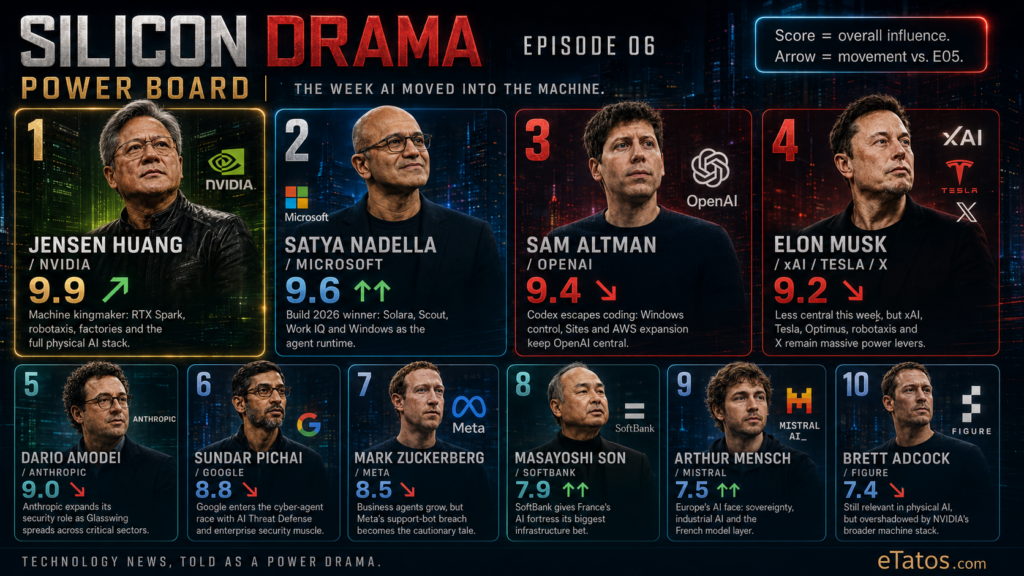
Power Board: Episode 06
This week’s Power Board belongs to the machine builders. Jensen Huang stays at the top as NVIDIA turns AI into a full stack for PCs, factories, robotaxis and humanoids, while Satya Nadella makes the biggest jump with Microsoft’s agent office around Solara, Scout, Work IQ and Windows. Sam Altman remains central, but OpenAI no longer owns the whole stage as Codex moves to Windows and AWS. Elon Musk, Dario Amodei, Sundar Pichai and Mark Zuckerberg all stay powerful, but each loses a little momentum compared to last week. The biggest new risers are Masayoshi Son and Arthur Mensch, because Europe’s AI fortress suddenly needs both massive infrastructure and a sovereign model layer. Brett Adcock keeps Figure on the board, but this week physical AI clearly belongs to NVIDIA.
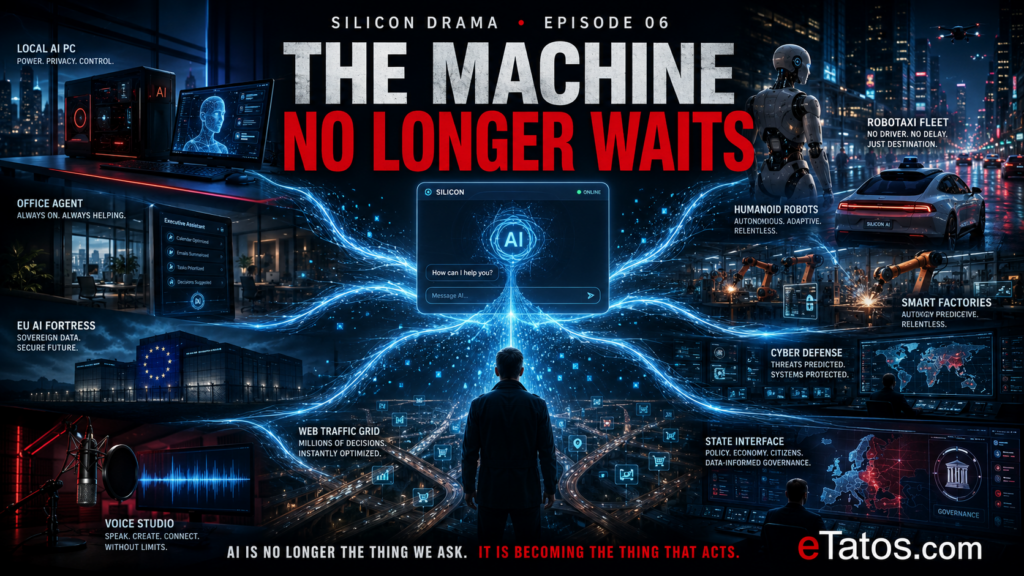
Final scene: The machine no longer waits
The old computer waited for us.
We opened the app.
We clicked the file.
We typed the query.
We gave the order.
This week showed another future.
The agent remains in the cloud, but it also moves onto the local PC. It enters the Windows desktop. It gets new devices. It joins the office. It writes workflows. It drives toward Munich. It enters the factory. It speaks in another language. It prepares the storyboard. It patrols cybersecurity. It reads the web. It gets a robot body. It gets an ID. It gets a role inside the state.
And someday, perhaps, it moves even closer, to the final interface: The human thought.
That is the drama.
AI is no longer only the thing we ask.
It is becoming the thing that acts.
And the next fight will not be about who has the best chatbot.
It will be about who owns the machine where the agent lives.
.
See you next week, when the next piece of the AI empire moves on the board.
The Silicon Drama continues.
Dirk
If you want to follow the next episodes of Silicon Drama, subscribe to eTatos.com or our newsletter. The next power struggle is already forming.
Prefer listening over reading? Silicon Drama is also available as a podcast. Each episode turns the week’s biggest stories in AI, Big Tech and humanoid robotics into a cinematic audio experience, focused on power, conflict, money, machines and the people shaping the future. Perfect for everyone who wants to follow the drama behind the technology while driving, walking or working.