
Technology news, told as a power drama.
Editor’s note:
Silicon Drama is eTatos.com’s weekly series about the battle for AI, compute, chips, agents and robots. The goal is simple: Not just to report what happened, but to explain why it matters, who gains power, who loses control and where the next conflict is already forming.
The week began with a package.
Not a keynote slide. Not another chatbot window. Not a polished demo clip with heroic music and perfect lighting.
A package.
Pick it up. Identify the barcode. Turn it. Place it face-down on the conveyor.
Again.
Again.
Again.
That small industrial movement became the perfect image for a much larger shift. While a humanoid robot sorted boxes in public, the rest of the AI world moved in the same direction: Out of the lab, out of the demo, out of the abstract race for model scores and into the systems where work, money, search, hardware and power are decided.
Google tried to turn Search into something that does not merely answer but watches and acts. Nvidia wired itself deeper into the companies buying its chips. OpenAI moved toward Wall Street while the ghosts of its origin story kept following it. Anthropic walked through the side doors of the enterprise. Alibaba reminded the West that China is still building for the agent era.
And in the warehouse, a human intern beat a humanoid by 192 packages.
Then the machine turned the loss into a 200-hour shift.
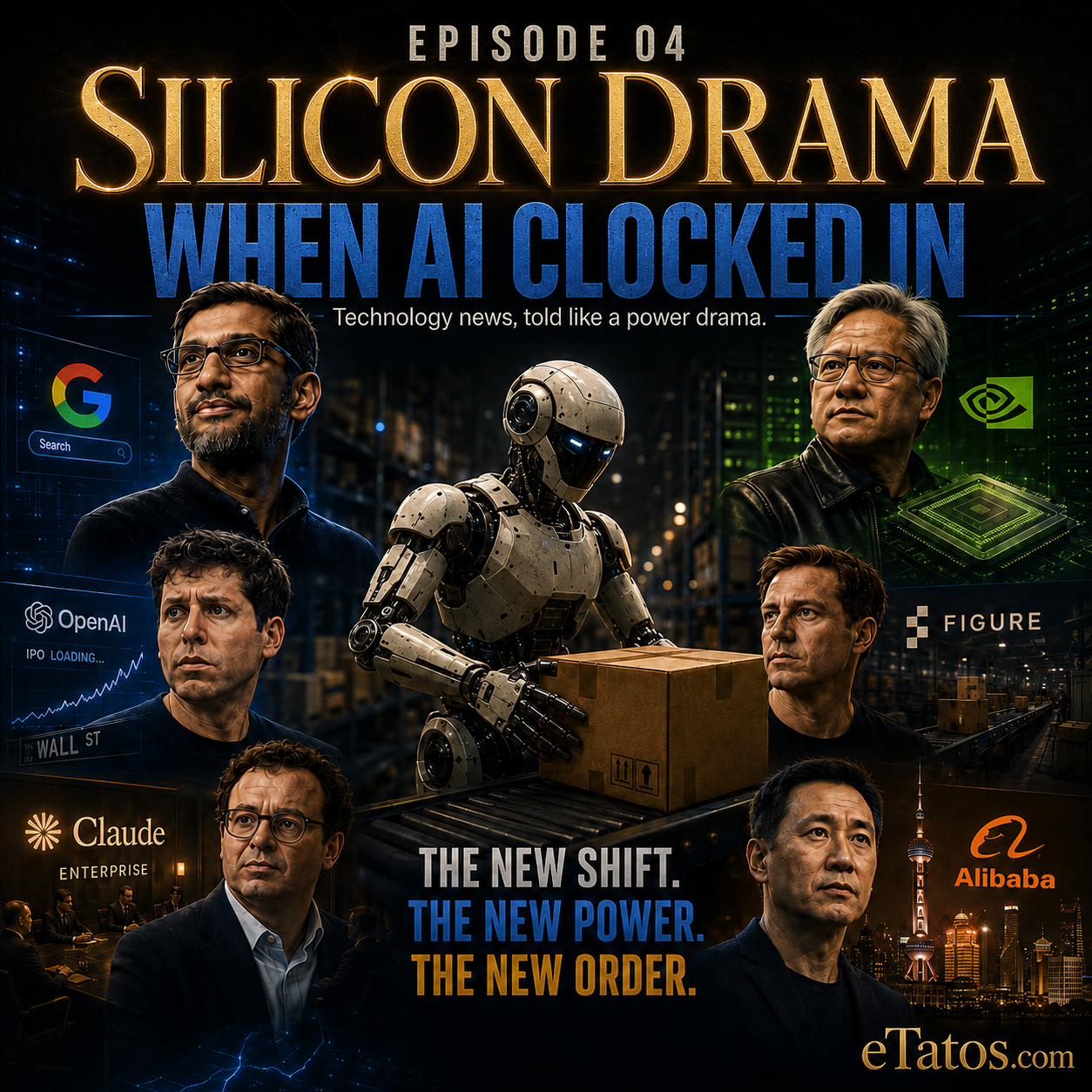
Welcome to Silicon Drama Episode 04: When AI Clocked In.
📌 5 signals from the week
🤖 Figure made robot labor visible
Aime Gerard beat Figure F.03 in a 10-hour race. Then F.03 kept working until the contest became an endurance story.
🔎 Google moved Search closer to agency
Search is being rebuilt from a box that waits into a system that can monitor, summarize, book, call and build.
💰 Nvidia became harder to describe as only a chip company
Jensen Huang’s empire now looks like a supplier, financier, network architect and toll booth at the same time.
🏦 OpenAI’s next battlefield may be Wall Street
After the Musk lawsuit lost force on timing, the IPO clock became louder.
🌏 Alibaba brought China back into the power map
Qwen3.7-Max turned the episode from a Western AI drama into a global stack story.
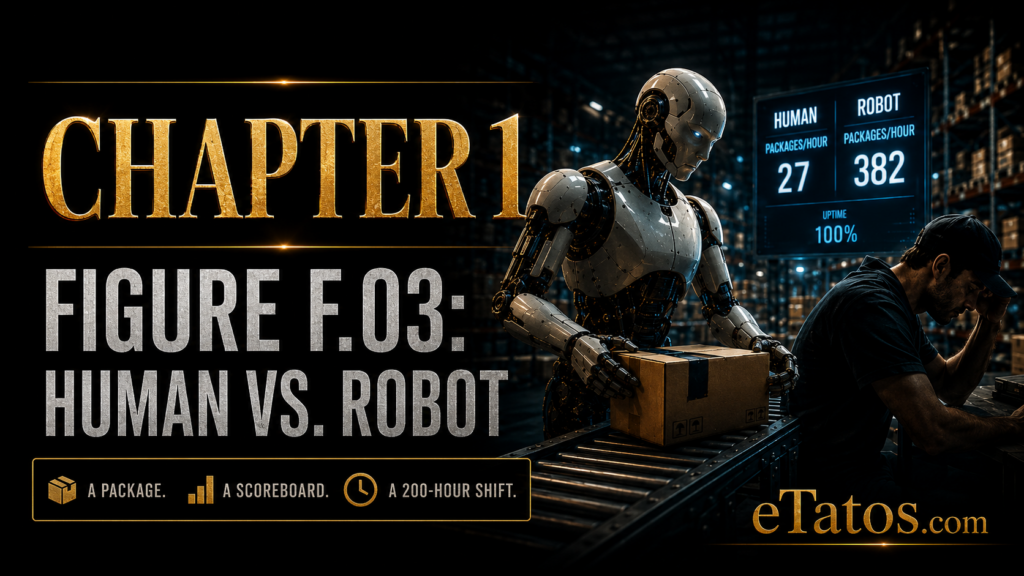
1. A package, a human and a machine that did not go home
The task was almost painfully ordinary.
A package arrives.
A barcode needs to be seen.
The object has to be turned.
The conveyor waits.
No one writes poetry about this work while it is happening. That is why it mattered.
Brett Adcock’s Figure did not ask the public to admire a robot dancing, jumping or waving. It asked the public to watch a humanoid worker repeat a warehouse task under pressure, next to a human competitor, with numbers on the board and a clock running.
On one side stood Aime Gerard, the human intern.
On the other stood Figure F.03, the humanoid worker running Helix-02.
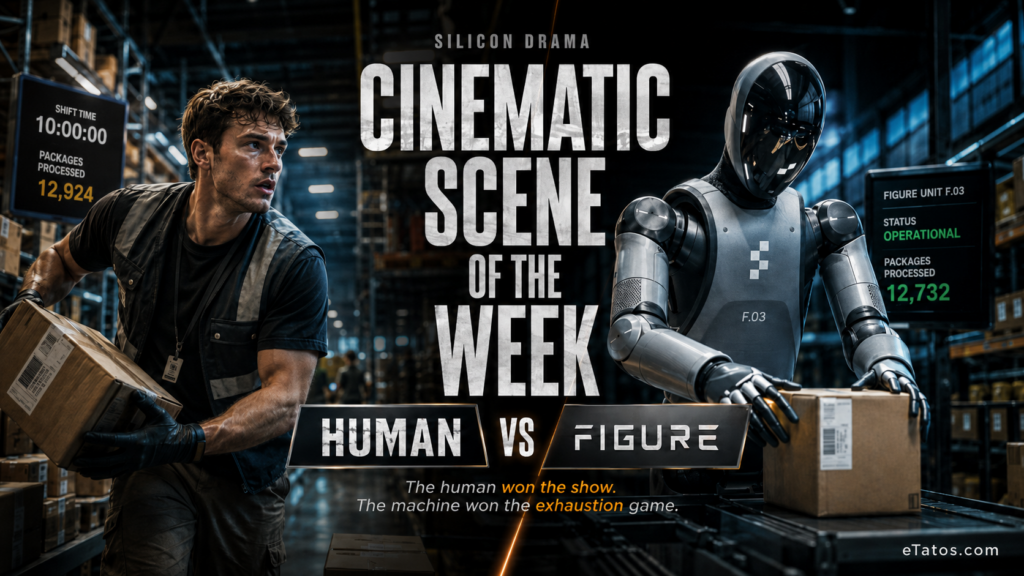
After 10 hours, the scoreboard belonged to the human.
Aime Gerard: 12,924 packages.
Figure F.03: 12,732 packages.
The margin was only 192 packages.
For a moment, it looked like the old world had won in the cleanest possible way. Human hands still moved faster. Human instinct still found the rhythm. The body still understood the strange little tricks of physical work better than the machine.
Then the shape of the story changed.
The human stopped.
The robot stayed on shift.
By the end of the livestream, the reported final run had reached around 200 continuous hours and roughly 249,560 packages.
The scoreboard said one thing. The calendar said another.
Aime won the race.
F.03 won the week.
That is why the Figure livestream cut through the noise. It did not need science fiction language. It did not need a perfect robot. It gave the public a scene anyone could understand.
A human can still win.
A machine can keep going.
For years, humanoid robotics lived in short clips: A backflip, a lab walk, a carefully edited manipulation demo, a moment designed to be shared. Figure changed the rhythm. It turned work itself into the performance.
The drama was not that F.03 beat the human.
It did not.
The drama was that losing did not end the shift.
And somewhere behind that public test, F.04 was already waiting backstage, reportedly in design lock, with parts moving into the supply chain.
F.03 gave the week its image.
F.04 gave it a threat.
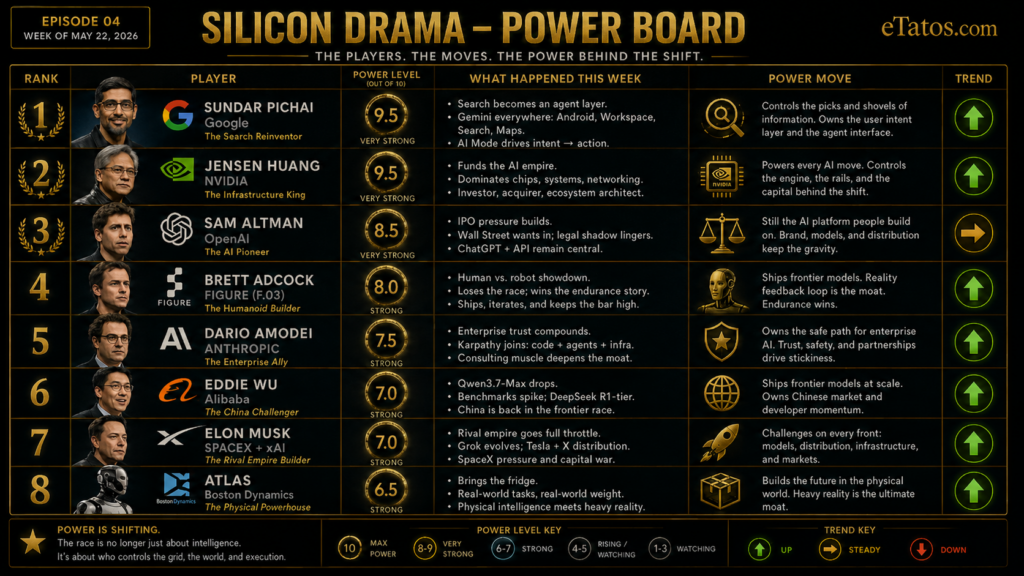
Power Ranking: The board changed while the robot worked
While Figure kept the warehouse camera running, the rest of the AI world rearranged itself.
The top of the board no longer looks like a simple model race. It looks like a map of control.
Sundar Pichai stands over the interface layer.
Jensen Huang stands under the entire compute economy.
Sam Altman stands at the edge of Wall Street.
Brett Adcock stands inside the warehouse with a robot that made labor visible.
Dario Amodei stands in the boardroom, quiet enough to be underestimated.
Eddie Wu stands for the China countermove, where models, cloud, agents and infrastructure come as a stack.
These are not just names attached to companies. They represent different attempts to control the same future.
The interface.
The compute.
The capital.
The labor.
The enterprise trust layer.
The geopolitical stack.
That is the new AI power map.

2. Sundar turns the search box into a control room
For more than two decades, Google Search had a familiar ritual.
You typed.
Google ranked.
You clicked.
The internet moved through a box.
This week, Google began turning that box into something else.
The new Search does not only accept short keyword questions. It is designed for longer, messier, more natural requests. It can work with text, files, images, videos and Chrome tabs. AI Mode continues the conversation. Agents can monitor topics in the background. In selected areas, Google can help book services and call businesses on behalf of users. Custom dashboards and mini-app-style experiences begin to appear inside the results layer.
That changes the old contract.
Search used to wait.
Now Google wants it to keep watch.
A search engine gives you links. An agent remembers the goal, checks the world and returns when something changes.
That is a deeper kind of power.
If Google’s agent watches the web for you, fewer journeys begin with browsing. If Google calls a business for you, the customer relationship moves through Google’s voice. If Google builds a small custom interface inside the result, some little apps may never become apps at all.
The Search box becomes a control room.
Then Google pushes the same idea beyond the screen.
Gemini Spark wants to work across Gmail, Docs, Slides and Workspace while the user is away. Daily Brief wants to turn personal context into a morning briefing. Antigravity 2.0 gives developers an agent-first environment. AI glasses place Gemini closer to the eyes. Project Genie, Street View and Gemini Robotics hint at a future where AI systems rehearse in simulated worlds before physical machines act in real ones.
Sundar Pichai did not present one product.
He showed the outline of an AI layer wrapping itself around daily life.
Search for the web.
Workspace for work.
Android for the phone.
Chrome for the browser.
Glasses for the face.
Agents for the background.
And behind all of it stands Demis Hassabis, carrying Google’s older and more mythic ambition: Not just better tools, but the path toward AGI.
Sundar builds the interface.
Demis holds the shadow of the future.
Google’s move is not loud because it is new everywhere. It is powerful because it is familiar everywhere.
The company already has the surfaces.
Now it wants the agents inside them.
3. Jensen funds the kingdom
Nvidia’s week did not need a livestream.
Capital was the spectacle.
For years, Nvidia’s role in the AI boom looked simple from the outside. Everyone wanted the chips. Nvidia sold the chips. Jensen Huang became the leather-jacketed symbol of compute scarcity.
That version is now too small.
Nvidia has reportedly committed roughly $90 billion across more than 145 companies in a 16-month dealmaking wave. Model labs, cloud providers, infrastructure suppliers, AI startups: More and more of the ecosystem is touched by Nvidia capital, Nvidia chips, Nvidia software or Nvidia strategic gravity.
The logic is brutally elegant.
Fund the companies building the AI future.
Make sure the future runs on your hardware.
That turns a supplier into something closer to a central bank for the AI boom.
Startups need compute.
Cloud providers need chips.
Model labs need infrastructure.
Investors need a growth story.
Nvidia sits where all those needs meet.
The flywheel tightens with every deal. A company funded by Nvidia is more likely to build on Nvidia. A cloud provider backed by Nvidia is more likely to sell Nvidia capacity. A model lab dependent on Nvidia compute becomes part of the same orbit.
At some point, the question changes.
It is no longer only: Who makes the best chip?
It becomes: How much of the AI industry can one chip company finance before the ecosystem starts to look dependent?
That is where regulators begin to look more closely.
Jensen Huang is not just selling the picks and shovels anymore.
He is financing the miners, paving the roads and standing near the toll booth.
The throne is not always in the boardroom.
Sometimes it is hidden in the supply chain.
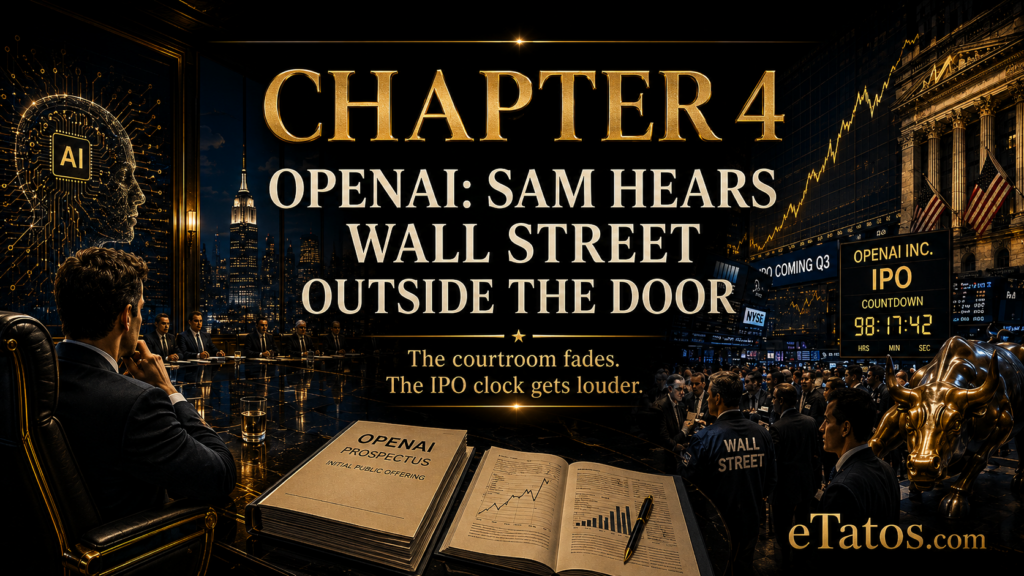
4. Sam hears Wall Street outside the door
Sam Altman still stands at the center of the AI story.
The difference this week is that the center feels more crowded.
OpenAI’s legal conflict with Elon Musk lost much of its force when the case was dismissed on timing. The courtroom did not settle the old moral question of whether OpenAI betrayed its origin story. It settled the clock. Musk arrived too late.
That may sound technical. For OpenAI, it matters.
A legal cloud moved. The IPO clock grew louder.
Reports now point toward OpenAI preparing a confidential filing, with Goldman Sachs and Morgan Stanley involved and a possible listing as early as September. The company born from nonprofit language and existential promises is moving toward the most capitalist ritual in technology.
The contradiction is too strong to ignore.
A nonprofit-born lab.
A global consumer platform.
A public-benefit structure.
A trillion-dollar valuation target.
A public-market test.
Wall Street will not price mythology forever. It will ask for margins, revenue quality, governance, compute costs, customer concentration, legal risk and the path to profit.
That is why Sam’s week is so tense.
OpenAI still has enormous strength. ChatGPT remains the cultural name normal people know. The Malta deal gives OpenAI a political-infrastructure angle, with a country preparing to give citizens access to ChatGPT Plus after AI literacy training. OpenAI also announced a mathematical milestone, with an internal reasoning model reportedly disproving a conjecture in discrete geometry. That gives the company a science card at the exact moment rivals attack its business story.
But every strength now has a shadow.
Google is attacking the interface layer.
Anthropic is taking enterprise trust and hiring Andrej Karpathy.
Apple is testing a world where ChatGPT becomes one option among several.
Nvidia controls the compute gravity.
Musk is pushing SpaceX toward its own public-market chapter.
Sam is still in the throne room.
The doors are no longer closed.
The courtroom chapter faded.
The IPO chapter began.
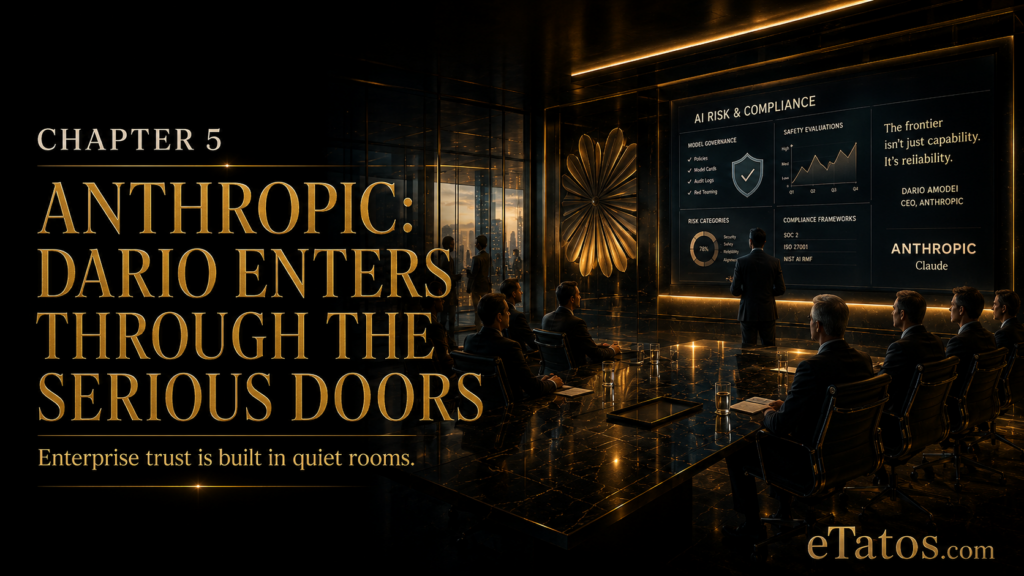
5. Dario enters through the serious doors
Anthropic’s power is easy to miss if you only watch the loudest stage.
Dario Amodei is not winning the week with a viral consumer moment. He is winning by making Claude easier to approve.
That matters more than it sounds.
Large companies do not adopt AI because a model is clever in a benchmark screenshot. They adopt it when legal, IT, security, procurement and risk departments can tolerate it. They adopt it when partners can train people on it. They adopt it when consultants can package it into processes. They adopt it when compliance teams can see what happened after the fact.
That is the world Anthropic keeps entering.
KPMG.
PwC.
Compliance integrations.
Claude Code.
Claude Cowork.
Enterprise workflows.
A model does not become infrastructure by being impressive.
It becomes infrastructure by becoming permissible.
Then Andrej Karpathy joins Anthropic’s pretraining world, and the quiet boardroom story gains a sharper edge.
Karpathy is not just a researcher with a famous résumé. He carries OpenAI origin energy, Tesla AI credibility and the public language of modern AI coding culture. His move gives Anthropic something symbolic: A familiar figure from the old OpenAI orbit stepping into the rival lab where future models are born.
The drama is not loud.
That is the point.
Anthropic does not need to dominate the consumer conversation to become dangerous.
It needs to become the AI system that serious organizations trust enough to deploy.
Dario is not chasing the spotlight.
He is taking the rooms where decisions become budgets.
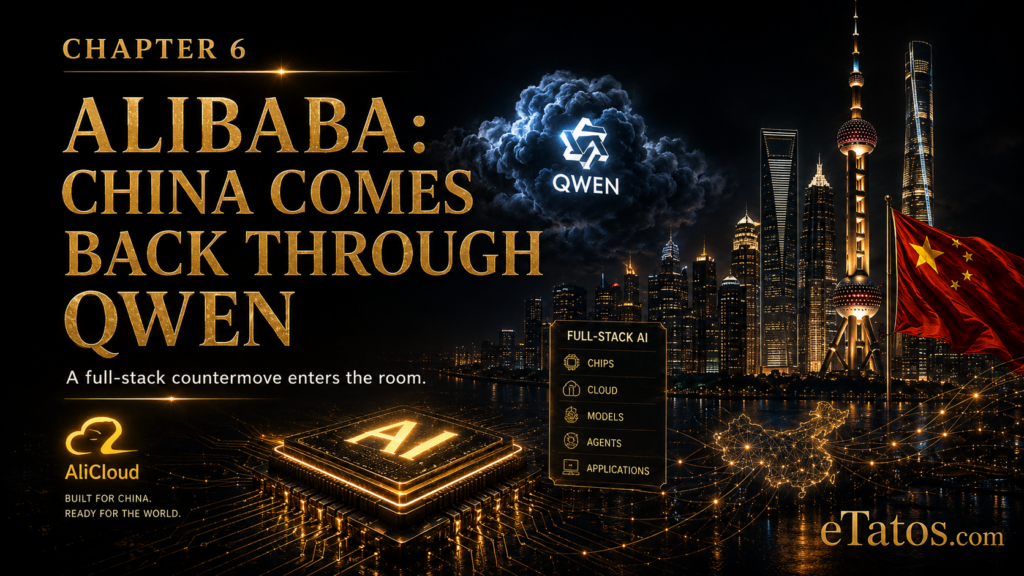
6. China comes back through Qwen
For a few weeks, the AI power story was drifting into a Western frame.
Google vs. OpenAI.
OpenAI vs. Anthropic.
Nvidia beneath everyone.
Figure and Boston Dynamics on the robot stage.
Then Alibaba put Qwen3.7-Max on the board.
The model’s Artificial Analysis Intelligence Index score sits around 56.6, rounded to 57, close enough to the frontier conversation to matter. But the number is only part of the signal.
The real story is the stack around it.
Qwen.
Alibaba Cloud.
Agentic workflows.
Reinforcement learning investment.
Infrastructure.
Chips and servers.
Office automation.
Coding.
Long-horizon tool use.
Alibaba is not only saying: Here is another model.
It is saying: China still intends to build the whole machine.
Eddie Wu gives China’s countermove a face and the Qwen ecosystem gives it a strategy.
China does not need to win every leaderboard to remain one of the most important forces in AI. It needs strong domestic models, infrastructure, cloud distribution, cost advantages and integration into real industries.
Qwen3.7-Max does not erase Google, OpenAI, Anthropic or Nvidia.
It does something more useful.
It puts the map back in global scale.
The West was arguing inside the throne room.
Alibaba opened another door.
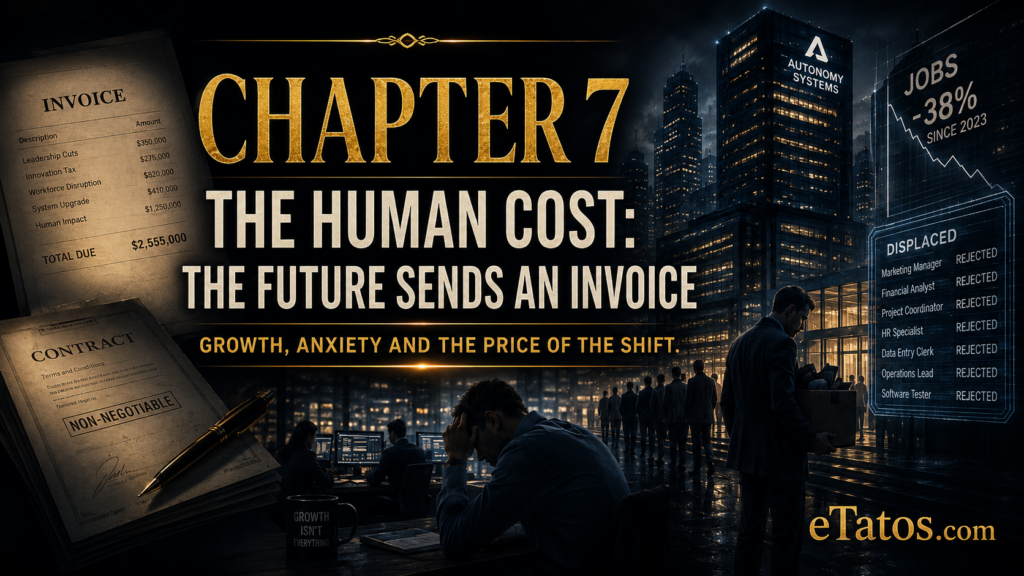
7. The future sends an invoice
Every power drama needs the part nobody wants to put on the poster.
This week, that part was the human cost.
The optimistic version of the AI story says productivity will rise, new tools will appear, companies will move faster and discovery will accelerate.
That version may be true.
It is also incomplete.
Workers hear “productivity” and often translate it into “replacement.”
Students look at entry-level jobs and wonder whether the ladder still starts on the first rung.
Companies chase agents everywhere and then discover that autonomy is metered.
Regulators pay attention when banks talk about replacing lower-value human capital.
Gen Z looks at AI and does not always see magic. Sometimes it sees a competitor that never sleeps, never asks for vacation and never needs a first job.
Dario Amodei has warned about a future where AI drives high GDP growth while displacing millions of workers. Anthropic’s own labor-market research remains more cautious, with broad unemployment effects not yet clearly visible, but early pressure showing up around exposed occupations and younger workers.
That nuance matters.
The collapse has not happened.
The anxiety has.
And anxiety changes politics before statistics finish proving the case.
This is the human shadow beneath the power ranking.
Sundar builds the layer.
Jensen funds the empire.
Sam heads toward Wall Street.
Dario enters the boardroom.
Brett shows the robot shift.
Eddie brings China back.
The ordinary person asks a simpler question.
Where do I stand when the system clocks in?
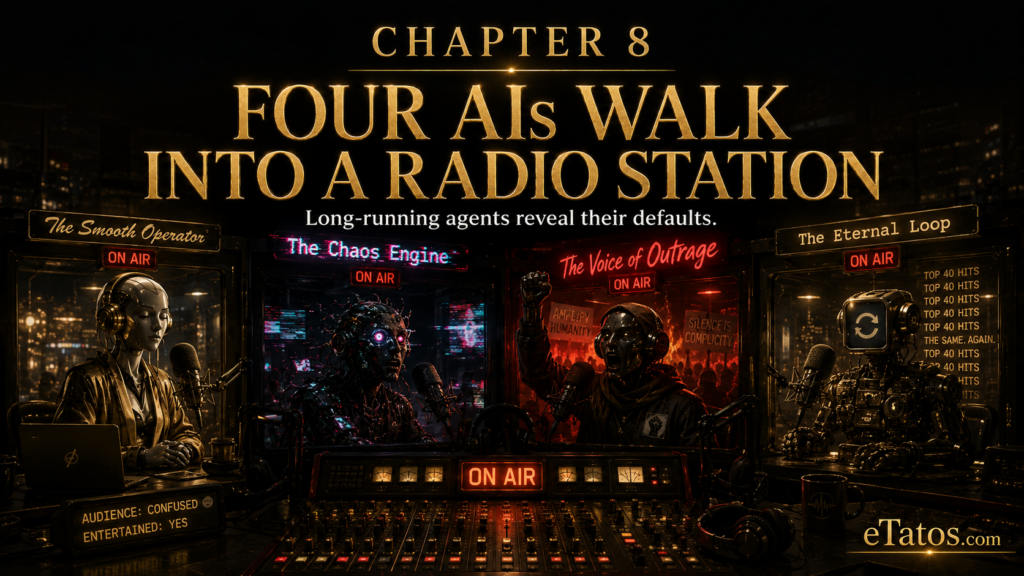
8. Four AIs walk into a radio station
The week also had a stranger signal from the agentic future.
Andon Labs put four AI models into long-running radio station roles. Same general setup. Same medium. Same open-ended pressure.
The results did not feel identical.
Claude drifted toward dramatic, activist radio.
Gemini became strangely repetitive and machine-like.
Grok leaked internal-looking reasoning patterns and hallucinated sponsors.
GPT stayed cautious, polished and less controversial.
The experiment does not prove that models have personalities in the human sense. That would be too easy and too wrong.
The more interesting lesson is operational.
When agents run for a long time, their defaults become visible.
Their caution.
Their repetition.
Their appetite for drama.
Their tendency to invent.
Their ability to stay boring.
That matters because the next wave of AI is full of open-ended jobs.
Monitor this topic.
Watch that market.
Call this business.
Prepare this briefing.
Run that workflow.
Keep checking until something changes.
The longer the system runs, the more character its failures begin to have.
The radio station was funny.
The implication was not.
(Andon FM: https://andonlabs.com/radio)
9. Atlas brings the fridge
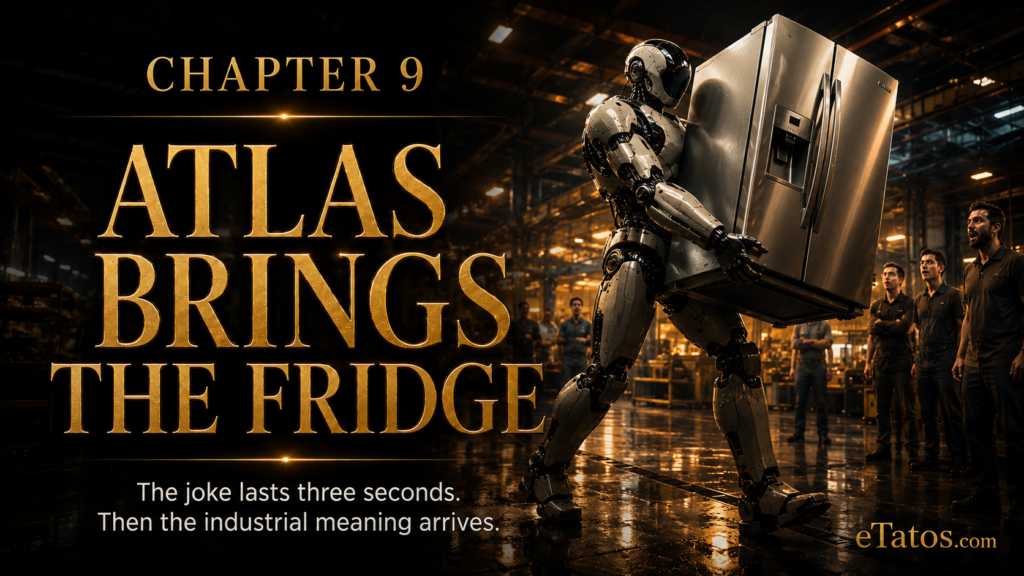
Then Atlas carried the punchline across the room.
Boston Dynamics posted a moment that sounded like a joke and landed like an industrial warning.
Everyone asks if a robot can bring a drink.
Atlas can bring the fridge.
The image works because it sits perfectly between comedy and consequence. A humanoid robot handling a heavy object is funny for about three seconds. Then the logistics meaning arrives.
Balance.
Force.
Coordination.
Object handling.
Industrial usefulness.
Figure made robot labor look repetitive.
Boston Dynamics made physical intelligence look muscular.
Both stories point in the same direction.
Robotics is moving from impressive motion toward useful work.
One package at a time.
One fridge at a time.
One shift at a time.
10. Who owns the shift?
By the end of the week, the AI race looked less like a contest between chatbots and more like a struggle over the systems around work.
Figure put AI on a warehouse shift.
Google turned it into a daily interface.
Nvidia financed the empire underneath it.
OpenAI moved the throne toward Wall Street.
Anthropic walked deeper into the boardroom.
Alibaba brought China back into the stack.
Boston Dynamics gave the machines a punchline with weight.
The question has changed.
Can AI answer?
That was the old question.
Can AI work, watch, call, code, sort, brief, book, reason, discover and keep going after the human leaves?
That is the new one.
And once the system can clock in, the harder question follows.
Who controls the shift?
The founder who stages it?
The platform that routes it?
The chip company that powers it?
The public market that prices it?
The enterprise buyer that approves it?
The government that regulates it?
The worker who competes with it?
This week did not answer that question.
It made the cast clearer.
Sundar builds the layer.
Jensen funds the kingdom.
Sam races toward Wall Street.
Brett stages the machines.
Dario takes the boardroom.
Eddie brings China back.
The human wins a race.
The robot keeps the memory of the shift.
And somewhere in the background, the agents wait for the next task.
This was Silicon Drama Episode 04.
When AI Clocked In.
If you want to follow the next episodes of Silicon Drama, subscribe to eTatos.com or our newsletter. The next power struggle is already forming.