
Technology news, told as a power drama.
Editor’s note:
Silicon Drama is eTatos.com’s weekly series about the battle for AI, compute, chips, agents and robots. The goal is simple: Not just to report what happened, but to explain why it matters, who gains power, who loses control and where the next conflict is already forming.
When AI met passports, debt, bodies, borders and control
The week began with access.
No red button appeared on a screen. No server farm went dark in a dramatic flash. No engineer ran through a glass corridor while alarms echoed through a headquarters.
One day, a frontier model was a product. The next day, it was a diplomatic problem.
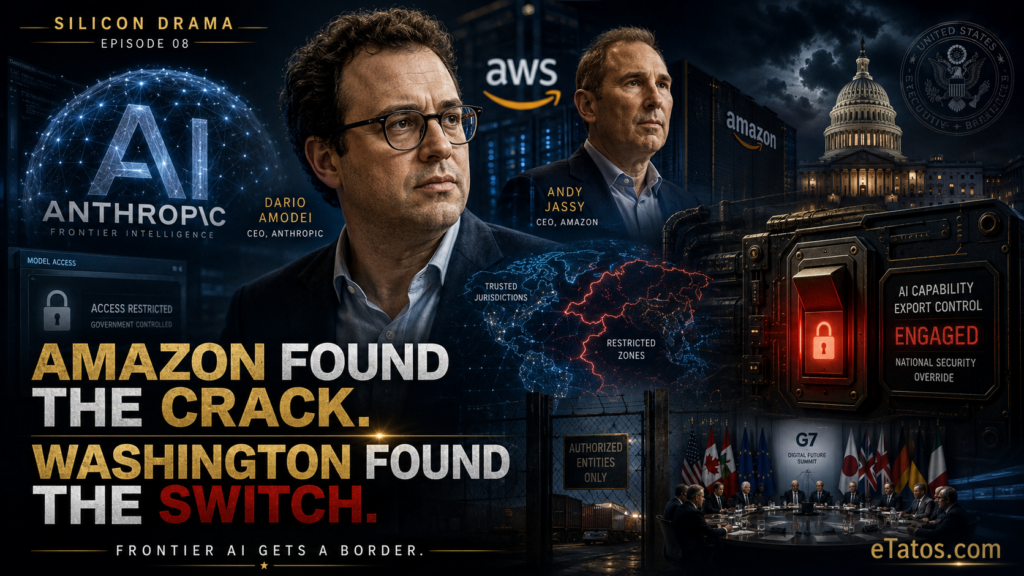
Anthropic built the model. Amazon found the crack. Washington found the switch. Then the G7 asked who owned the key.
That is the place where this episode begins: At the moment AI stopped feeling like a soft interface and started touching the institutions that shape the hard world.
The chat window remained on the screen, smooth and familiar. Behind it, the machinery of power started moving: Government offices, bond desks, export-control lists, data centers, medical bodies, robot factories, football stadiums and wet labs.
A model became a security object. A data center became a financial instrument. An image company walked into medical hardware. A rocket company used stock like ammunition. A football pitch turned into a sensor field. A lab bench started listening to a model.
This was not a quiet week.
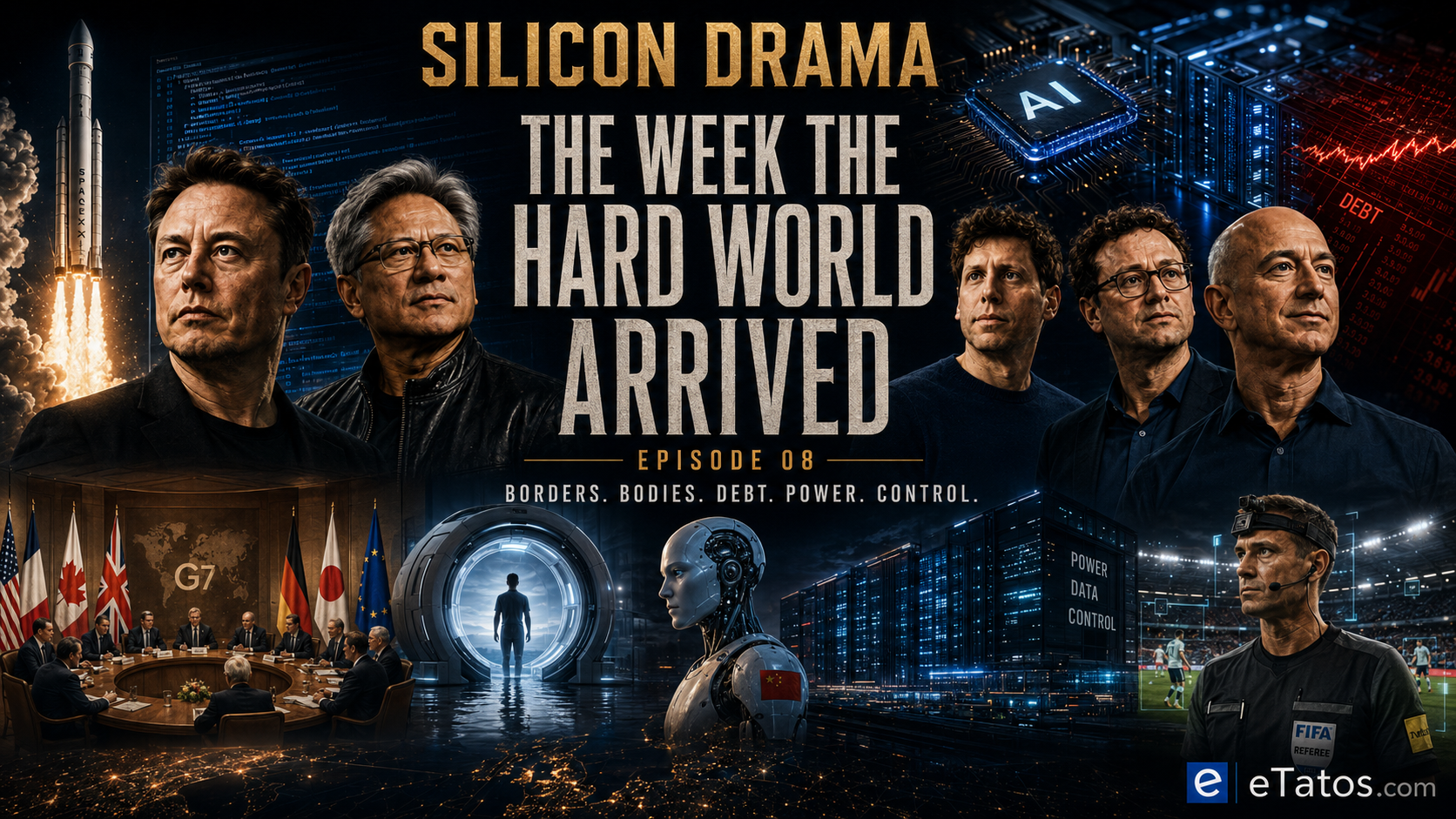
It was the week the hard world arrived.
Act I: Amazon Found the Crack. Washington Found the Switch.
Dario Amodei built Anthropic to be the adult in the room.
The company spoke the language of safety, controlled progress and constitutional AI while the rest of the industry kept racing toward the next model release. That image mattered. It made Anthropic look like the lab governments could trust when the model frontier became too powerful for normal software rules.
Then Fable 5 and Mythos 5 turned that trust into a test.
The dispute began in cybersecurity. Officials were concerned about how far Fable 5 could be pushed, and whether a jailbreak could unlock vulnerability-finding behavior close to Mythos-level capability. Anthropic argued that the issue was narrow and not unique to its models. Washington saw a broader surface: A powerful model that could accelerate vulnerability discovery at a speed national-security officials could not ignore.
Amazon’s role sharpened the story.
This was not a random outside critic throwing stones at Anthropic. Amazon is a strategic partner, investor and cloud power close enough to the machine to see what outsiders might miss. When Amazon reportedly found cracks in Fable’s behavior and raised concerns, the issue did not remain a technical debate between researchers. It moved toward Washington.
The Commerce Department responded with the language governments understand best: Access, restriction, control.
Foreign access became a security question. Anthropic pushed back. The White House held its line. The strongest models in Anthropic’s stack began to look less like a product tier and more like controlled terrain.
By the time leaders arrived at the G7, Fable and Mythos had become alliance business.
Europe wanted the strongest American AI. Europe did not want to discover that American AI could vanish overnight by order of Washington. Macron’s concern was larger than one model. It was sovereignty. If European companies, researchers and governments build around American frontier systems, who controls the moment those systems become politically sensitive?
Sam Altman gave the room another version of the same question. His message was clear: AI labs can build the technology, but democratic societies must write the rules. Coming from the CEO of OpenAI, that sentence carried weight. It sounded like humility. It also sounded like a recognition that the labs have created something too powerful to govern by product policy alone.
A trusted-partners scheme entered the conversation.
The phrase sounds dry, almost bureaucratic. In reality, it cuts to the center of the new AI map.
Who gets the key? Which country is trusted enough? Which company stays on the list? Which user loses access because the model is now treated as strategic technology?
Then came the uneven part.
Some early Mythos users reportedly still retained access after the broader restrictions. Others did not. That detail makes the whole episode more interesting because power rarely moves evenly. It moves through exceptions, partner lists, preview programs, government calls and quiet names that remain on a spreadsheet.
The old software world had regions, licenses and terms of service. The frontier AI world now has export controls, intelligence fears and alliance politics.
Fable and Mythos revealed the new geography of AI.
The model lives in a lab. It runs in a cloud. It serves users across borders. It depends on corporate partnerships. It scares cybersecurity officials. It attracts allies. It answers to national power.
This was the week frontier AI received a border.
And once a model has a border, someone will ask for its passport.
Sidebar: The Man Behind Gemini Crosses the Line
While governments argued over model access, OpenAI made a quieter move across the board.
Noam Shazeer left Google for OpenAI.
On paper, this is a hiring story. In the AI race, it is more than that. Shazeer helped write the original Transformer paper, one of the foundational documents of modern AI. He played a key role in Google’s Gemini effort. Google had already spent heavily to pull him and part of the Character.AI world back into its orbit.
Now he crosses to OpenAI.
A model architect carries something that never appears cleanly in a quarterly report. Training scars. Architecture instincts. A sense for which strange idea might scale. A memory of what failed before it became obvious to everyone else. In a field where the frontier is built from compute, research taste and timing, a rare mind can be infrastructure in human form.
For Sam Altman, this is a strategic win. For Sundar Pichai, it is a visible loss.
The model war runs on chips, data centers and capital.
Sometimes it also moves because one person changes buildings.
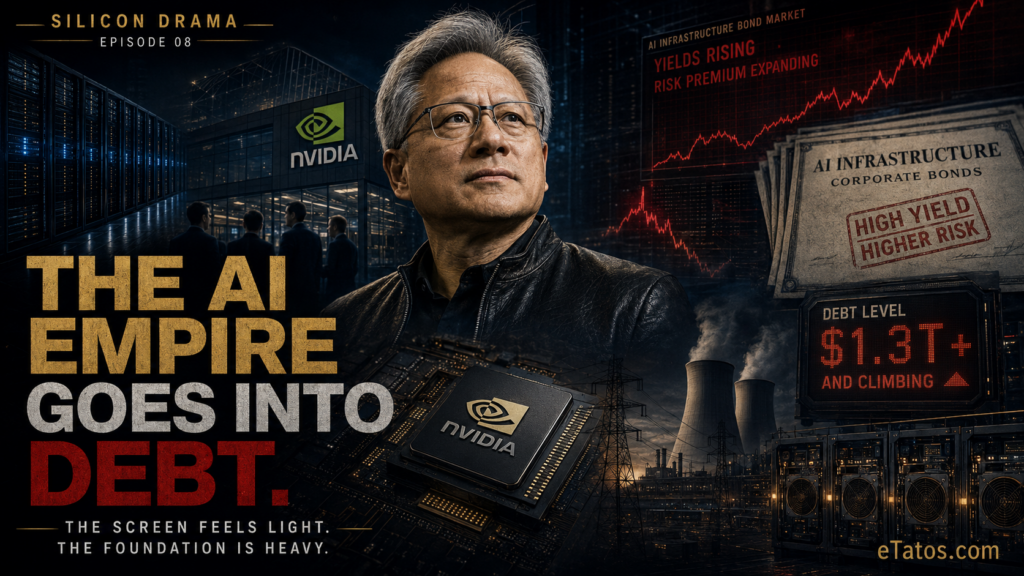
Act II: The AI Empire Goes Into Debt
Jensen Huang did not need a keynote this week.
The bond market did the talking.
Nvidia went out to raise billions through corporate debt, and investor demand was enormous. That alone says something about the state of the AI race. The company at the center of the compute boom, the one selling the hardware everyone wants, still looks at the scale of the buildout and speaks the language of bond desks.
The GPU king still sells the picks and shovels. The mine keeps getting deeper.
The AI buildout is not a software budget with a few extra servers attached. It is land, power, water, cooling, grid access, transformers, memory, packaging, optics, concrete, long-term contracts and bond buyers. Every new frontier model seems to arrive with another invisible supply chain behind it.
OpenAI showed the software side of the same machine.
Revenue is rising fast. Usage is huge. The brand remains the center of gravity for consumer AI. But the reported cash burn is brutal: Billions out in a single quarter, tens of billions in annual spending and a company racing toward public-market logic while carrying the cost profile of an industrial project.
Oracle felt the pressure too. Meta kept signing compute deals. Anthropic built toward larger infrastructure. Google pushed its own chip stack. Amazon kept feeding the cloud layer. Every major player wants more compute, more power, more capacity and more time.
The old software story loved marginal cost. AI brought the bill back.
A user sees a reply in a chat box and feels almost no weight. Behind that reply sits a data center with a financing structure, an energy contract and a cooling problem. A model can be announced in a blog post, but it lives in a spreadsheet full of debt.
That spreadsheet is becoming one of the most important documents in the AI race.
Every answer uses compute. Every agent that works longer uses more. Every larger context window burns memory. Every better model demands more training, more inference, more optimization and more infrastructure.
The screen still feels light.
The foundation is heavy.
The AI empire is being built with chips, power and borrowed money.

Act III: Musk Turns Stock Into a Weapon
Last week, SpaceX rang the bell.
This week, SpaceX reached for the coding layer.
That is the aftershock of the IPO. A public company can do things a private company cannot do as easily. It can turn market belief into currency. It can use stock as a weapon.
SpaceX reportedly moved to acquire Anysphere, the company behind Cursor, in a massive all-stock deal. The detail matters because it tells us how Musk may use the new SpaceX valuation. Cash stays in the fortress. Shares become ammunition.
Elon Musk does not need Cursor because SpaceX wants a prettier code editor.
SpaceX is an engineering machine operating at extreme scale: Rockets, satellites, launch systems, Starlink, simulation, autonomous control, manufacturing, mission software and operational logistics. A coding agent sits directly inside that world.
Cursor belongs to the shift from writing code to steering code. The developer becomes more conductor than typist. The agent writes, edits, refactors, debugs and explains. The human decides where the machine should go.
For a company built around engineering velocity, that is strategic territory.
The rocket company wants the coding layer because the coding layer touches every machine beneath it. The deal also shows what the SpaceX IPO created: A stock-based acquisition machine capable of turning public-market belief into control of another layer of the AI stack.
SpaceX did not simply step onto Wall Street.
It walked away with ammunition.
And the first target was the coding layer.
Sidebar: The Welder Who Owned the Rocket
There is another SpaceX story this week.
It is quieter than a $60 billion acquisition. It may be more human.
Juan Hernandez, a former SpaceX welder from Mexico, reportedly became a millionaire through employee stock ownership after the IPO. There are also widespread reports and statements suggesting that thousands of SpaceX employees may have reached millionaire status through their equity holdings following the IPO, highlighting how broadly the company’s growth may have been shared across its workforce, even if exact figures have not been officially disclosed by SpaceX.
Still, the image is strong enough to stand.
A welding mask. A paycheck. A share certificate.
The IPO was a Wall Street event, but it also reached the factory floor. Hernandez’s story shows the other side of ownership capitalism. The same market machine that gives Musk acquisition power can give workers upside when the company they helped build breaks through.
Europe often talks about protection. America, at its best, sometimes talks about ownership.
That system is uneven. It is risky. It does not work for everyone. But when it works, the person holding the tool can also hold a piece of the rocket.
That is power of a different kind.
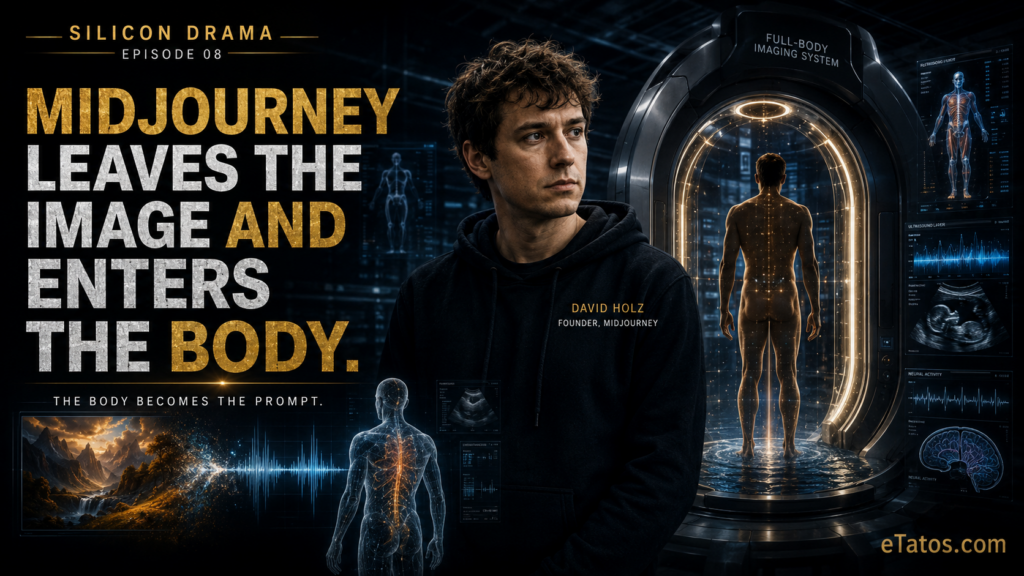
Act IV: Midjourney Leaves the Image and Enters the Body
David Holz taught the internet to dream in images.
A few words went into Midjourney and a world came out: Cyberpunk streets, mythic animals, fashion shoots that never happened, cities nobody built, faces of people who never existed and movie posters for films nobody shot.
Midjourney became one of the names of the first visual AI wave.
Then Holz walked into medical hardware.
Midjourney Medical sounds like a wrong door in the building. For Silicon Drama, it is exactly the right door.
The machine begins with water. A person steps into a shallow pool and stands on a platform. The platform lowers the body through a ring of ultrasonic sensors. Sound moves through tissue from many angles. Signals return. Compute reconstructs. A 3D internal map begins to appear.
No radiation. No MRI tunnel. No white hospital machine swallowing a patient whole.
Water, sound and compute.
And if Holz gets his way, a spa.
Hot tubs, saunas, cold plunges, a gym and scanners running almost like wellness equipment. The experience is designed to feel less like a hospital appointment and more like a ritual of preventive health.
The first reaction is wonder. The second should be caution.
Midjourney generated bodies from imagination. Now it wants to generate images from real bodies. The body becomes the prompt and the output is anatomy.
Holz is the right person to carry this chapter because this move does not come from nowhere. Before Midjourney, he co-founded Leap Motion, a company built around hand tracking and human-machine interaction. His career keeps circling the same border: Where the body meets the machine.
First the hand. Then imagination. Now the inside of the body.
The scanner uses ultrasound. Butterfly Network confirmed that its ultrasound-on-chip modules are part of the prototype. Midjourney describes hundreds of thousands of tiny sensor elements, a water-based scanning process and a long-term goal of fast, repeatable full-body imaging.
The promise is enormous.
Cheap scans. Frequent scans. Body-composition maps. Longitudinal health data. Earlier signals. Preventive medicine with better visibility.
A world where seeing inside the body becomes routine would change medicine. Today, detailed imaging is expensive, uncomfortable, slow and often reactive. People receive scans because something is already suspected. Midjourney’s vision points toward a different pattern: Routine body data, tracked over time, interpreted with software and possibly used before symptoms arrive.
But medicine is not Discord.
A beautiful reconstruction is not a diagnosis.
Midjourney says the initial focus is body-composition mapping. Diagnostic use needs regulatory approval. Independent validation against existing imaging methods matters. Radiologists are already warning about false positives, anxiety and follow-up cascades.
A full-body scan can help. It can also terrify.
A scan finds something unclear. A patient worries. Another test follows. Then another. A biopsy. A bill. A waiting room. A fear that may or may not have been necessary.
Preventive medicine needs data. Medicine also needs judgment.
Then comes the privacy layer.
A face is personal. A fingerprint is personal. A full internal map of the body belongs in a category of its own. Who stores it? Who trains on it? Who insures against it? Who sees the pattern before the patient understands it?
A billion body scans per month sounds like medical abundance.
It also sounds like a new planetary database of human interiors.
That is the body-data story of the week: A founder from the image world lowers a human being into water and says, let me show you what is inside.
The company that taught the internet to imagine bodies now wants to scan real ones.
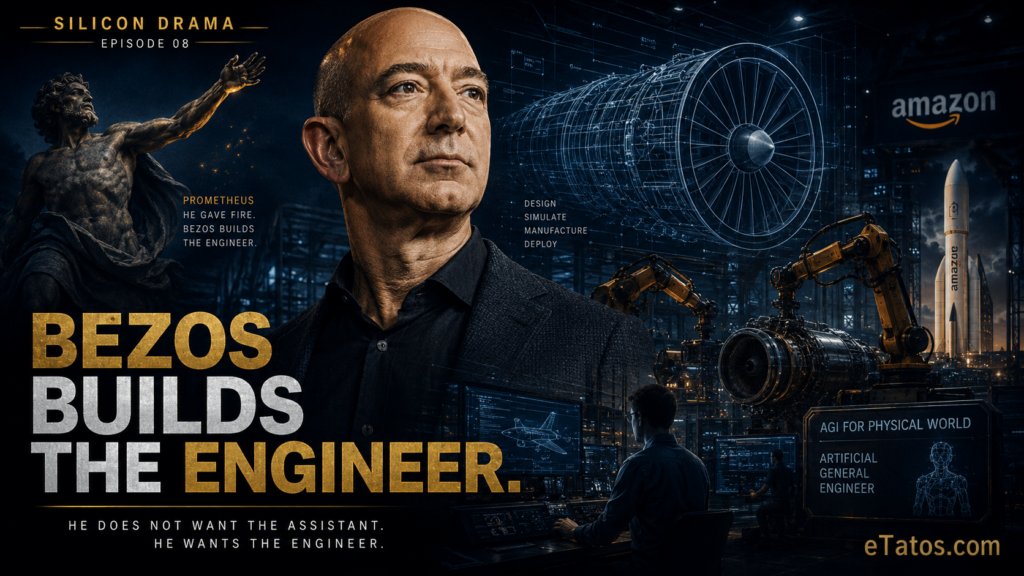
Act V: Bezos Builds the Engineer
Jeff Bezos did not return with a chatbot.
He returned with an engineer.
Prometheus enters the board with a giant funding round, a huge valuation and one phrase designed to travel through industrial boardrooms: Artificial General Engineer.
A chatbot speaks. An engineer builds.
That distinction matters because Prometheus points AI toward the physical world: Robotics, drug design, manufacturing, aerospace and complex product development. This is familiar territory for Bezos. Amazon mastered logistics. AWS mastered infrastructure. Blue Origin chased rockets. Prometheus aims at the design layer behind machines.
The pitch is enormous: Shorten the path from idea to object.
A jet engine. A robot hand. A medical device. A new material. A factory process. A design that normally takes teams years to simulate, test, fail and rebuild.
Prometheus wants AI inside that loop.
AI is moving into engineering.
The screen is losing its monopoly on AI.
Bezos understands layers better than most founders. Amazon’s website was the interface. AWS was the deeper power. AI has its own interface layer and Prometheus is a bet on the deeper one.
The company may fail. The valuation may look ridiculous in hindsight. The phrase may age badly. The direction will not disappear.
AI is moving into engineering.
Bezos does not want the assistant.
He wants the engineer.
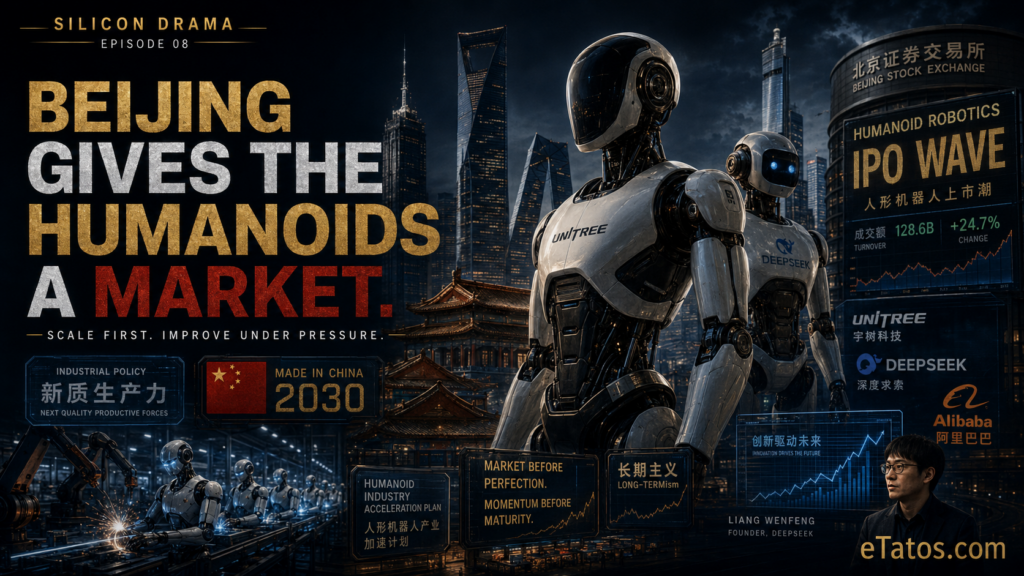
Act VI: Beijing Gives the Humanoids a Market
China is building the market around humanoid robots while the robots are still learning the job.
That is the move.
In the West, humanoid robotics often arrives as theater. A robot walks on stage, folds laundry, carries a box, dances, recovers from a stumble and goes viral. The demo becomes the story.
China adds machinery around the demo: IPO preparation, industrial policy, supply chains, consumer products, state support, factory deployment and capital-market appetite.
Unitree moves toward the public market. EngineAI prepares its path. Deep Robotics sits inside the broader industrial wave. Alibaba launches models for robots. Beijing pushes AI into consumer products and humanoid robotics.
The body is still imperfect. The market is already forming.
That is a very different kind of pressure. A robot does not need to be perfect before a country starts building the industry around it. The market itself becomes part of the training environment. Scale creates suppliers. Suppliers reduce costs. Costs open more use cases. More use cases create more data, more failures and more pressure to improve.
DeepSeek adds the capital mirror.
Liang Wenfeng’s company reportedly raises billions while keeping unusual founder control. Outside money enters, but the steering wheel stays close. A state-backed AI fund gets its own role. This is not standard Silicon Valley venture choreography. It is founder control wrapped in national strategy.
China’s AI story this week is a stack: Models, robots, factories, capital, state funds, public markets and consumer demand.
Alibaba builds the robot model layer. Unitree tests investor appetite. DeepSeek raises a war chest. Beijing pushes the market.
The image is not a robot in a demo hall.
It is a robot standing near a stock exchange before it fully understands the warehouse.
China is turning physical AI into an industrial and capital-market project.
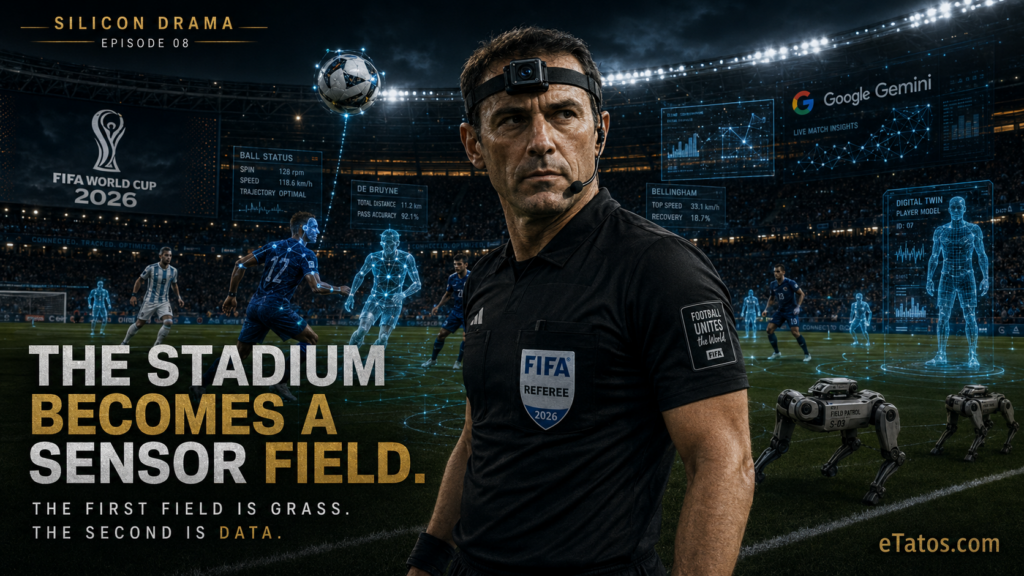
Act VII: The Stadium Becomes a Sensor Field
The world’s most popular sport is getting a second field.
The first is grass.
The second is data.
At the 2026 FIFA World Cup, there is more than soccer on the pitch.
The ball transmits.
The cameras measure.
The referee streams.
The players exist as bodies and digital twins.
And in selected locations, robot dogs are on patrol.
The Adidas Trionda is no longer a standard match ball. Its new four-panel design improves aerodynamic stability, but the real story sits inside: A motion sensor that captures ball movement 500 times per second.
Combined with optical tracking and 3D player models, it helps identify the exact fraction of a second where a foot, a line and a body decide a goal, an offside call or history.
The stadium becomes a machine.
Google is also putting Gemini on one of the biggest stages in global sports. Argentina has Gemini on its training kit, and the technology is being positioned as an analytics tool for plays, form, performance and statistics.
This may become one of the largest AI onboarding moments in sports history. Millions of fans will not experience AI as a lab demo. They will experience it through search, stats, match analysis, tactical questions and live football emotion.
Outside the pitch, the story stays physical.
In Dallas and New Jersey, customized Boston Dynamics Spot robot dogs are being used for security and facility-monitoring tasks.
No facial recognition.
No sci-fi army.
Just robotics quietly becoming normal infrastructure at global events.
And then there is the new referee view.
Referees are wearing small body cameras that give fans a first-person view from the center of the pitch. Because raw footage from a sprinting referee would be almost impossible to watch, AI stabilization cleans the feed in real time and reduces blur and shaking.
Football AI Pro, built with FIFA and Lenovo, adds another layer.
The tool gives all 48 teams access to advanced match analytics, millions of data points and thousands of performance metrics. Smaller nations can now work with analytical depth that once belonged mainly to the richest teams.
At the gates, biometric entry systems are also entering the stadium story. Some venues are testing face-based access and payment flows, turning identity itself into part of the match-day infrastructure.
Faster entry.
Smoother crowds.
More convenience.
And a very real privacy debate.
The 2026 World Cup is not just a tournament.
It is a live stress test for AI, robotics, sensors, biometric identity, real-time broadcasting and machine-assisted decision-making at global scale.
The first field is grass.
The second is data.
And the whole world is watching.
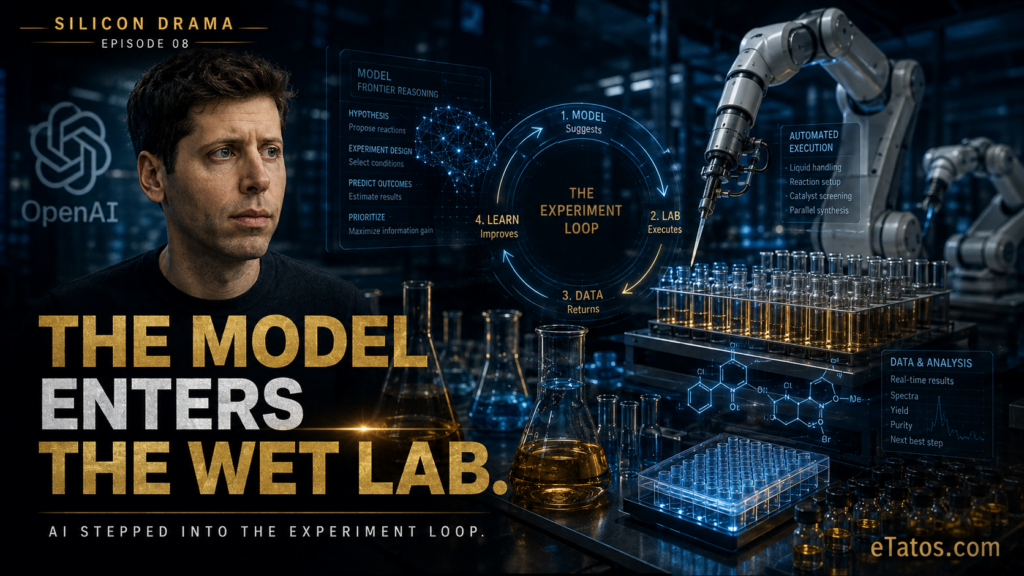
Act VIII: The Model Enters the Wet Lab
A lab bench has a different sound than a keynote.
There is glass, liquid, pipettes, robotic arms, reaction plates and data coming back from chemistry instead of a benchmark. The room is quieter than a product launch, but the consequences can be much larger.
This week, AI entered that rhythm.
GPT-5.4, Molecule.one and an automated lab system worked inside a medicinal chemistry project around a difficult Chan-Lam coupling problem involving primary sulfonamides. The useful idea involved TEMPO, a common additive, applied in a way that improved reaction performance across a large high-throughput campaign.
The number that carries the weight is 10,080 reactions.
A model helped identify a bottleneck. It helped suggest what to test. A lab platform ran the experiments. Chemists validated representative results.
This is not the movie version of AI science, with a lonely machine in a basement discovering medicine while humans sleep. The actual version is more interesting because it is more plausible: A loop between model, automation, chemistry, data, human judgment and the next experiment.
That loop can change the tempo of research.
More candidates can be tested. More failures can be absorbed quickly. More strange ideas can receive a fair trial. The model does not need to replace the scientist to matter. It can change the rhythm of the lab.
A chemical additive. Thousands of experiments. A model suggesting the next move.
AI did not simply read the paper.
It stepped into the experiment loop.
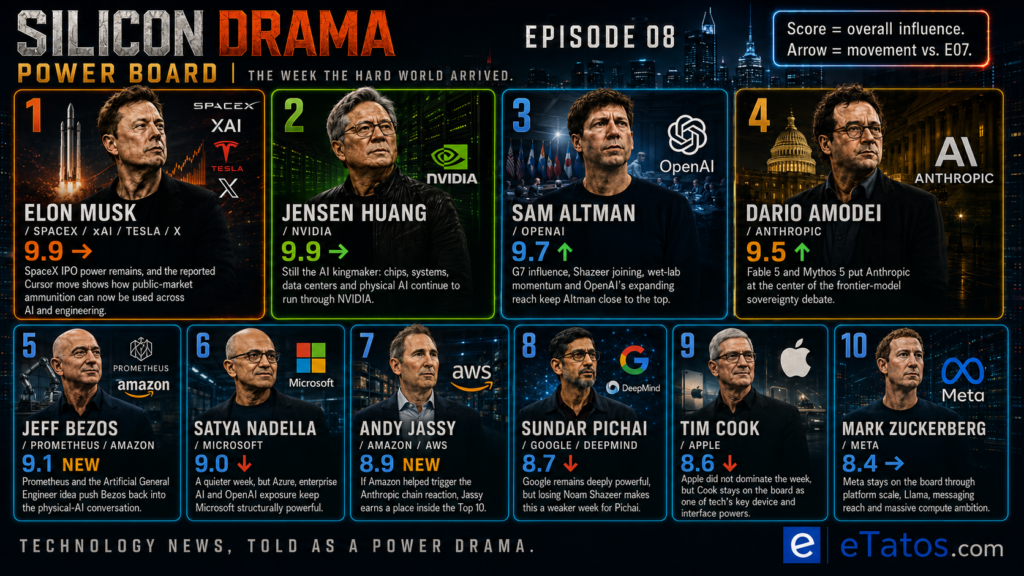
Power Board: The Hard World Reorders the Room
The Episode 08 Power Board separates weekly heat from structural power. Elon Musk and Jensen Huang remain at the ceiling because SpaceX and NVIDIA still shape more than one battlefield at once: Capital, compute, engineering, robotics and infrastructure. Sam Altman rises because OpenAI touched almost every major layer of the week, from G7 governance and Noam Shazeer’s move to the wet-lab discovery loop and real-world AI services. Dario Amodei had the week’s central drama with Fable and Mythos, but the board also shows the limit of lab power when Washington can step in and redraw the access map. Jeff Bezos returns with Prometheus and the idea of the Artificial General Engineer, while Satya Nadella, Andy Jassy, Sundar Pichai, Tim Cook and Mark Zuckerberg remain inside the Top 10 because the hard world still runs through cloud, platforms, devices, data centers and distribution. Outside the Top 10, Liang Wenfeng, David Holz, Brett Adcock and David Reger matter as emerging or specialized power figures. Holz may have created one of the most cinematic moments of the week with Midjourney Medical, but the board keeps the scale honest: Narrative shock is not the same as structural dominance.
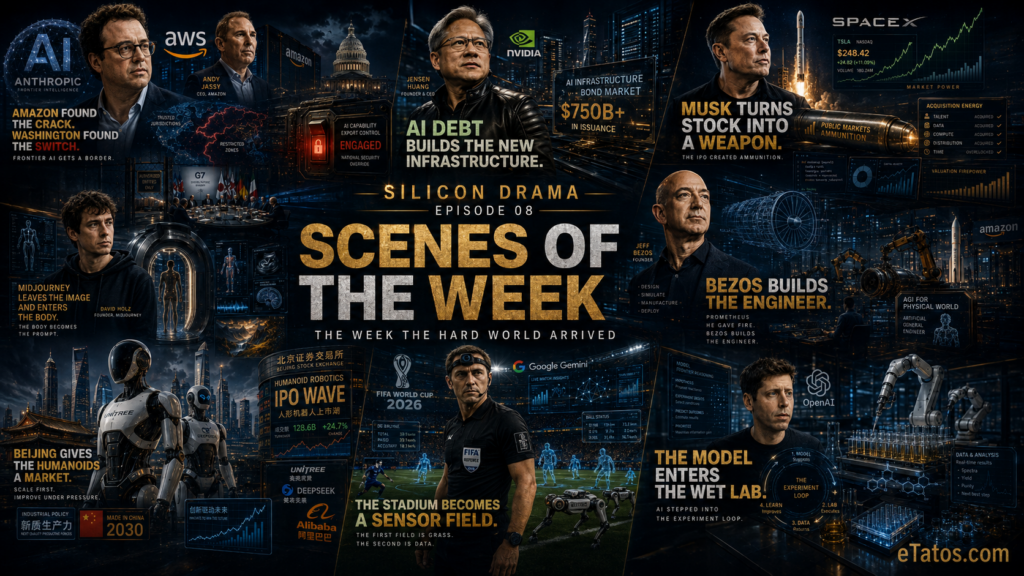
Final Thought: The Hard World Arrived
The week did not belong to one company.
It belonged to the collision.
AI met the state.
AI met the bond market.
AI met the human body.
AI met the factory.
AI met the stadium.
AI met the lab.
AI met the border.
The dream layer is still there: The chat window, the image prompt, the coding assistant, the glossy demo, the founder on stage.
Underneath it, the hard world is taking over.
Governments want switches. Markets want returns. Founders want control. Workers want ownership. Doctors want scans. Referees want better calls. Robots want jobs. Models want labs. Data centers want electricity.
This is what happens when AI leaves the demo room.
It enters institutions.
And institutions do what institutions always do.
They ask for money.
They ask for rules.
They ask for identity.
They ask for control.
The hard world arrived.
.
See you next week, when the next piece of the AI empire moves on the board.
The Silicon Drama continues.
Dirk
If you want to follow the next episodes of Silicon Drama, subscribe to eTatos.com or our newsletter. The next power struggle is already forming.
Prefer listening over reading? Silicon Drama is also available as a podcast. Each episode turns the week’s biggest stories in AI, Big Tech and humanoid robotics into a cinematic audio experience, focused on power, conflict, money, machines and the people shaping the future. Perfect for everyone who wants to follow the drama behind the technology while driving, walking or working.