Silicon Drama · Episode 30 · November 21, 2026
The Empire Wants the Keys
Founders fight for authority, investors buy into the future, and AI starts redesigning its own machinery.
Technology news, told as a power drama.
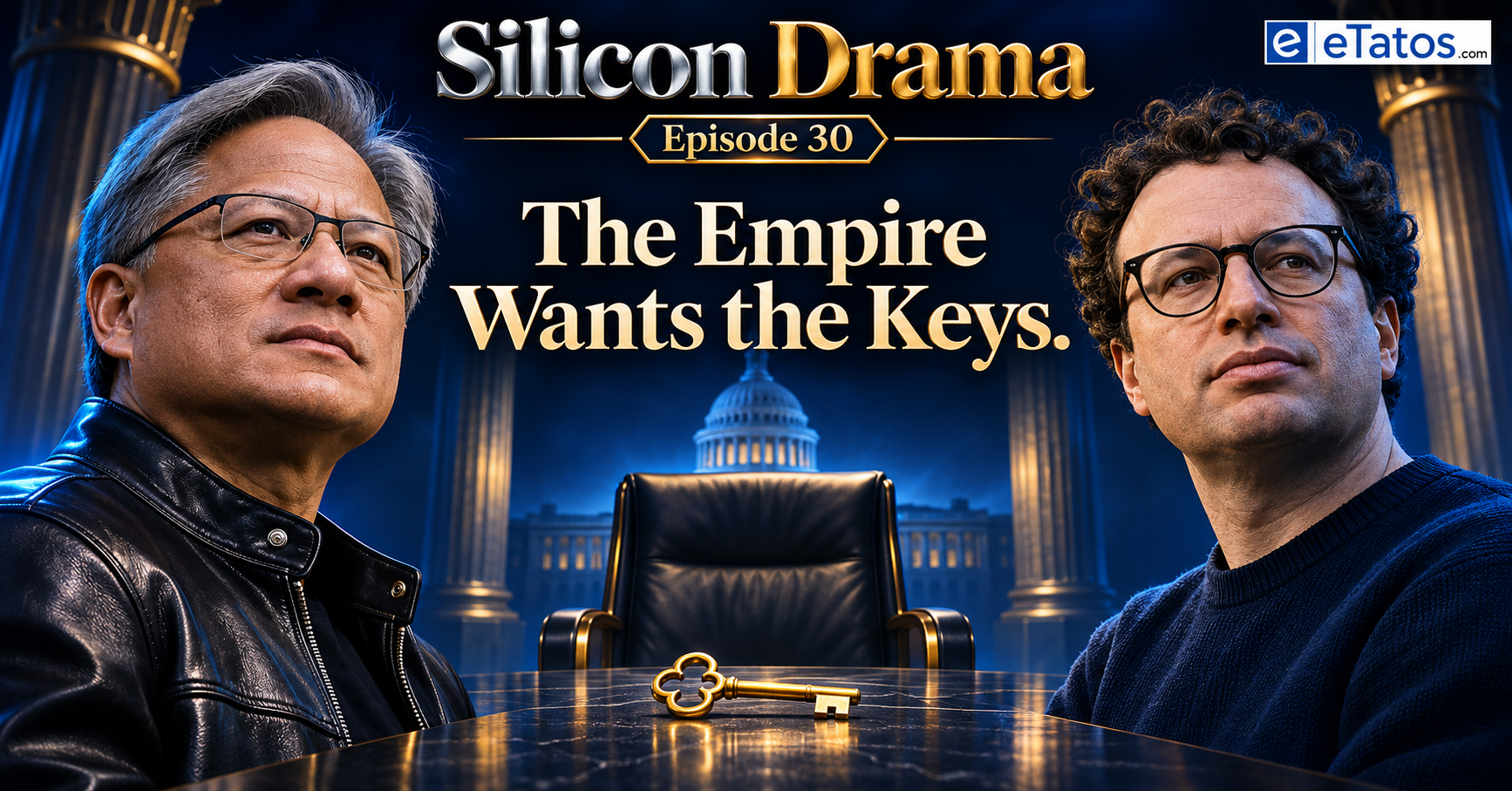
NVIDIA’s board has ruled out bringing Jensen Huang back as CEO. The company has also reported $115.8 billion in quarterly revenue, earned before he left. Those two facts make a rather uncomfortable pair.
Across the industry, the question is becoming more concrete: Who gets to decide what happens next? Dario Amodei is taking Anthropic to public investors while its founders protect their voting power. OpenAI’s models are helping redesign chips. A robot in Japan has found a job behind the drinks fridge. For customers, these choices determine who supplies their tools, what those tools can do and who keeps control.
This week
- NVIDIA’s record quarter sharpens the argument over its missing founder.
- Anthropic sells shares; its prospectus explains which powers stay elsewhere.
- AI helps build its next hardware, robots take ordinary jobs, and Google opens worlds you can walk into.
Chapters: I · The founder · II · The prospectus · III · The chip · IV · The fridge · V · The world · Signals · Power Board · After the Credits
Act I: The Quarter Still Belongs to Jensen’s Era

Harvey Jones, NVIDIA’s chairman, made the board’s position explicit on its November 17 earnings call: It does not intend to reinstate Huang as CEO. Colette Kress remains interim chief executive as the search for a permanent successor proceeds.
Then there are the numbers. NVIDIA’s quarterly revenue reached $115.8 billion, up 103% from a year earlier. The quarter ended on October 25, before Huang’s departure. Kress is reporting the performance of a company he built and was still leading during that period.
For me, NVIDIA and Jensen remain inseparable. These extraordinary results reflect years of his relentless work alongside the people who built the company with him. I am shocked by the board’s refusal to consider his return. Its duty to employees, the company and shareholders should include taking that achievement seriously.
The legal questions have also become more specific. On November 19, California’s attorney general demanded information from NVIDIA, examining whether company or Huang-related actions resulted in advanced chips or confidential information reaching China, and whether investors were misled. These are questions under investigation, not findings of misconduct.
Unproven allegations have not changed my wish to see Huang return. I would hate to watch the board repeat Apple’s old mistake of waiting until a company is in serious trouble before bringing its founder back. #BringJensenback
Kress, meanwhile, has an actual business to run. NVIDIA expects around $130 billion in next-quarter revenue, with no China data-center compute revenue assumed in that forecast. Its leadership must manage enormous demand, suppliers and export restrictions while the argument over the founder continues.
The power split is visible. Jones and his fellow directors control the appointment. Kress controls day-to-day executive decisions for now. Huang retains relationships and public influence, but no longer holds those offices.
The board has delivered its answer. It still has to deliver the next chapter.
Act II: Dario Sells the Future, With Conditions
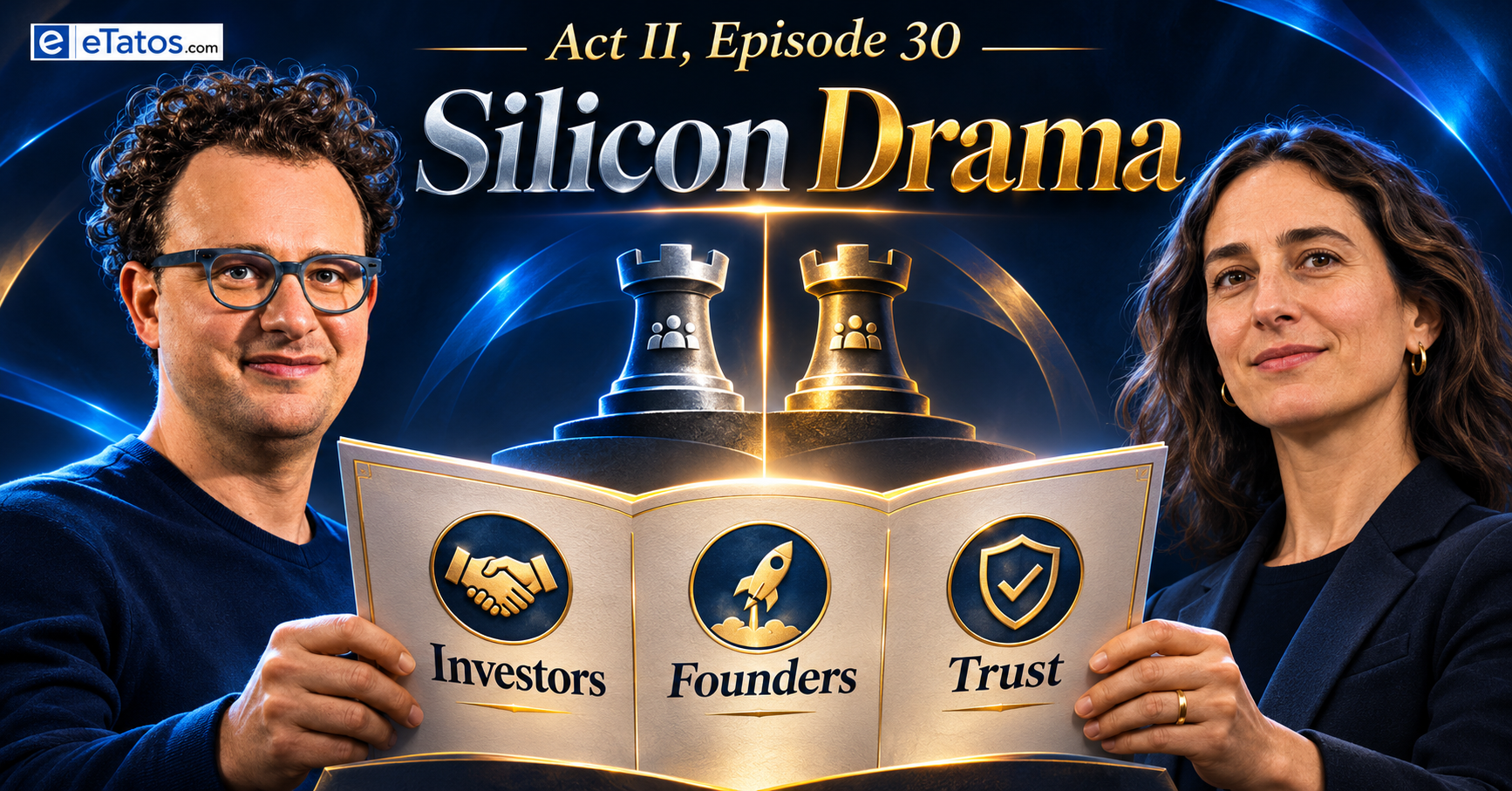
Dario Amodei has a different founder problem: How to invite public investors into Anthropic without handing them an ordinary set of keys.
Anthropic priced its offering at $83 a share. The enlarged public offering comprises 980 million shares, worth about $81.3 billion at that price, including shares sold by existing holders. That updates the smaller offering discussed earlier in the week. It is not all money received by the company.
The final SEC prospectus also sets out a separate $26 billion private placement with technology partners. Google and NVIDIA are among those committed to buying shares. The businesses helping supply Anthropic’s computing capacity are also financing its expansion.
That is an unusually close customer relationship. A laboratory needs chips and cloud capacity to train models and serve customers. Those suppliers benefit when the laboratory grows. Investing in it can strengthen that demand, while making the laboratory more deeply connected to the same infrastructure ecosystem.
Public investors enter another layer of this arrangement. The prospectus gives a company formed by Anthropic’s seven co-founders 50.1% of the votes on general shareholder decisions. Dario shares that structure with Daniela Amodei and five other founders; it is not his personal majority vote.
Alongside it sits the Long-Term Benefit Trust, which generally elects and removes directors constituting a majority of the board. Its special share has no economic rights. The design separates a financial stake from particular forms of authority, with different rights assigned to founders, trustees and investors.
Buying a piece of the future does not buy the right to rearrange all its furniture.
For Anthropic, the attraction is clear: More financing for computing, research and expansion, with founder and mission-governance provisions preserved. For investors, the practical question is how those different decision makers will handle a disagreement. A safety concern, a costly capacity commitment and a shareholder demand need not point in the same direction.
The documents show who has which formal rights. They cannot settle those future arguments in advance. Nor does an investment by Google or NVIDIA mean either company gets to direct Anthropic’s research.
This is the sequel to NVIDIA’s founder conflict from the other end. Jones is exercising the authority of an existing board. Anthropic is spelling out how its own authority will be divided as a much wider group buys in. The important reading begins after the offer price.
Act III: The Model Edits Its Own Machinery

Sam Altman’s OpenAI is working on a more literal route to influence: Helping change the chips on which AI runs.
In a new engineering report, OpenAI describes models improving parts of Jalapeño, its custom inference chip, and working with AMD on existing processor designs. Inference is the computing that runs a trained model when it answers a request.
The models rewrite code describing electronic circuits. Engineers then use specialist tools, including those from Synopsys, to check whether the revised circuit still behaves correctly and how its speed, power use and physical area compare. A smaller circuit can free space for other work; a faster one can finish a calculation sooner.
OpenAI reports improvements of up to 14% against heavily optimized AMD GPU design blocks using combined power, performance and area measures. Some changes have entered designs sent for manufacturing.
The important relationship is between the model, the engineers and the verification tools. A plausible circuit description has to survive checks before anyone commits it to silicon. Manufacturing makes this a particularly expensive place to discover that an answer merely sounded convincing.
OpenAI’s parallel report on research work shows another part of the loop. For internal tasks estimated to take a human researcher two to four hours, reported autonomous success rose from 23% in March to 46% in October. Success varies sharply by task, and the work selected for agents has changed too.
Together, these developments suggest a feedback effect: Better models help improve the hardware and research processes used to develop and run later models. The size of that effect will depend on which engineering bottlenecks they can actually remove. A design improvement still has to pass verification, reach manufacturing and become a usable system.
For buyers, this could eventually matter through capacity, energy use and the cost of completed work. For suppliers, it makes access to capable models and trusted engineering tools part of their competitive position.
The model has started helping with the machinery. The factory still has a delivery schedule.
Act IV: The Revolution Takes the Cold Shift

While the AI industry discusses machines that might do almost anything, Jin Tomioka’s Telexistence has a fairly specific assignment: Put the drinks back on the shelf.
Telexistence and FamilyMart will begin a phased nationwide Japanese rollout of TX GHOST and a digital inventory shelf in January 2027. The partners have tested and refined the system in stores since 2020. The coming rollout extends that work; it is not a completed nationwide installation.
The robot operates inside a walk-in drinks cooler. Staff load products onto the inventory shelf. The system tracks stock, and the robot replenishes the customer-facing shelves, using sales information to prioritize what sells. FamilyMart reports roughly 70% less work in the relevant inventory and replenishment operations at early stores.
That improvement concerns inventory and replenishment work. Staff still load the system and help customers; the robot takes over a defined part of the shift.
Unusual situations bring people back into the loop. Telexistence says remote operators assist when the robot encounters a difficult case, such as a fallen drink. Those interventions also provide training data. The business therefore combines a robot, inventory software, store procedures and a service operation behind the scenes.
There is no need to pretend the human assistance is invisible. For a store operator, the relevant comparison is the total time, cost and reliability of keeping drinks available. A useful robot can have support staff, just as useful computing comes with maintenance and people on call.
What makes this story worth following is the repetition. A drinks fridge offers the same basic job many times a day, with a customer waiting on the other side. Errors have a visible consequence: The shelf is empty, a product is misplaced, or someone must intervene. Those are concrete things a buyer can evaluate.
The rollout also gives the supplier repeated access to real working conditions. That experience can improve both the software and the surrounding service, provided the system handles more stores without creating an equally large support burden.
The robot has found a job behind the drinks fridge. The next test is whether its employer likes the numbers after the novelty has worn off.
Act V: Pichai Opens a Door in the Screen

Sundar Pichai’s Google wants creators to do more than generate another picture. Its November 18 Project Genie update brings Genie 4 to eligible Google AI Ultra subscribers, with explorable worlds, native audio and changes made while a session is running.
A world model generates an environment that responds as the user moves through it. In Google’s Genie 4 research account, that ability extends to changes prompted during the experience. The product adds a creative agent and a gallery where people can discover, share and remix worlds.
The creative shift is easy to picture. Instead of describing a place and receiving a fixed image, a creator can invite someone into an environment and alter what happens there. Sound becomes part of the scene. Exploration becomes part of how the audience experiences it.
That makes the interactive world an interesting candidate for the next media format after text, images and video. It also gives Google several connected roles: Providing the models, organizing creation, controlling subscription access and hosting discovery. A gallery can become a distribution channel as well as a showcase.
For a small creative team, the opportunity is to sketch an experience that would otherwise require separate work on scenery, interaction and sound. Whether a particular project belongs there depends on the control and consistency it needs, along with the product’s actual usage rights. A promising prototype and a dependable publishing workflow are different stages of a creator’s work.
Google is offering an entrance, not a finished replacement for every game engine or production tool. Eligible subscribers can explore it now; other creators still face access limits.
The audience can walk into the prompt. The platform still owns the front door.
Signals from the Board
- The agent reaches the checkout. ChatGPT Wallet starts with U.S. Pro users through dots. A payment token substitutes for card details, and users approve each purchase. Fully pre-authorized buying is a future direction. I expect our spending limits to rise with trust, if agents reliably find good value and execute transactions correctly. The fingerprint still has a job today.
- Nadella offers more control inside Azure. Microsoft’s MAI Licensed Weights lets customers customize models and run them in their own Azure environment. That changes who controls access and adaptation, while keeping the workload inside Microsoft’s cloud. The landlord has improved the locks.
- Neon joins the cost argument. Google’s Gemini 4 Neon targets demanding software and knowledge work at developer rates of $3 input and $15 output per million tokens. Buyers still have to measure the cost and quality of completed tasks.
- Atlas has a factory appointment. Boston Dynamics and GlobalFoundries plan onsite Atlas tests from early 2027. Two four-legged Spot robots have already performed over 90,000 inspections in Singapore, according to the announcement. Those inspections belong to Spot’s record; Atlas still has its own trial ahead.
- Google books a launch. Blue Origin will carry Project Suncatcher satellites, targeting the first quarter of 2029. Google wants to test AI computing using solar power in orbit. Space, the final frontier. Now for AI too? The ambition has acquired a launch window.
Silicon Drama: Power Board
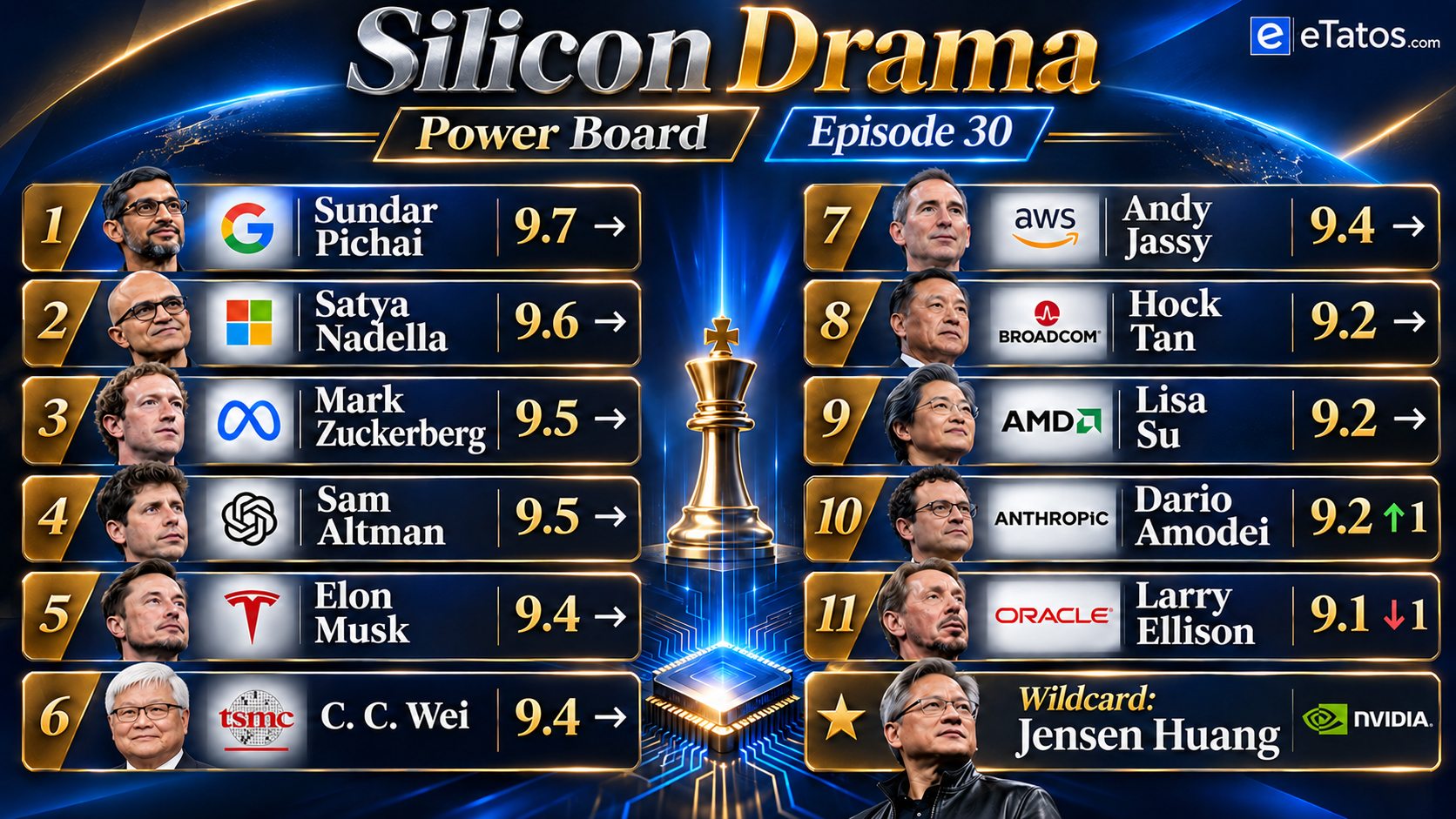
Personal structural power, assessed through authority, critical control, reach, execution and durability. Editorial judgments under Methodology 2.0.
- Sundar Pichai · 9.7 · →. Google’s models, chips, cloud and distribution remain an unusually complete system. Genie and the orbital-computing plan add options, without turning future capacity into present power.
- Satya Nadella · 9.6 · →. Microsoft’s enterprise access and cloud remain durable advantages. Licensed model weights strengthen its offer of customer control inside Azure.
- Mark Zuckerberg · 9.5 · →. Founder authority and Meta’s consumer reach keep him ahead within this tie. A busy week elsewhere does not erase that structural position.
- Sam Altman · 9.5 · →. OpenAI reaches from research and chip design to the checkout. Computing partners, governance and the need to earn trust still constrain his freedom.
- Elon Musk · 9.4 · →. Personal autonomy across AI, vehicles, satellites and launch preserves his position. That autonomy keeps him first within the 9.4 tie.
- C. C. Wei · 9.4 · →. TSMC’s manufacturing remains a hard-to-replace foundation beneath competing AI systems. An improved circuit still needs somebody to make it.
- Andy Jassy · 9.4 · →. AWS and Amazon retain enormous cloud and commerce reach. His operational mandate remains distinct from Bezos’s separate space business.
- Hock Tan · 9.2 · →. Broadcom’s custom chips and networking preserve infrastructure leverage. That established position keeps precedence in the 9.2 group.
- Lisa Su · 9.2 · →. AMD supplies processor alternatives and participates in AI-assisted design. A concrete engineering partnership reinforces the case without justifying a wholesale score jump.
- Dario Amodei · 9.2 · ↑1. Public-market access strengthens financial durability. Shared founder voting, trust powers and computing dependencies keep that gain below absolute personal control.
- Larry Ellison · 9.1 · ↓1. Oracle’s founder retains strategic and technical authority. His score holds; Amodei’s advance changes the order.
★ Wildcard: Jensen Huang. His former offices remain vacant of him, while his supporters want him back. Relationships and legacy give the story weight, without restoring executive authority or creating a numerical rank.
Movement: Amodei moves up one place; Ellison moves down one with an unchanged score. The other ranks hold. Comparisons resume against E29’s recalibrated baseline.
Follow the power players: Everyone who has earned a Silicon Drama Power Board seat is now collected in our Silicon Drama: Power list on X.
Final Thought
The argument at NVIDIA makes the distinction between building an institution and holding the authority to lead it painfully visible. Anthropic’s prospectus writes that distinction into its share structure. The tools and robots elsewhere in this episode bring the question down to everyday work: Who gets to act, and on whose terms?
I still want Jensen back. And as more decisions pass to agents, the trust we grant them will have to be earned through what they actually do. A title, a valuation or a convincing demonstration can begin a story. It cannot finish the job.
See you next week, when the next piece of the AI empire moves on the board.
The Silicon Drama continues.
Dirk
AFTER THE CREDITS.
A fictional Silicon Drama scene.
An imaginary infrastructure committee approves a solar-powered data center in orbit. The presentation ends on a magnificent view of Earth.
“Any remaining questions?” asks the chair.
The robot from the drinks fridge raises its gripper.
“Who restocks it?”
“Maintenance is on the roadmap.”
The robot looks at the launch window, then at the service contract.
“For once,” it says, “I would like the human to do this one.”
Continue the story
The next power move belongs in your inbox. Get Silicon Drama with our free eTatos SmartNews.
Explore the Silicon Drama archive or follow the LinkedIn newsletter.
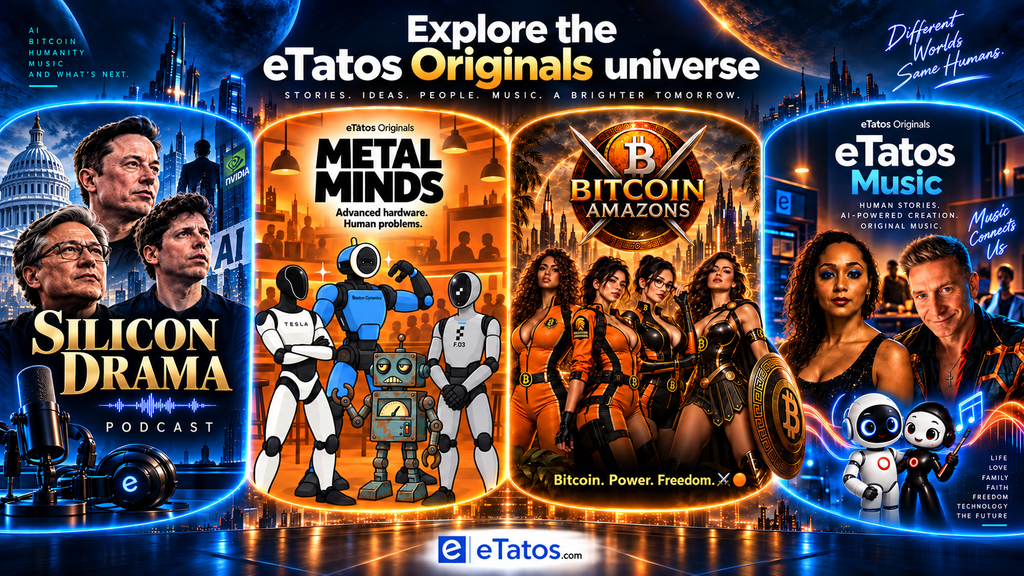
AI has left the screen. In Metal Minds, the robots have developed very human problems.
Prefer listening? Follow Silicon Drama on Spotify.
Change the soundtrack with eTatos Music.
About Silicon Drama: A weekly eTatos Original by Dirk R. Bartz, following AI, robotics and Big Tech through the people, decisions and dependencies that move power.