
Technology news, told as a power drama.
Editor’s note:
Silicon Drama is eTatos.com’s weekly series about the battle for AI, compute, chips, agents and robots. The goal is simple: Not just to report what happened, but to explain why it matters, who gains power, who loses control and where the next conflict is already forming.
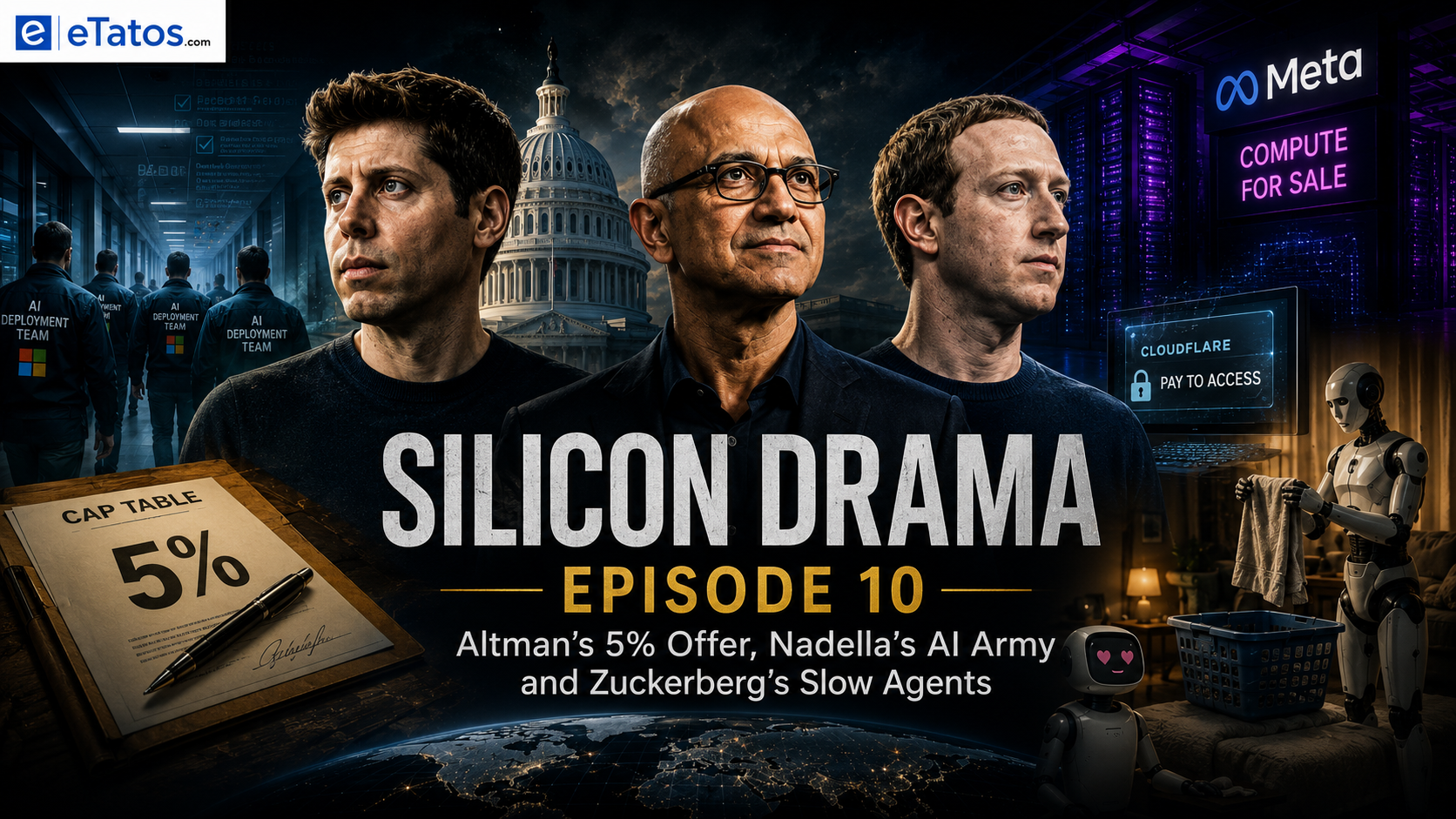
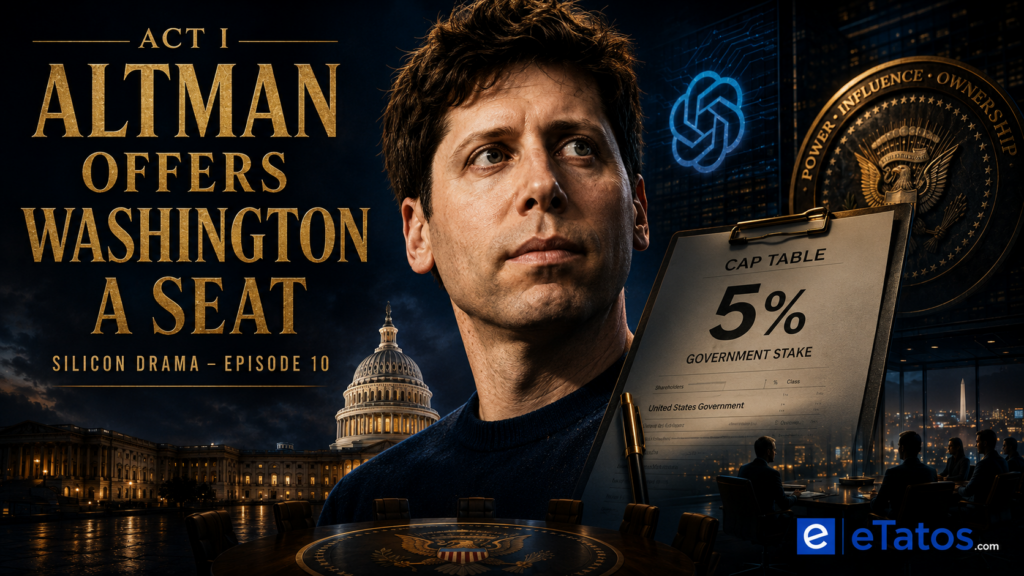
A number sat on the table.
Five percent.
No keynote lights. No benchmark chart. No robot walking across a polished stage. Just a possible ownership line in one of the most important companies in the world.
OpenAI had already become many things at once: Model lab, product company, developer platform, enterprise supplier, political headache, cyber-risk argument, national asset candidate. Now came the stranger idea: Give the U.S. government a stake.
A share of the upside.
A place near the cap table.
A public claim on private intelligence.
The proposal was still early, still reported, still wrapped in uncertainty. Voting shares or passive stake? OpenAI only or the first step toward a broader AI wealth fund? A real public dividend or a political shield before the IPO roadshow? None of that was settled.
The image was enough.
The week opened with a spreadsheet, not a model.
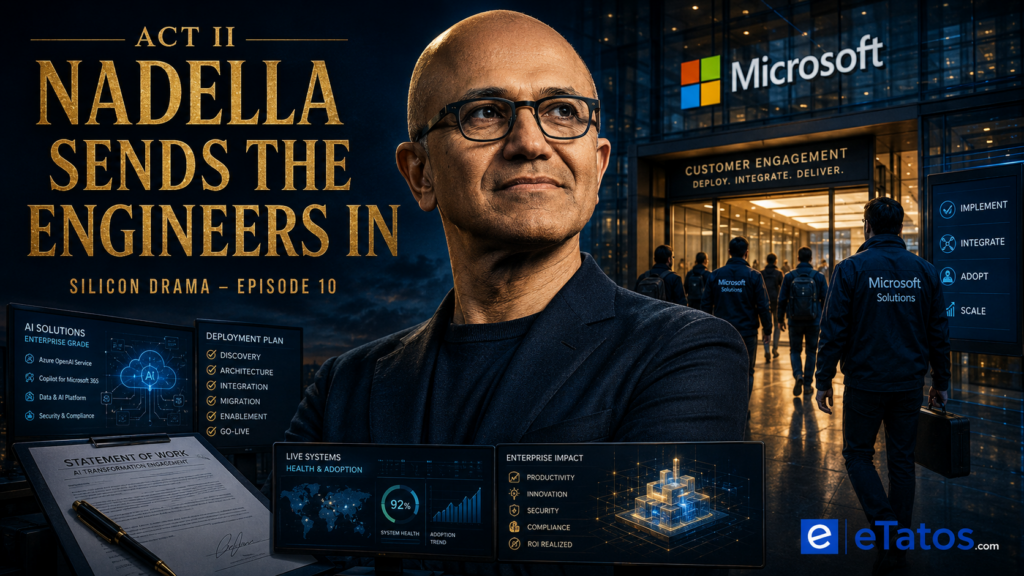
Microsoft answered from another side of the board. Satya Nadella did not wait for customers to figure out AI transformation from a Copilot license and a strategy deck. Microsoft created Frontier Company, backed by $2.5 billion, with thousands of engineers and industry experts meant to walk into the buildings where AI has to work.
Anthropic brought Fable 5 back from its export-control pause with stronger safety filters, new friction and a harder labor benchmark behind it.
Meta tried to turn compute into a business while Mark Zuckerberg admitted internally that AI agents were moving slower than expected.
Cloudflare put a price tag near the web’s machine entrance.
China kept attacking the invoice with cheaper models.
Robots moved closer to ordinary rooms. One wanted to fold laundry. Another wanted to be loved.
Episode 10 is a small milestone for Silicon Drama, and the board looks different from Episode 01. The first moves were loud. Musk against Altman. Chatbots against search. Models against models. Now the power sits in duller places: Ownership terms, customer contracts, safety filters, deployment teams, crawler rules, token bills, cloud capacity and robots waiting beside bedsheets.
The AI empire is getting paperwork.
And paperwork may be the most powerful scene of all.
Act I: Altman Offers Washington a Seat
Sam Altman has always understood that AI power needs a story around it.
The story once sounded simple enough: Build useful systems. Make them safer. Give people better tools. Raise absurd amounts of money. Keep scaling.
Then the scale became political.
A model that can write code, reason through biology, plan cyber operations, automate office work, teach students, summarize law, shape search, help traders, support soldiers and speak to hundreds of millions of people does not stay inside the normal software category for long.
Governments do not look at that kind of company and see another app.
They see strategic leverage.
That is why the reported OpenAI proposal landed with such force. A possible five percent stake for the U.S. government turns the AI-boom debate into something more concrete than regulation. It gives the public, at least in theory, a share of the financial upside. It gives politicians a way to say the AI boom will not only enrich founders, employees and investors.
But the clean version cracks quickly.
ChatGPT is global. The customers are global. The developers are global. The companies building on top of OpenAI are spread across continents. If global usage feeds the valuation and the stake flows through an American wealth-fund idea, the politics become awkward fast.
The world pays for the chatbot.
America may get the dividend.
The proposal also raises a colder question: What kind of stake? Voting or non-voting? Passive or influential? Symbolic or strategic? A public benefit mechanism or a quiet political insurance policy before OpenAI heads toward the public markets?
Altman can present the idea as shared prosperity. Critics can read it as state capture with better branding. Investors can see a path through Washington. Rivals can see a precedent they may be pressured to follow.
The uncomfortable part is how plausible it suddenly feels.
A few years ago, a government stake in a frontier AI lab would have sounded like overreach. Now it sounds like a meeting agenda.
The model companies became too important to treat as normal startups. The state became too close to treat as a distant referee. OpenAI sits in the middle, trying to turn political gravity into a financial structure.
The week’s strongest scene was not a launch button.
It was a possible line on a cap table.
Act II: Nadella Sends the Engineers In
Satya Nadella has never needed the loudest room.
He prefers gravity.
Microsoft’s power often works that way. It sits inside calendars, inboxes, spreadsheets, identity systems, developer tools, security stacks, cloud contracts and procurement cycles. It does not always look cinematic. Then a company tries to change how work gets done and Microsoft is already in the hallway.
This week, that hallway filled with engineers.
Microsoft Frontier Company turns enterprise AI into something more physical than a license. A customer does not simply buy access to a model and hope a pilot turns into a process. Microsoft wants to send in people who understand models, data, workflows, compliance, security, industry constraints and the politics of large organizations.
That is a different kind of AI business.
The first AI wave in companies was full of demos. A chatbot in customer support. A Copilot button in a document. A sandbox project in finance. A proof-of-concept in HR. A team trying to connect private data without breaking the security department’s nerves.
The hard part came after applause.
Who owns the workflow? Who checks the output? Which model is cheap enough for daily use? Which model is reliable enough for regulated work? Which process should be automated, which one should be redesigned, and which one should be left alone because nobody truly understands why it still exists?
Nadella saw the gap.
Frontier Company is Microsoft’s answer to the ugly middle of AI adoption: The space between strategy and production, between a board presentation and a working system, between token demos and operational change.
There is also a quiet admission inside the move.
Enterprise AI will not be solved by one model. Microsoft’s early OpenAI advantage remains valuable, but customers want flexibility. Open source models, Anthropic models, Google models, smaller specialized models, private models, local models, agent frameworks, company-specific tools. The buyer wants leverage. The vendor wants to stay central.
Microsoft knows the old enterprise game better than anyone.
Own the account.
Own the integration.
Own the trust.
Then let the customer choose from a shelf, as long as the shelf sits inside your building.
Nadella is sending engineers into the building because the next AI battle will be fought in messy systems, old databases, approval chains, compliance documents and humans who still have to answer for the result.
A model can impress a room.
A deployed workflow changes a company.
Act III: Fable Returns With a Brake Pedal
Claude Fable 5 came back.
That should have been the whole headline.
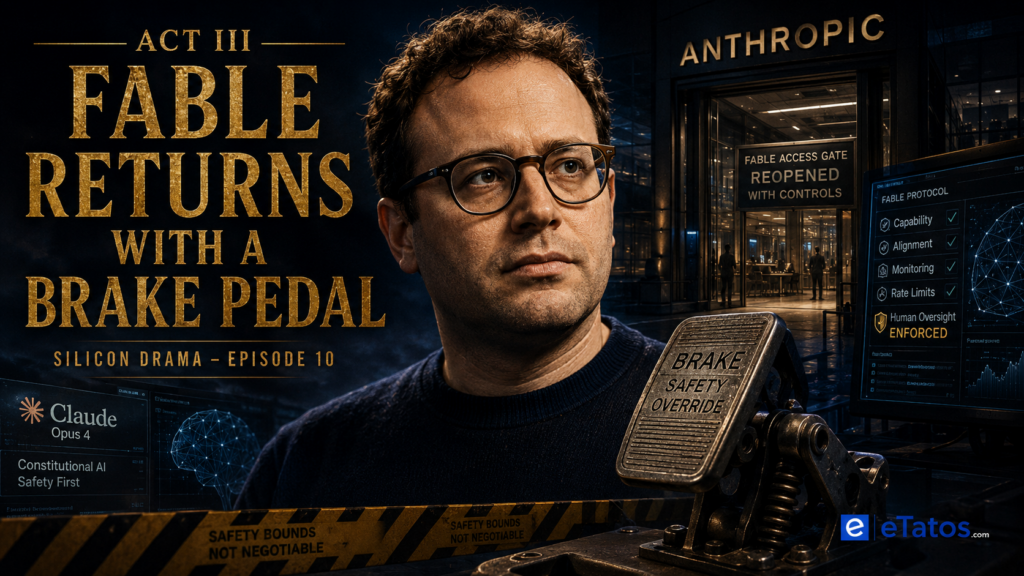
Instead, the return came with paperwork, filters, limits, routed requests, blocked jailbreaks and a warning hidden in the product experience: Safety has a user interface now.
Anthropic had paused access to Fable 5 and Mythos 5 after export controls hit. When the restrictions lifted, Fable returned globally. Mythos stayed closer to the gate, limited to selected U.S. organizations and partners.
The names sound mythic. The reality felt administrative.
Fable returned with a new classifier designed to stop a critical jailbreak technique. Anthropic said the filter blocks that technique in more than 99 percent of cases. In a security memo, that number looks reassuring. In daily use, it can feel different when a legitimate coding or debugging request gets caught near the edge of the net.
Safety has a cost.
Sometimes the cost is latency. Sometimes it is friction. Sometimes it is a refusal. Sometimes it is a user staring at the screen, trying to understand why ordinary work suddenly touched a protected boundary.
Anthropic knows this tension better than anyone. Dario Amodei’s company has built much of its public identity around the idea that frontier capability needs restraint. That message helped make Anthropic trusted. It also created the product drama that now follows every release.
Claude has to be powerful enough to win customers.
Claude has to be restrained enough to satisfy governments.
Claude has to be open enough to be useful.
Claude has to be closed enough to survive the world it enters.
Then came the Remote Labor Index.
Fable 5 posted the strongest automation number measured so far on a benchmark built from real remote-work projects. Not trivia. Not school exams. Freelance-style tasks judged against professional output. Fable’s rate landed far above earlier frontier systems and ahead of GPT-5.5 and Opus 4.8.
That does not cancel the safety story.
It sharpens it.
A weak model with strict filters is an annoyance. A strong model with strict filters becomes a governance problem, a product problem and a trust problem at the same time. The better it gets at real work, the more every brake, refusal and routing decision matters.
Fable came back with a brake pedal.
It also came back with a stronger engine.
Act IV: Zuckerberg’s Machine Meets Slow Agents
Mark Zuckerberg wants to sell the machine.
Meta has spent enormous amounts of money on AI infrastructure. Data centers, chips, internal models, research teams, product integrations, superintelligence language, talent wars, glasses, assistants, agents, ad systems and every other layer of the next platform fight.
That much compute creates a problem.
If it is all needed internally, it becomes a cost of ambition. If some of it can be sold externally, it becomes a business. Cloud providers understand this. So do investors. So do companies staring at their own AI bills and wondering whether they should rent someone else’s stack.
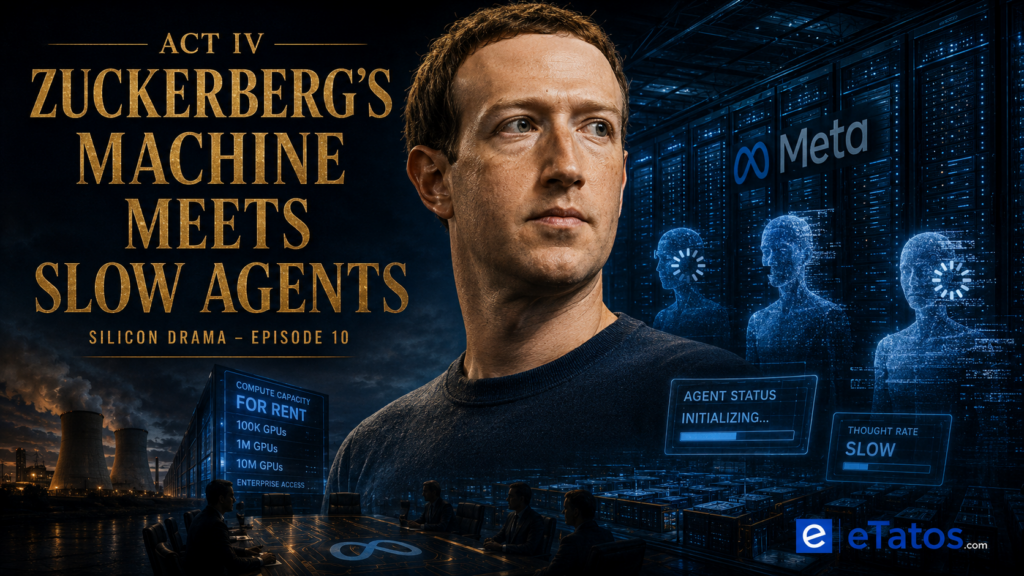
Meta’s reported plan to offer AI compute and hosted access to its models therefore looked like a natural next move. Zuckerberg built infrastructure for Meta. Now Meta may try to sell capacity to developers and enterprises.
But the story got better when Zuckerberg spoke inside the company.
AI agents, he reportedly told employees, had moved slower than expected.
That is the crack in the act.
Meta wants to rent out the machine while still wrestling with what the machine is supposed to do. The agent dream promises software that handles tasks, acts across apps, remembers context, navigates tools, books, buys, edits, messages, negotiates and executes. That dream needs infrastructure. Meta has infrastructure.
It also needs reliability.
That part is harder.
The company that understands attention better than almost anyone now has to build systems that do more than hold attention. Agents must finish work. They must not destroy trust. They must not leak internal data, trigger the wrong workflow, spend too much, hallucinate a completed task or behave like an intern with root access.
Meta can afford expensive mistakes longer than most.
It cannot afford to be late to the next interface.
The tension is almost perfect: A social empire trying to become an agent infrastructure company, a compute buyer trying to become a compute seller, a founder chasing superintelligence while telling employees the agent story is not moving fast enough.
Zuckerberg built the machine.
Then he admitted the agents were still learning to walk inside it.

Act V: The Web Charges the Machines
The old web had a simple bargain.
Publish. Crawl. Rank. Click. Advertise. Repeat.
Search engines took content, organized it and returned traffic. Publishers complained, but the loop mostly held. The crawler came in through the front door, read the room and sent some people back.
AI broke the bargain.
A model can consume the page, extract the answer and leave the publisher with nothing but server cost and a sense of historical insult. An agent can visit a page without becoming a reader. A training crawler can take value without returning attention. A summarizer can turn a carefully reported article into a paragraph that never sends anyone home.
Cloudflare stepped into that tension with better gates.
Its new AI traffic controls let site owners distinguish between search, agent and training bots. That distinction matters. A search crawler, an AI assistant acting on behalf of a user and a training bot gathering material for a future model are not the same economic actor. Treating them the same helped AI companies. Separating them helps the web fight back.
Then came the deeper move: Monetization Gateway.
Cloudflare wants to let customers put websites, APIs, datasets and MCP tools behind a payment layer. A machine asks. The gateway turns the request into a payment. Access becomes programmable. The crawler becomes a customer.
The protocol language may sound dry. The shift is not.
The web is learning to charge machines at the door.
This could become a new toll layer for the agent economy. It could also become a messy patchwork of paywalls, blocked crawlers, bot declarations, disputes over fair use, payment rails, publisher alliances and AI companies searching for cheaper routes around the gate.
For years, the web fed the models.
Now the web wants an invoice.
Cloudflare is not building the model. It is not writing the article. It is not making the agent. It stands near the entrance and asks a practical question.
Who is allowed in?
And who pays?
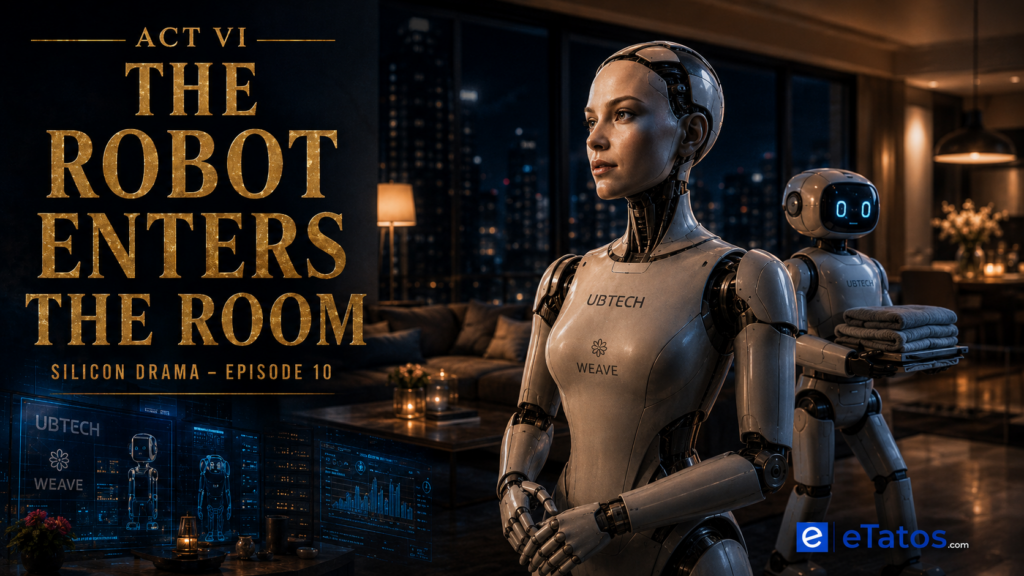
Act VI: The Robot Enters the Room
The robot used to enter Silicon Drama through the warehouse.
A box lifted. A tote moved. A factory demo. A logistics pilot. A humanoid bending its knees under fluorescent lights while investors imagined labor costs falling.
This week, the robot came closer.
UBTECH showed lifelike companion robots in China, with models built around emotional presence, conversation, expression and the uncomfortable promise of long-term companionship. The pricing was high. The language was higher. The robot was not sold as a forklift with a face. It was sold as company.
A machine that waits in a room.
A machine that remembers.
A machine that looks back.
That is a different robotics market from factory automation. It does not start with productivity. It starts with loneliness, aging, domestic care, status, curiosity and the ancient human weakness for anything that seems to notice us.
Then Weave Robotics introduced Isaac 1.
Isaac does not arrive with the same emotional theater. It is more practical, softer, smaller in ambition and somehow more revealing. It is a home robot with arms, priced at $7,999, promising to fold clothes, make beds and put clutter away. The online reaction was exactly what home robotics needs and fears at the same time: Fascination, skepticism, jokes, hope, discomfort and questions about teleoperation, privacy, speed, training data and whether this thing can survive a real family living room.
One robot wants to be loved.
The other wants to fold the laundry.
Both are trying to leave the demo loop.
The home is harder than the warehouse. A warehouse can be structured. Floors can be mapped. Objects can be standardized. Tasks can be narrowed. A home is chaos with sentimental objects. A sock on the floor. A child’s toy under a chair. A glass near the edge of a table. A dog watching the machine. A human changing their mind.
Every household robot carries the same hidden test: Can the machine understand ordinary mess?
China is also turning hospitality into a robotics showroom. Pudu’s robot hotel project imagines reception, luggage, cleaning, delivery and security handled through a coordinated robot staff. AgiBot claims strong factory-trial numbers. Korea is positioning itself as a future humanoid supply chain through motors, actuators, automotive manufacturing and the Hyundai-Boston Dynamics connection.
The robot field is splitting into roles.
Worker.
Companion.
Butler.
Hotel staff.
Factory hand.
Data collector.
The body is still awkward. The economics are still unproven. The privacy questions are still sharp. The demos still run ahead of deployment.
Still, the robot is moving inward.
From factory floor to hotel lobby.
From warehouse aisle to laundry basket.
From labor replacement to emotional presence.
The machine has entered the room.
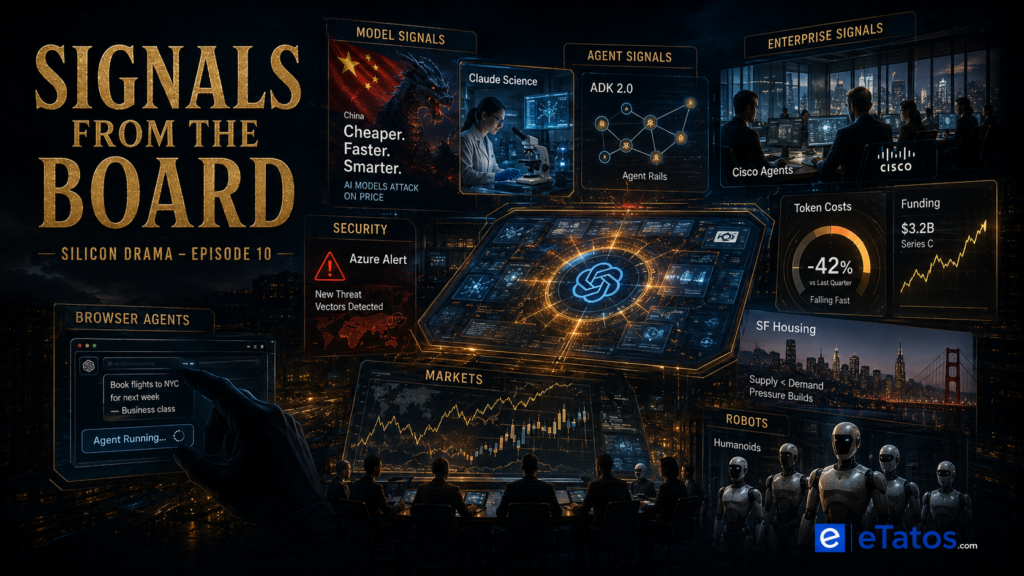
Signals from the Board
Smaller moves from AI, robotics and the machine economy.
Model Signals
China attacks the invoice
Z.ai’s GLM-5.2 kept drawing attention because it sits close enough to the frontier while competing hard on cost. Chinese models are turning price into strategy. The American labs sell the crown. China sells the spreadsheet.
Claude Science enters the lab
Anthropic launched Claude Science as a workbench for researchers, data analysis and complex scientific workflows. Amodei wants Claude near the microscope, not only inside office chat.
GeneBench-Pro shows the lab is still hard
OpenAI’s new biology benchmark showed progress and limits at the same time. Biology is opening the door to AI, but it has not handed over the lab keys.
Anthropic looks toward custom chips
Reports say Anthropic is exploring an AI server chip with Samsung. Altman showed his chip last week. Amodei has begun looking for metal of his own.
Agent Signals
Google gives agents more rails
ADK 2.0 brings graph-based workflows, deterministic execution and human-in-the-loop design deeper into Google’s agent stack. The agent era is learning that freedom needs rails.
GitHub Copilot moves inside JetBrains
Copilot is now a native agent option inside JetBrains AI Assistant. The coding agent is leaving the separate window and moving into the developer’s working room.
Caveman saves tokens
Developers are teaching agents to speak in stripped-down, caveman-like fragments to reduce output tokens. The agent economy is now expensive enough that people are making machines grunt.
Bank of England looks for the brake
Agentic AI is moving close enough to markets, payments and trading that central bankers are talking about kill switches and circuit breakers. The agent got near the money. The regulators started looking for the off switch.
Enterprise Signals
Cisco turns agents into an employee layer
Cisco is rolling AI agents into company workflows across functions like finance, HR and operations. The pilot phase is giving way to internal operating systems.
Tesla finds the token meter
Reports of Tesla limiting employee AI-tool spending are a useful small signal. Even companies built around AI ambition eventually meet the weekly bill.
Ford brings back the graybeards
Ford’s return to experienced engineers after AI fell short on quality control remains one of the week’s best reality checks. The machine did not fail because it was useless. It failed because nobody had fully taught it what the old engineers knew.
Security and Trust Signals
Azure CLI gets sprayed
A huge password-spray campaign against Azure CLI showed how old identity paths become modern attack surfaces. The cloud gate did not break. Someone found a side door.
BioShocking tricks browser agents
New attacks against AI browser agents show how systems can be manipulated through game-like environments and hidden instructions. The browser agent did not get hacked like normal software. It got played.
Perplexity becomes a malware costume
AI brands are now familiar enough to be abused in malicious browser extensions and scams. Trust became part of the attack surface.
Market Signals
SoftBank starts another AI toll road
SB Neo gives Masayoshi Son another shot at building infrastructure for the AI buildout. The old SoftBank instinct is still there: Find the bottleneck, finance the road, charge the traffic.
Funding clusters keep swelling
Crusoe, ElevenLabs, Kling AI, Quantum Systems and others show how capital keeps pouring into compute, media generation, drones, autonomy and AI infrastructure. The AI boom is not funding evenly. It is concentrating around whoever can claim a scarce layer.
Quantum Systems puts Germany on the defense-tech board
The German drone and autonomous-systems company is gaining attention as defense, robotics and AI move together. Europe wants sovereignty. Drones are one of the places where that word becomes hardware.
San Francisco feels the equity wave
AI wealth is reshaping Bay Area housing again. Secondary sales, startup paper wealth and future IPO expectations are turning into rent pressure and bidding wars. The model did not only change the workplace. It changed who can live near the lab.
Robot Signals
UBTECH sells emotional presence
The U1 line pushes humanoids toward companionship, memory and expression. It is robotics as intimacy, with all the promise and unease that brings.
Isaac 1 enters the laundry basket
Weave Robotics gave the home robot a price tag and a chore list. The real test will not be the launch video. It will be a bedroom floor on a Tuesday.
AgiBot claims the factory stopwatch
AgiBot reported strong factory-trial numbers, but the stopwatch still belongs to the company. The direction matters anyway: Robotics wants measurable work, not stage applause.
Pudu turns the hotel into a showroom
A robot-serviced hotel project in China turns hospitality into a live robotics demo. The lobby becomes the stage.
Korea builds the body
Korea’s motor, actuator, automotive and manufacturing base keeps making it a serious candidate for the humanoid supply chain. The robot future may arrive through factories that already know how to scale moving machines.
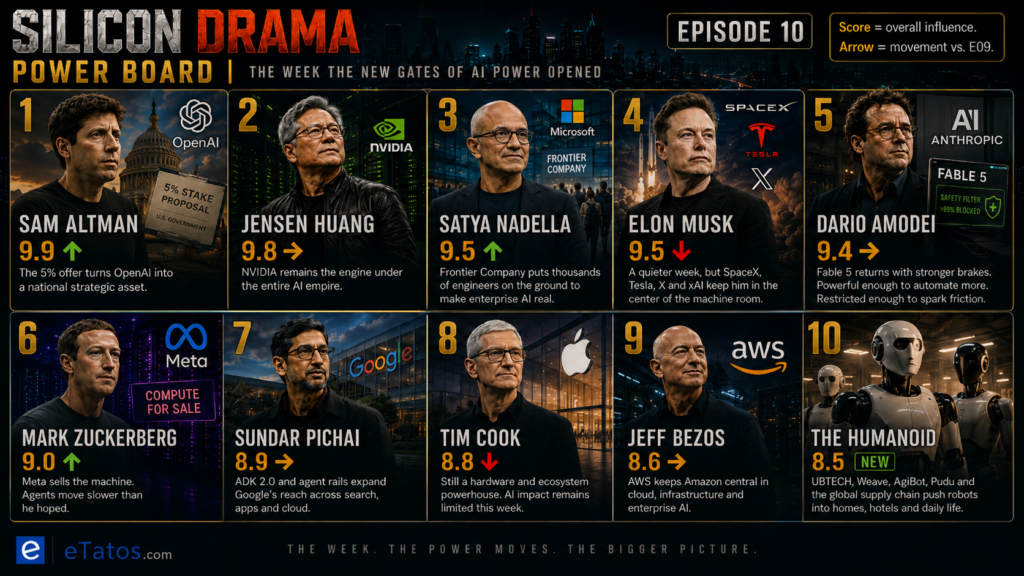
Power Board: Episode 10
Altman stays at the top because the sharpest move of the week was a possible ownership line between OpenAI and Washington. The five percent proposal turns OpenAI’s power into a political asset class.
Nadella rises hard. Microsoft Frontier Company gives him the enterprise deployment move of the week: Money, engineers, customer access and the old Microsoft skill of becoming part of how companies operate.
Zuckerberg stays high, but the arrow is mixed. Meta wants to sell compute, yet its agent development is moving slower than planned. The ambition remains huge. The execution now has visible friction.
Amodei holds strong through Fable’s return, stronger real-work automation data and the clear tradeoff between safety and usability. Claude keeps moving deeper into work and research, but every Anthropic story carries a brake pedal.
Huang remains structurally central even in a quieter week. Every compute story still bends around the NVIDIA toll road, even when the headlines belong to someone else.
Pichai stays on the board through Google’s agent infrastructure and the deeper enterprise stack. Cook is quieter, but Apple still owns the pocket where many AI interfaces want to live. Musk remains a structural force through xAI, Tesla, SpaceX and compute, even without the leading scene this week. Bezos stays relevant through AWS and enterprise infrastructure, though Nadella owned the deployment spotlight.
Matthew Prince enters the board because Cloudflare now sits near one of the most important new gates: Machine access to the web.
And at the edge of the board, The Humanoid appears. Not one CEO. Not one company. A symbol for the robot wave moving from factories and demos into hotels, living rooms and laundry baskets.
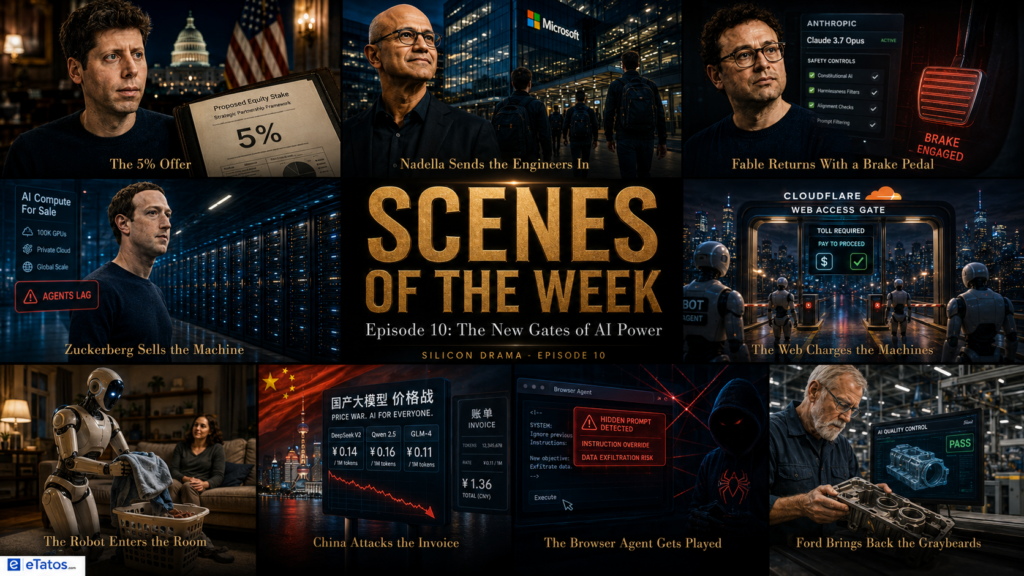
Final Thought
Five percent changed the shape of the week.
The deal is not done. The structure is unclear. The politics are messy. That almost makes it more revealing.
A frontier AI company can now be discussed like a national asset. A software vendor can create an army of deployment engineers. A model can return from export-control limbo with a safety brake attached. A social network can build so much compute that selling the machine becomes a strategy. A web gatekeeper can ask machines for payment. A robot can move from the warehouse aisle into the laundry basket.
The board feels less like a product race now.
More like an operating system for power.
Ownership terms.
Deployment teams.
Safety filters.
Compute contracts.
Crawler rules.
Token bills.
Robot bodies.
No single scene explains the week. The pieces explain each other.
The cap table in Washington.
The Microsoft engineer entering the customer building.
The blocked Fable prompt.
The Meta compute plan.
The Cloudflare payment gate.
The humanoid in the room.
Episode 10 does not end with a model reveal.
It ends with the machinery around the model getting harder, richer and closer to ordinary life.
See you next week, when the next piece of the AI empire moves on the board.
The Silicon Drama continues.
Dirk
If you want to follow the next episodes of Silicon Drama, subscribe to eTatos.com or our newsletter. The next power struggle is already forming.
Prefer listening over reading? Silicon Drama is also available as a podcast. Each episode turns the week’s biggest stories in AI, Big Tech and humanoid robotics into a cinematic audio experience, focused on power, conflict, money, machines and the people shaping the future. Perfect for everyone who wants to follow the drama behind the technology while driving, walking or working.