

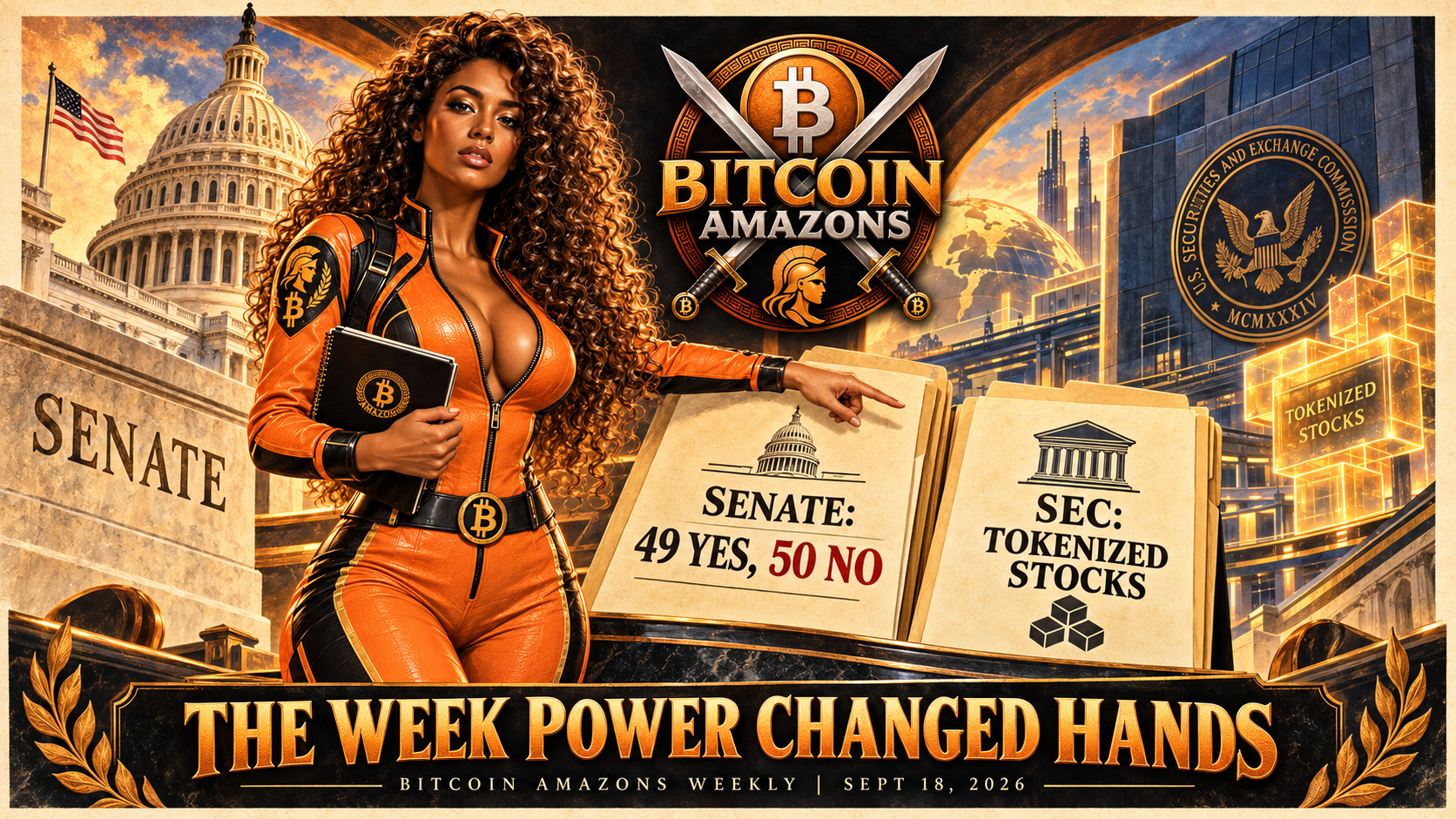
This week, the argument over crypto’s future moved from promises to procedure. A major U.S. crypto bill failed to advance in the Senate. Two days later, the securities regulator offered a conditional route for trading real shares on blockchain infrastructure. Meanwhile, one of Wall Street’s largest data companies moved deeper into the tools that secure that infrastructure. The question running through all three stories: Who sets the rules and who gets access?
Congress pauses; the SEC acts
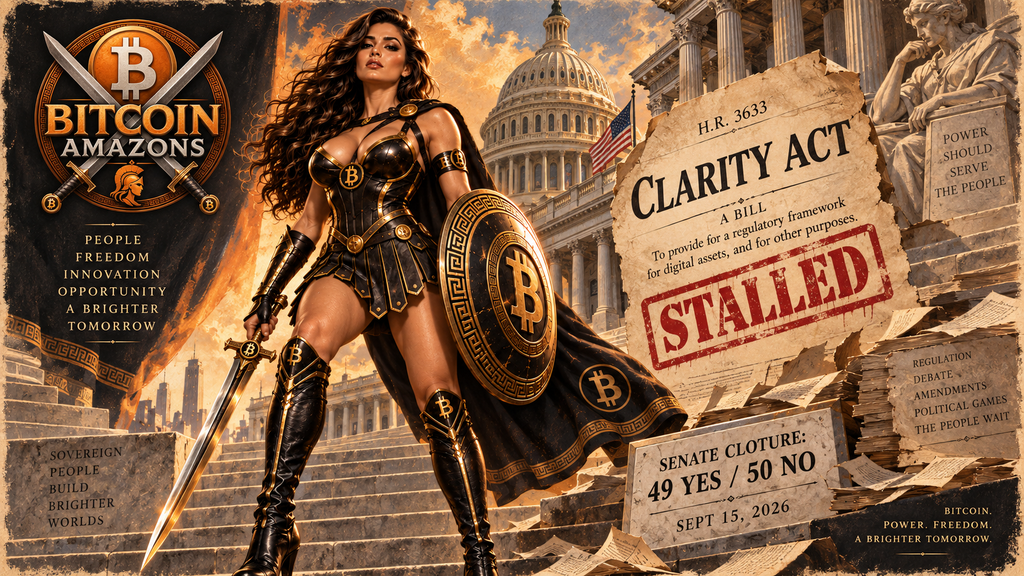
On September 15, the Senate rejected cloture on the motion to proceed to H.R. 3633, known as the CLARITY Act. The vote was 49 in favor, 50 against, with one senator not voting. This was a procedural failure to advance the bill, not a final vote repealing or rejecting every provision. A lasting division of authority between the SEC and CFTC remains unresolved.
On September 17, the SEC announced temporary, conditional relief for certain tokenized stock trading venues and liquidity providers. Eligible tokens must carry the rights of underlying shares, including dividends and votes; purely synthetic exposure is excluded. Issuers may object, and venue access is permissioned. Reuters reports that the relief is for five years. This opens a legal experiment, not a universal launch of around-the-clock stock trading. The SEC says durable rulemaking still needs to follow.
For investors, the difference between owning a share and holding a token that merely tracks its price is fundamental. For builders, the exemption creates a test of whether onchain settlement can coexist with enforceable shareholder rights and market safeguards.

Wall Street wants the security layer
On September 17, S&P Global announced an agreement to acquire OpenZeppelin, a provider of smart-contract libraries and security assessments. Closing conditions remain; the deal has not closed, and the price was not disclosed. S&P says OpenZeppelin will remain a separate business unit under its existing name. The move brings the security tools used by DeFi and tokenized products closer to a traditional financial information company. That could support institutional standards, while also raising questions about concentrated influence over infrastructure.
Earlier, Reuters reported a $110 million financing round for crypto data firm Kaiko led by S&P Global, with BNP Paribas, Nasdaq and other investors. Investment in data and security is a clearer institutional signal than price predictions, though it does not prove that tokenized products have reached mass adoption.

Read the flows carefully
Friday changed the weekly picture. Across the five U.S. trading sessions from September 14 through 18, Farside’s Bitcoin ETF table sums to $6.1 million of net inflows, while its Ethereum ETF table sums to $140.6 million of net outflows. On September 18 alone, spot Bitcoin ETFs recorded $433.0 million of net inflows and spot Ethereum ETFs recorded $143.7 million. Those Friday inflows nearly erased Bitcoin funds’ earlier weekly outflows but only partly offset Ethereum funds’ losses.
This revision adds the September 18 figures that were unavailable at the original editorial cutoff; it does not add events after that cutoff. The aggregate data cannot identify who bought, whether the same investors moved between BTC and ETH, or what caused market prices to change. In macro policy, the Federal Reserve raised its target rate range by a quarter point to 3.75%–4.00% on September 16. The ETF rebound followed later in the week, but sequence alone does not prove causation.
The week’s lesson is about control: Laws can stall, agencies can carve out experiments, and established companies can acquire the tools under the new market. Follow the ownership rights, the conditions and the security assumptions before the headline. ⚔️🟠
Bitcoin. Power. Freedom. ⚔️🟠