Most people do not need more hours in the day. They need a better rhythm for using the hours they already have.
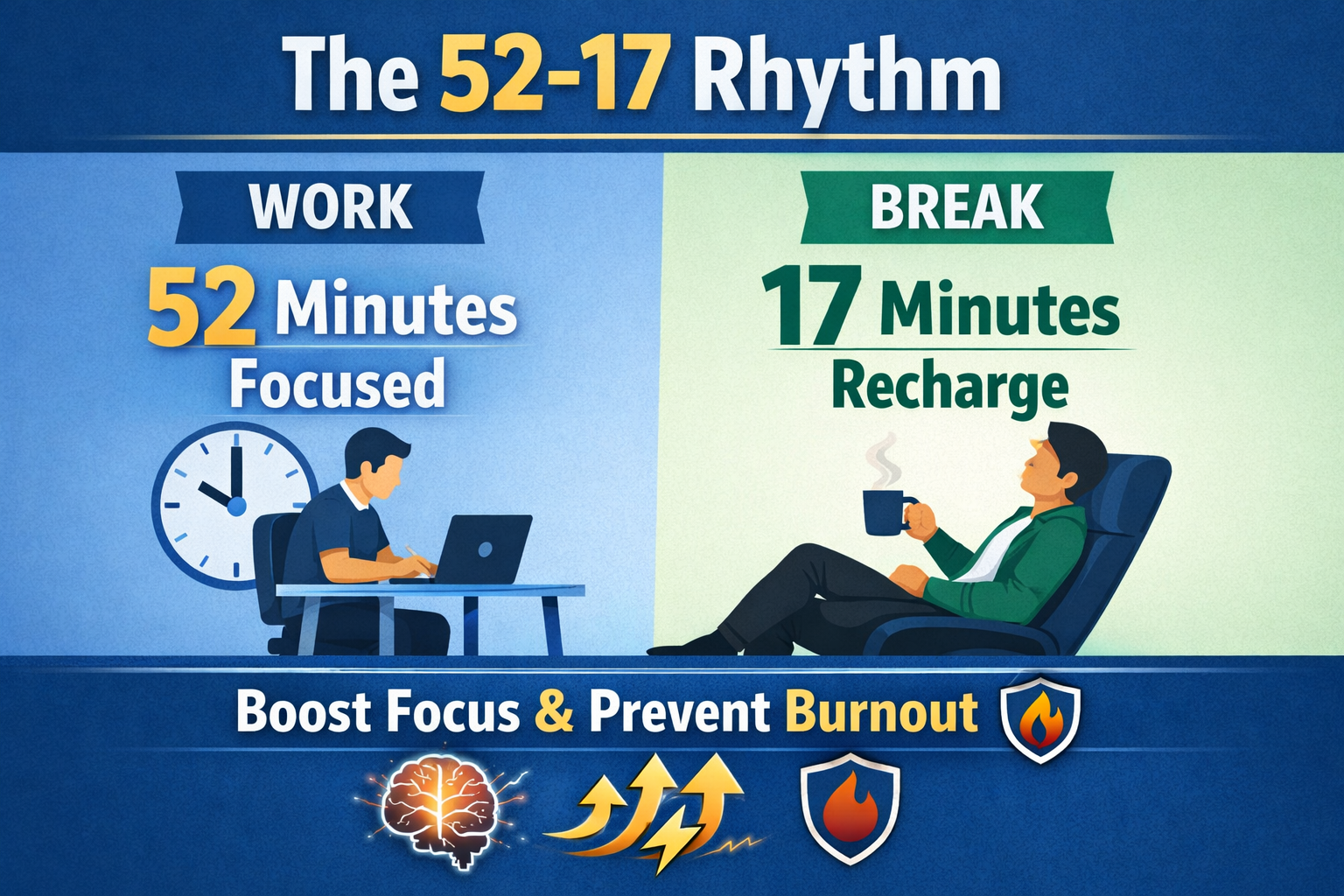
That is exactly why the 52-17 method has become such a compelling productivity idea. The concept is simple: work with full focus for 52 minutes, then take a 17-minute break to reset before the next round. The method was popularized by DeskTime after analyzing the work patterns of its most productive users and finding that this rhythm appeared again and again among top performers.
What makes the 52-17 method so appealing is that it challenges a very common productivity myth: that the best results come from sitting longer, pushing harder, and powering through fatigue.
In reality, sustained performance often depends on the opposite. Focus needs recovery. Energy needs renewal. And productivity works best when intensity is paired with deliberate rest. That broader principle is strongly supported by research on micro-breaks and structured breaks.
What is the 52-17 method?
The 52-17 method is a time-management rhythm built around two phases:
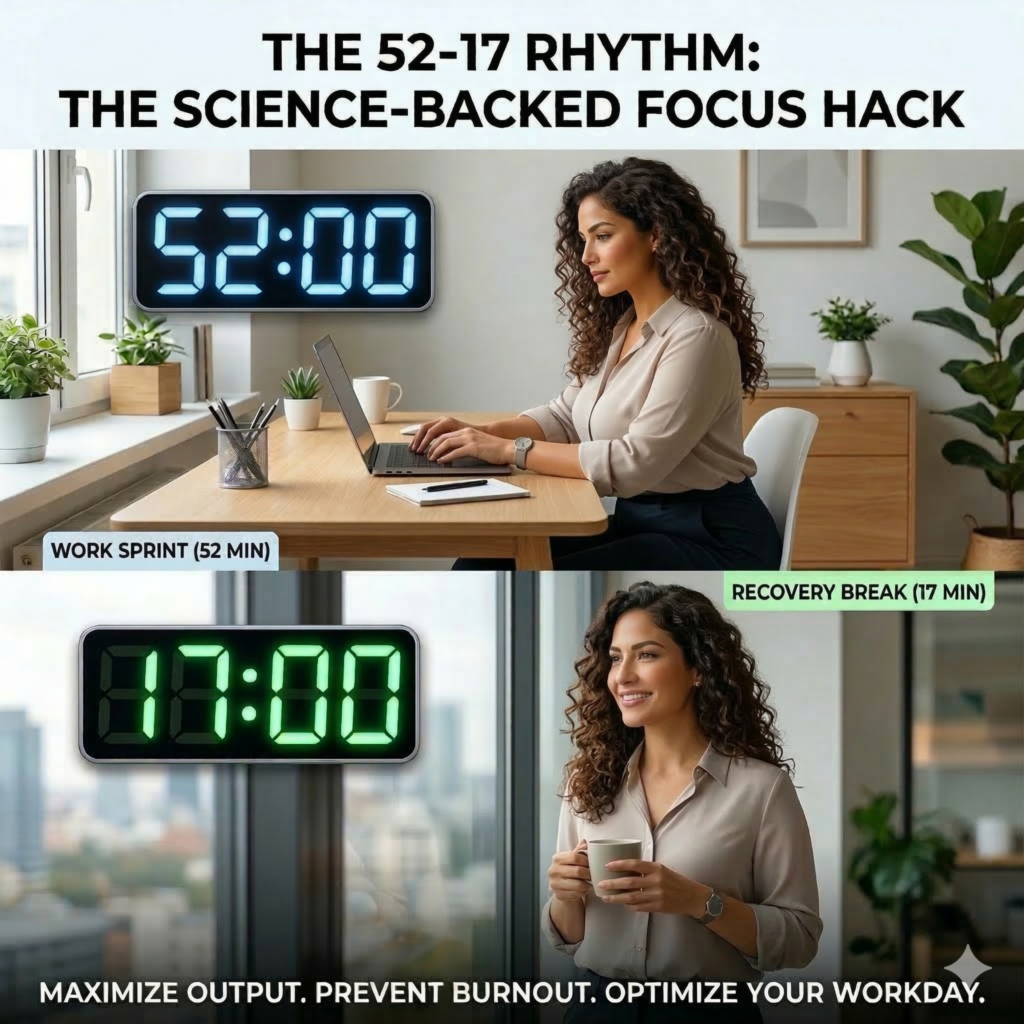
52 minutes of focused work
This is your deep work block. One important task. Minimal distractions. Full concentration.
17 minutes of intentional recovery
This is not a fake break spent half-checking emails. It is a real pause that helps your mind and body reset before the next work cycle. DeskTime’s analysis is what made this ratio famous, and it remains one of the best-known structured work-break frameworks online.
In other words, the 52-17 method is not about doing less. It is about working in a way that helps you do your best work more consistently.
Why the 52-17 rhythm works so well
The power of this method is not just the timer. It is the rhythm.
Many people notice that their focus drops long before they admit it. They stay at the desk, but the quality of attention fades. Decisions get slower. Small distractions grow bigger. Mental fatigue creeps in.
Research on micro-breaks helps explain why. A 2022 systematic review and meta-analysis found that short breaks produced meaningful benefits for well-being, especially by improving vigor and reducing fatigue. The same review found that performance effects can vary by context, but the recovery value of breaks was clear.
That is what makes the 52-17 method so practical. It gives you a structure before exhaustion takes over. Instead of waiting until your brain is drained, you build recovery into the workflow itself.
Why structured breaks beat random breaks
One reason the 52-17 method feels powerful is that it removes guesswork.
Without a clear rhythm, many people either forget to rest or take breaks too late, when their attention is already collapsing. Others take constant small interruptions that do not really restore anything.
There is evidence that pre-determined, systematic breaks can be especially helpful. A 2023 study comparing Pomodoro-style breaks with self-regulated breaks found that planned breaks had mood benefits and appeared to have efficiency benefits as well, with similar task completion in shorter time.
That does not mean everyone must follow one exact timer forever. It means that having a deliberate break structure can work better than relying on willpower alone. It is also worth noting that the exact work and break intervals vary across studies and methods, so the 52-17 rhythm should be seen as a strong starting point, while each person tests and refines the timing to find the rhythm that works best for their own focus, energy, and workload.
Why the break matters as much as the work block
A lot of people love the idea of focus, but underestimate the value of recovery.
The 17-minute break is not wasted time. It is what helps make the next 52 minutes sharp again.
The research on recovery breaks suggests that short pauses can help people feel more energetic and less fatigued, and that the type of break matters. Nature exposure, movement, and genuine mental detachment tend to be more restorative than simply replacing work with another kind of digital stimulation.
That means your break should actually feel different from work.
A few smart options:
- stand up and walk
- stretch your back, neck, and shoulders
- get water or coffee without taking your phone
- breathe slowly for a few minutes
- step outside for light and fresh air
- rest your eyes away from the screen
The goal is simple: come back clearer than you left.
Who should use the 52-17 method?
This method can work especially well for:
- professionals doing knowledge work
- entrepreneurs juggling multiple priorities
- students studying for long periods
- creators who need focused time without burnout
- anyone who feels busy all day but mentally drained by the end of it
The reason it resonates across different groups is that it respects both sides of performance: concentration and recovery. That is also why structured break-taking continues to show promise in both workplace and learning research.
How to try the 52-17 method today
You do not need a complicated app or a perfect schedule.
Start with this:
Choose one important task.
Set a timer for 52 minutes.
Work on that task only.
When the timer ends, stop.
Take 17 minutes to reset properly.
Then repeat.
Try it for a few days and pay attention to three things:
- how well you concentrate
- how mentally tired you feel afterward
- how easy it is to start the next work block
That is the real test of any productivity system. Not whether it sounds clever, but whether it helps you work better and feel better at the same time.
Final thought
The 52-17 method is powerful because it gives people permission to stop treating productivity like endurance punishment.
Its message is refreshingly simple: focused work matters, but recovery is part of productivity too.
That is why this method continues to stand out. It is actionable, realistic, and easy to apply. And most importantly, it helps shift the goal from “work nonstop” to “work well, then recover well.” That core idea aligns with both the original popularity of the 52-17 method and the wider research on breaks, energy, and sustained performance.